This is a perfect tonal shift. After the external chaos of the Daintree, we move into the quiet, often agonizing “internal weather” of a physical and psychological recovery. For Year 12 English, this story is ideal for exploring internal monologue, metaphor, and the concept of the “fallen hero.”
Story 5: The Glass Knee
Theme: Identity, resilience, and the psychological toll of elite performance.
Chapter 1: The Ghost of the Sprint
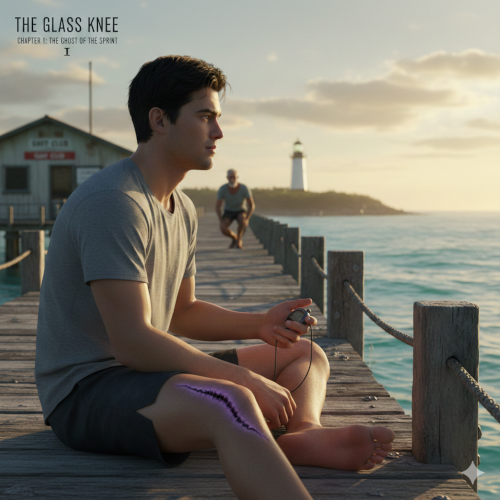
The hum of the Pacific Highway was the only sound in the small town of Agnes Water, but to Kael, it sounded like a stadium roar.
He sat on the edge of the wooden jetty, his left leg stretched out straight before him. The scar was a jagged, angry purple line that bisected his kneecap—the “Glass Knee,” as the tabloids had called it after the National Trials in Brisbane. One bad landing, one sickening pop heard over the broadcast, and a decade of five-am sprints had evaporated in a fraction of a second.
In Agnes Water, no one cared about his 100-meter personal best. To the locals at the bait shop, he was just the “limping lad” who lived in the beach shack at the end of the point. Here, the only clocks that mattered were the tides.
Kael looked down at his stopwatch. He had set a goal for today: walk to the end of the jetty and back without using the cane. It was only fifty meters. To the old Kael, it was less than six seconds of effort. To the current Kael, it felt like climbing Mount Everest in flip-flops.
He stood up. His quadriceps flickered—a weak, rebellious muscle that had forgotten how to hold his weight. He took the first step. Pain. Not the sharp, electric pain of the injury, but a dull, grinding ache that whispered: Give up. You’re done. You’re human now.
He stared out at the “Bustard Head” lighthouse in the distance. The water was a brilliant, mocking turquoise. In his mind, he could still feel the track spikes biting into the synthetic rubber, the surge of adrenaline that turned his blood into liquid fire. But when he looked back down at his leg, all he saw was a broken machine.
“Focus on the horizon, not the feet,” a voice rasped from behind him.
It was Miller, an old surfer with skin like cured leather and a missing finger. He had been watching Kael from the porch of the surf club for weeks. “If you look at where you’re failing, you’ll never see where you’re going.”
Comprehension Questions: Chapter 1
- Diction and Metaphor: Why does the author use the term “Glass Knee” to describe Kael’s injury? What does this suggest about the fragility of an athlete’s career?
- Contrast: How does the author contrast the “stadium roar” of Kael’s past with the “hum of the Pacific Highway” in his present? What does this reveal about his internal state?
- Symbolism: Discuss the significance of the “tides” being the only clock that matters in Agnes Water. How does this challenge Kael’s previous relationship with time?
- Characterization: Miller’s advice is to “focus on the horizon, not the feet.” How does this function as both physical advice and a psychological metaphor for recovery?
- Internal Conflict: Analyze the dialogue Kael has with his own body (the “rebellious muscle”). How does this illustrate the “internal battle” mentioned in the prompt?
Story 5: The Glass Knee
Chapter 2: The Weight of Water
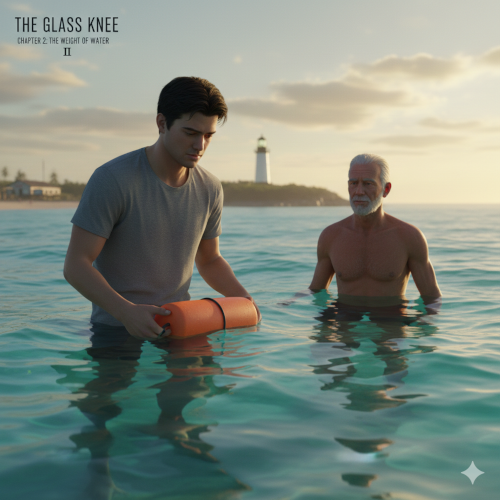
The Pacific Ocean didn’t offer the sterile, temperature-controlled comfort of the Brisbane physiotherapy pools. Here, the water was alive. It pulled at Kael’s hips with a relentless, rhythmic gravity, and the sand beneath his toes shifted like a treacherous memory.
“The water is a leveler,” Miller said, standing waist-deep in the surf beside him. “It doesn’t care about your records. It only cares about your balance.”
Kael waded in until the water reached his chest. The cold was a shock, a sudden bracing reality that forced his lungs to expand. This was his first attempt at ‘hydro-loading’—using the resistance of the ocean to wake up the dormant neural pathways in his leg.
He tried to perform a simple submerged lunge. In the gym, he used to squat two hundred kilograms. Here, with only the weight of the sea against him, his left knee buckled. He went under, the salt-water stinging his nose and throat. For a second, he stayed down, staring at the blurred, sandy bottom. It was peaceful in the blue. No expectations. No commentators. No stopwatch.
He surfaced, coughing and wiping his eyes. “It’s gone, Miller,” he spat, the bitterness sharper than the salt. “The explosive power, the twitch—it’s just… mush. I’m a high-performance engine with a snapped timing belt.”
“You’re thinking like a sprinter,” Miller replied, treading water effortlessly. “Everything is a burst for you. Start to finish in ten seconds or it’s a failure. But recovery? Recovery is a marathon run at a walking pace.”
Kael gripped a floating buoy, his knuckles white. The internal battle was a constant noise: one voice told him he was a warrior in exile, destined for a comeback; the other, louder voice whispered that he was a fool chasing a ghost.
He looked at his reflection in a calm pocket of water between the waves. He looked the same—the broad shoulders, the lean frame—but the ‘spark’ he used to see in his own eyes was missing. He realized then that he wasn’t just rehabbing a ligament; he was rehabbing a soul that didn’t know how to exist without a podium.
Comprehension Questions: Chapter 2
- Metaphorical Language: Kael describes himself as a “high-performance engine with a snapped timing belt.” How does this mechanical metaphor reflect his view of his own body?
- Theme of Resilience: Compare Miller’s definition of recovery (“a marathon run at a walking pace”) with Kael’s athletic background. Why is this perspective so difficult for Kael to accept?
- Imagery and Symbolism: What does Kael’s moment beneath the surface of the water—where there are “no expectations”—reveal about the psychological pressure he feels?
- Vocabulary: Define “hydro-loading” and “neural pathways.” How does the use of technical language ground this emotional story in a physical reality?
- Character Development: At the end of the chapter, Kael realizes he is “rehabbing a soul.” How does this shift the conflict of the story from a physical one to a psychological one?
Story 5: The Glass Knee
Chapter 3: The Breaking Strain
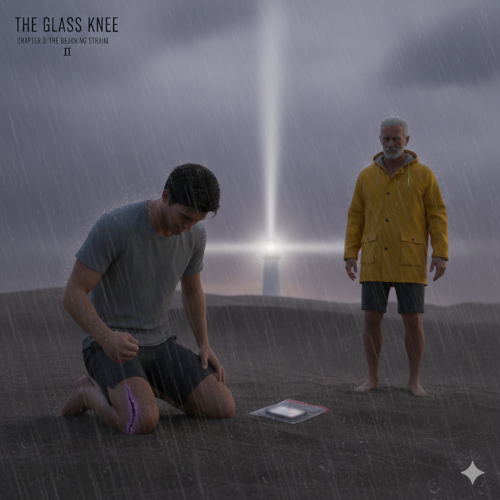
The storm that rolled into Agnes Water wasn’t the kind Kael was used to in the city. There, storms were an inconvenience to traffic. Here, the sky turned the color of a fresh bruise, and the wind whipped the sand into a stinging fog that stripped the paint off the beach shacks.
Kael was alone on the dunes, his leg throbbing in time with the falling barometric pressure. He had been pushing himself—three hours of lunges, four hours of resistance bands—desperate to feel that old “burn” that signaled progress. Instead, he felt only a hollow, grinding instability.
He tried to jog. Just ten meters. The sand was soft, the worst possible surface for a reconstructed ACL. On the third stride, his foot hit a patch of washed-up kelp. His knee didn’t pop this time, but it gave way, sending him face-first into the grit.
“Dammit!” he screamed, his voice swallowed by the wind. He pounded his fist into the sand. He stayed there for a long time, the rain beginning to lash his back. The internal battle had reached a stalemate: his ego demanded he stand up and run, while his body simply refused to comply.
He looked at his phone, which sat in a waterproof bag nearby. He had three missed calls from his agent in Brisbane and a dozen notifications from “Athletics Australia.” They were moving on. New names were topping the leaderboards. The world was spinning at 9.8 meters per second, and he was anchored in the mud.
Miller appeared through the grey curtain of rain, wearing a yellow slicker that made him look like a weathered buoy. He didn’t offer a hand. He just stood there, letting the rain soak into his beard.
“You’re trying to outrun the pain, Kael,” Miller said. “But the pain is the only thing telling you the truth right now.”
“The truth is I’m a failure, Miller!” Kael yelled back. “If I can’t run, who am I? I’m just a guy with a bad leg and a trophy room full of dust.”
“You’re a man who’s never learned to sit still,” Miller replied quietly. “You’ve spent your whole life moving so fast you never noticed the scenery. Maybe the knee didn’t break to stop you. Maybe it broke to make you look around.”
Kael looked up at the lighthouse. Its beam was cutting through the storm, steady and unmoving, a fixed point in a world of chaos. For the first time, he didn’t try to stand up immediately. He just sat in the rain, feeling the cold, the salt, and the slow, heavy beat of his own heart.
Comprehension Questions: Chapter 3
- Setting and Mood: How does the author use the “approaching storm” as a pathetic fallacy to represent Kael’s internal psychological state?
- Internal Monologue: Kael feels he is “anchored in the mud” while the world “spins.” Explain the effectiveness of this imagery in conveying a sense of irrelevance.
- Characterization: Why does Miller refuse to offer Kael a hand to help him up? What does this reveal about Miller’s philosophy on recovery?
- Thematic Conflict: Discuss the question Kael asks: “If I can’t run, who am I?” How does this capture the crisis of identity common in elite athletes who face career-ending injuries?
- Symbolism: Analyze the use of the “lighthouse” in this chapter. What does it represent in contrast to Kael’s previous obsession with speed and movement?
Story 5: The Glass Knee
Chapter 4: The New Rhythm
The storm cleared, leaving Agnes Water scoured and sparkling. The air felt lighter, but for Kael, the silence was the heaviest thing of all. He spent three days without touching his stopwatch. It sat on his bedside table, a digital eye that he finally turned face-down.
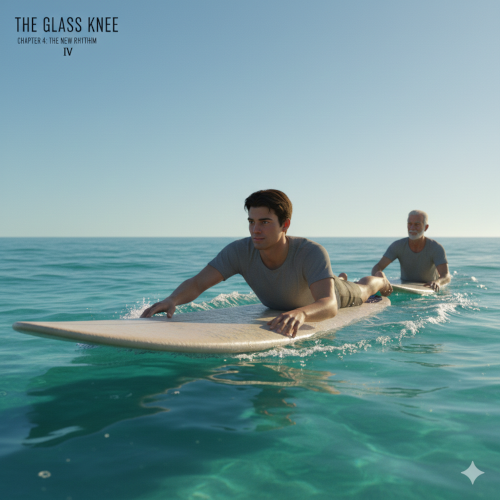
He met Miller at the surf club, but he didn’t bring his resistance bands. Instead, Miller handed him a heavy, long-form surfboard—a “log”—made of thick foam and resin.
“I can’t surf, Miller,” Kael said, gesturing to his knee. “The torque on the pop-up would tear the graft right off the bone.”
“Who said anything about standing up?” Miller paddled out, his strokes deep and rhythmic. “Just paddle. Use your core. Feel the swell. Stop trying to beat the ocean and start trying to slide with it.”
Kael lay flat on the board, his chest against the wax. As he paddled out beyond the break, he felt a different kind of exertion. It wasn’t the explosive, lactic-acid burn of a 100-meter dash; it was a slow, steady endurance. He had to time his movements not to a starter’s pistol, but to the pulse of the Pacific.
The water supported his weight, taking the pressure off the “glass” joint. For the first time in months, he wasn’t thinking about degrees of flexion or muscle atrophy. He was watching the way the sunlight refracted through the crest of a wave, turning the water into a sheet of moving emerald.
He realized that his entire life had been measured in lanes—lanes that kept him looking straight ahead, never left or right. Out here, there were no lanes. There was only the horizon.
“You’re breathing,” Miller called out from a few meters away.
“I’ve always been breathing,” Kael shouted back.
“No,” Miller corrected. “You were hyperventilating for twenty years. Now, you’re actually taking a breath.”
Kael caught a small, rolling wave. He didn’t try to stand. He stayed on his stomach, arms outspread like wings, feeling the surge of the ocean carry him toward the shore. He wasn’t the fastest man in the country anymore. He was just a man on a wave, moving at exactly the speed he was meant to.
Comprehension Questions: Chapter 4
- Symbolism: What is the significance of Kael turning the stopwatch “face-down” at the beginning of the chapter?
- Imagery and Contrast: How does the author contrast the “lanes” of the running track with the “horizon” of the ocean? What does this suggest about Kael’s mental shift?
- Metaphor: Miller tells Kael he was “hyperventilating for twenty years.” What does this imply about the nature of elite sports and the pressure Kael was under?
- Vocabulary: Define “torque” and “atrophy” in the context of Kael’s injury. How do these physical limitations force a change in his identity?
- Characterization: Why is it important that Kael “didn’t try to stand” on the surfboard? How does this demonstrate a victory in his internal battle?
Here is the final chapter of The Glass Knee, concluding our series of Queensland-based stories.
Story 5: The Glass Knee
Chapter 5: The Fixed Point
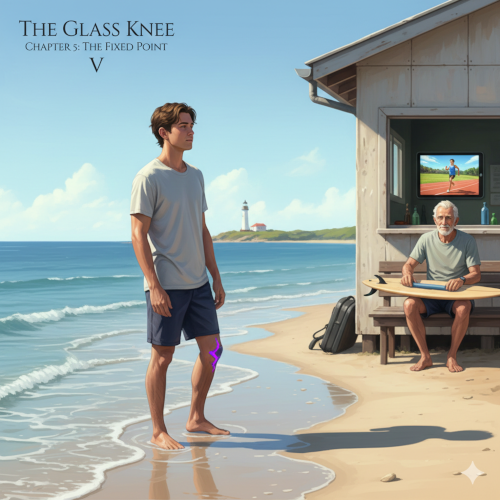
Six months after the “pop” that ended his career, Kael stood on the shore of Agnes Water. The Brisbane morning news was playing on a tablet inside the surf club, featuring a segment on the “New Face of Australian Sprinting.” Kael watched the screen for a moment. He saw a young man in a green-and-gold singlet, vibrating with the same frantic, ego-driven energy Kael had worn like a second skin.
He didn’t feel a sting of jealousy. He felt a strange, distant empathy. He knew the weight of that singlet—how it could make you feel like a god one second and a ghost the next.
Kael turned away from the screen and looked at the water. His gait was still uneven—the “limp” was a permanent part of his rhythm now—but he no longer viewed it as a failure. It was a signature. It was the mark of a man who had survived a collision with his own limits.
Miller was sitting on the bench, waxing a board. “Leaving today, aren’t you?”
“The agent called,” Kael said, leaning against a pylon. “There’s a coaching role at the academy. Junior development. They want me to talk to the kids who’ve had major setbacks. The ‘red-shirt’ squad.”
“And?” Miller asked, squinting against the sun.
“I took it,” Kael said. “But I told them I’m not bringing my stopwatch. We’re going to spend the first month learning how to breathe. Maybe I’ll even bring them up here to see the lighthouse.”
He walked down to the water’s edge one last time. He didn’t try to sprint. He didn’t try to test the explosive power of his quads. He simply walked into the surf until the water swirled around his scarred knee. He felt the cold, the grit of the sand, and the steady pull of the tide.
The internal battle hadn’t ended in a victory for one side or the other. Instead, the two Kaels—the Athlete and the Human—had declared a truce. He realized that the “Glass Knee” wasn’t a curse of fragility; it was a window. It had allowed him to see through the blur of his own speed to the world that had been waiting for him all along.
As he drove out of town, the Bustard Head lighthouse grew smaller in his rearview mirror. It remained a fixed point, a silent witness to a race that didn’t have a finish line, only a horizon.
Comprehension Questions: Chapter 5
- Character Transformation: How has Kael’s perspective on the “New Face of Australian Sprinting” changed since Chapter 1? What does this reveal about his psychological growth?
- Symbolism of the Scar: Kael now views his limp as a “signature” rather than a “failure.” Discuss how this shift in perception relates to the theme of resilience.
- Thematic Synthesis: Kael decides to coach without a stopwatch. How does this decision reflect the central message of the story regarding time and performance?
- Literary Technique: Analyze the metaphor of the “window.” How does the author play on the title “The Glass Knee” to provide a positive resolution?
- Reflective Evaluation: Consider the entire five-story series. How does “The Glass Knee” serve as a fitting conclusion to the themes of identity and struggle explored across all the Queensland settings?
End of Story Series
We have now completed all five stories:
- The Red Dirt Ghost (Outback Gothic/Mystery)
- The Sunken Spire (Dystopian/Sci-Fi)
- The Echo Chamber (Psychological Thriller)
- The Salt-Line (Paramedic Realism/Action)
- The Glass Knee (Contemporary Drama/Internal Battle)
********************************************************************************************************************************************************
これは完璧なトーンの転換だ。デインツリーでの外部の混乱の後、私たちは心身の回復という静かでしばしば苦痛に満ちた「内なる天候」へと移っていく。12年生の英語にとって、この物語は**内なる独白**、**メタファー**、そして**「倒れた英雄」という概念**を探求するのに最適だ。
—
## ストーリー5:ガラスの膝
**テーマ:** *アイデンティティ、回復力、そしてエリート選手としてのパフォーマンスがもたらす精神的負担。*
### 第1章:スプリントの亡霊
小さなアグネス・ウォーターの町では、パシフィック・ハイウェイのざわめきだけが聞こえていたが、ケイルにとってはスタジアムの歓声のように聞こえた。
彼は木製の桟橋の端に座り、左足をまっすぐ前に伸ばしていた。傷跡は、彼の膝頭を二分するギザギザの、怒りに満ちた紫色の線だった。ブリスベンでの全国選考会の後、タブロイド紙はそれを「ガラスの膝」と呼んだ。一度の着地の失敗、放送から聞こえた不快な「ポンッ」という音。そして、10年間続けてきた朝5時の短距離走は、ほんの一瞬で消え去った。
アグネス・ウォーターでは、彼の100メートル自己ベストなど誰も気にしていなかった。餌屋の地元の人たちにとっては、彼は岬の端にある浜辺の小屋に住む「足を引きずる若者」に過ぎなかった。ここでは、唯一重要視されるのは潮の満ち引きだけだった。
ケイルはストップウォッチを見下ろした。今日の目標は、杖を使わずに桟橋の端まで往復することだった。たった50メートル。昔のケイルにとっては6秒にも満たない努力だった。しかし今のケイルにとっては、まるでビーチサンダルでエベレストを登るような気分だった。
彼は立ち上がった。大腿四頭筋が震えた。体重を支える術を忘れた、弱々しく反抗的な筋肉だ。彼は最初の一歩を踏み出した。*痛み*。怪我の鋭く電撃的な痛みではなく、鈍く、擦り切れるような痛みが囁いた。*諦めろ。もう終わりだ。お前はもう人間なんだ。*
彼は遠くの「バスタードヘッド」灯台を見つめた。水面はまばゆいばかりのターコイズブルーに輝いていた。心の中では、トラックのスパイクが合成ゴムに食い込む感覚、アドレナリンが血を熱く燃えるように駆け巡る感覚がまだ残っていた。しかし、ふと自分の脚を見下ろすと、そこには壊れた機械しか見えなかった。
「地平線を見ろ、足元を見ろ」背後からかすれた声が響いた。
それはミラーだった。使い古した革のような肌と、片指を失った老サーファー。彼は何週間もサーフクラブのポーチからケイルを見守っていた。 「失敗しているところばかり見ていると、自分がどこへ向かっているのかが見えなくなってしまう。」
—
### 理解度チェック問題:第1章
1. **語彙とメタファー:** 著者はなぜケールの怪我を「ガラスの膝」と表現したのでしょうか?これはアスリートのキャリアの脆さについて何を示唆しているのでしょうか?
2. **対比:** 著者は、ケールの過去の「スタジアムの歓声」と現在の「パシフィック・ハイウェイのざわめき」をどのように対比させているのでしょうか?これは彼の内面の状態について何を明らかにしているのでしょうか?
3. **象徴性:** 『アグネス・ウォーター』において「潮の満ち引き」が唯一重要な時計であることの意味について論じなさい。これはケールのこれまでの時間との関係にどのような疑問を投げかけるのでしょうか?
4. **登場人物描写:** ミラーのアドバイスは「足元ではなく、地平線に目を向けなさい」というものです。これは、回復のための身体的なアドバイスであると同時に、心理的なメタファーとしてもどのように機能しているのでしょうか?
5. **内なる葛藤:** ケールが自身の体(「反抗する筋肉」)と交わす対話を分析してください。これは、課題で言及されている「内なる葛藤」をどのように表現していますか?
—
## ストーリー5:ガラスの膝
**第2章:水の重さ**
太平洋は、ブリスベンの理学療法プールのような、無菌で温度調節された快適さを提供してくれなかった。ここでは、水が生きていた。容赦なくリズミカルな重力でケールの腰を引っ張り、つま先の下の砂は、まるで危険な記憶のように動いた。
「水は平らにするんだ」と、ミラーは彼の隣で腰まで波打ち際まで立ちながら言った。「記録なんて気にしない。バランスだけを気にするんだ。」
ケールは胸まで水に浸かった。冷たさは衝撃的で、突然襲いかかる現実に肺を膨らませざるを得なかった。これは彼にとって初めての「ハイドロローディング」、つまり海の抵抗を利用して脚の眠っている神経経路を目覚めさせるという試みだった。
彼は水中で簡単なランジをしようとした。ジムでは200キロのスクワットをしていた。だが、海の重みだけを背負った今、左膝が折れた。海に沈み、潮が鼻と喉を刺す。一瞬、彼はそこに留まり、ぼんやりとした砂の底を見つめた。青い海は静寂に満ちていた。期待も、解説者も、ストップウォッチもなかった。
彼は咳き込み、目を拭きながら水面に浮かび上がった。「もう何も残っていない、ミラー」と吐き捨てた。塩よりも鋭い苦味がこみ上げてきた。「爆発的なパワーも、痙攣も、ただ…ドロドロだ。タイミングベルトが切れた高性能エンジンだ」
「まるで短距離走者みたいに考えているな」とミラーは楽々と水面を踏みながら答えた。「君にとって全ては爆発だ。10秒でスタートからゴールまで走らなければ、失敗だ。だが、回復は?回復とは、歩くペースで走るマラソンのようなものだ」
ケールは指の関節が白く染まる中、浮かぶブイを握りしめていた。内なる葛藤は絶え間なく続いていた。ある声は、お前は追放された戦士であり、必ず復活する運命にあると告げ、もう一つの、より大声の声が、お前は幽霊を追う愚か者だと囁いた。
波間の静かな水面に映る自分の姿を見つめた。広い肩、引き締まった体格、そして以前と同じ姿だった。しかし、かつて自分の目に感じていた「輝き」は失われていた。その時、彼は自分が単なる靭帯のリハビリをしているのではなく、表彰台なしでは生きられない魂のリハビリをしているのだと悟った。
—
### 理解度チェック問題:第2章
1. **比喩表現:** ケールは自分自身を「タイミングベルトが切れた高性能エンジン」と表現している。この機械的な比喩は、彼の身体観をどのように反映しているだろうか?
2. **回復力のテーマ:** ミラーによる回復の定義(「歩くペースでマラソンを走る」)とケールのアスリートとしての経歴を比較しなさい。なぜケールにとってこの視点を受け入れるのがそれほど難しいのでしょうか?
3. **イメージと象徴性:** ケールが水面下で「何の期待も抱いていない」瞬間は、彼が感じている心理的プレッシャーについて何を明らかにしているでしょうか?
4. **語彙:** 「ハイドロローディング」と「神経経路」を定義しなさい。専門用語の使用は、この感情的な物語をどのように物理的な現実に根付かせているでしょうか?
5. **登場人物の発展:** 章の終わりに、ケールは自分が「魂のリハビリ」をしていることに気づきます。これは、物語の葛藤を物理的な葛藤から心理的な葛藤へとどのように変化させるのでしょうか?
—
## ストーリー5:ガラスの膝
**第4章:新たなリズム**
嵐は去り、アグネス・ウォーターは水浸しになり、きらきらと輝いていた。空気は軽くなったように感じられたが、ケイルにとっては静寂こそが何よりも重かった。彼は3日間、ストップウォッチに触れずに過ごした。それはベッドサイドテーブルに置かれ、ついには裏返しになったデジタルの目だった。
彼はサーフクラブでミラーと会ったが、レジスタンスバンドを持ってきていなかった。代わりにミラーは、厚いフォームと樹脂でできた重くて長いサーフボード――「丸太」――を彼に手渡した。
「ミラー、サーフィンなんてできないよ」ケイルは膝を指さしながら言った。「ポップアップのトルクで、移植片が骨から剥がれてしまうだろう」
「誰が立ち上がれなんて言ったんだ?」ミラーは深くリズミカルなストロークでパドルを漕ぎ出した。 「ただ漕ぐだけ。体幹を使って。うねりを感じろ。海に打ち勝とうとするのをやめて、海と共に滑るように意識しろ。」
ケールはボードの上に平らに横たわり、胸をワックスに押し付けた。波の向こう側へ漕ぎ出すと、彼は別の種類の力を感じた。100メートル走の爆発的な乳酸燃焼のようなものではなく、ゆっくりとした、着実な持久力だった。スタートのピストルではなく、太平洋の鼓動に合わせて動きを計らなければならなかった。
水が彼の体重を支え、「ガラス」のような関節にかかる圧力を取り除いてくれた。数ヶ月ぶりに、彼は屈曲の度合いや筋萎縮について考えていなかった。波頭で太陽光が屈曲し、水面を動くエメラルドグリーンのシートに変えていく様子を見つめていた。
彼は、これまでの人生がレーンで測られてきたことに気づいた。レーンは、彼を左右に見ることなく、まっすぐ前を見続けさせてくれた。しかし、ここにはレーンなどなかった。そこには水平線しか見えなかった。
「呼吸してるだろ」ミラーは数メートル離れたところから声をかけた。
「俺はずっと呼吸してたんだ」ケイルは叫び返した。
「違う」ミラーは訂正した。「君は20年間過呼吸だった。今、ちゃんと呼吸してるんだ」
ケイルは小さな波に乗った。立ち上がろうとはしなかった。腹ばいのまま、両腕を翼のように広げ、波のうねりに岸へと運ばれていくのを感じていた。もはや国内最速の男ではなかった。ただ波に乗った男、まさに自分が進むべき速度で動いているだけだった。
—
### 読解問題:第4章
1. **象徴性:** ケイルが章の冒頭でストップウォッチを「裏返し」にしていることには、どのような意味があるか?
2. **比喩と対比:** 著者は、ランニングトラックの「レーン」と海の「水平線」をどのように対比させているか?これはケールの精神状態の変化について何を示唆しているでしょうか?
3. **メタファー:** ミラーはケールに「20年間過呼吸状態だった」と言います。これはエリートスポーツの性質とケールが受けていたプレッシャーについて何を示唆しているでしょうか?
4. **語彙:** ケールの怪我の文脈における「トルク」と「萎縮」を定義してください。これらの身体的制約は、どのように彼のアイデンティティの変化を促したのでしょうか?
5. **キャラクター描写:** ケールがサーフボードの上で「立ち上がろうとしなかった」ことはなぜ重要なのでしょうか?これはどのように彼の内なる闘いの勝利を示しているのでしょうか?
—
クイーンズランドを舞台にした物語シリーズを締めくくる、**ガラスの膝**の最終章をお届けします。
—
## ストーリー5:ガラスの膝
**第5章:不動点**
彼のキャリアを終わらせた「ポン」という音から6ヶ月後、ケイルはアグネス・ウォーターの岸辺に立っていた。サーフクラブ内のタブレットでブリスベンの朝のニュースが流れており、「オーストラリア短距離走の新顔」を特集していた。ケイルはしばらく画面を見つめた。緑と金色のシングレットを着た若い男が、ケイルが第二の皮膚のように身にまとっていたのと同じ、狂おしく、自我に突き動かされたエネルギーで震えているのが見えた。
彼は嫉妬の感情を少しも感じなかった。奇妙な、どこか遠い共感を覚えた。あのシングレットの重みを知っていた。一瞬、神のように感じさせられたのに、次の瞬間には幽霊のように感じさせられることを。
ケイルは画面から顔を背け、水面を見つめた。歩き方は相変わらず不安定だった。「足を引きずる」ことが、今や彼の足取りの一部になっていた。だが、彼はもはやそれを失敗だとは考えていなかった。それは彼のトレードマークだった。自分の限界との衝突を乗り越えた男の証だった。
ミラーはベンチに座り、ボードにワックスをかけていた。「今日帰るんだろう?」
「エージェントから電話があったんだ」とケイルは鉄塔に寄りかかりながら言った。「アカデミーでコーチの募集があるんだ。ジュニア育成の。大きな挫折を経験した子供たち、いわゆる『レッドシャツ』チームと話をしてほしいらしい」
「それで?」とミラーは太陽に目を細めて尋ねた。
「受けたよ」とケイルは言った。「でも、ストップウォッチは持って行かないって言ったんだ。最初の1ヶ月は呼吸の仕方を学ぶつもりなんだ。もしかしたら、灯台を見に連れて行くかもしれない」
彼は最後にもう一度、水辺まで歩いて行った。彼は全力疾走しようとはしなかった。大腿四頭筋の爆発的な力を試そうともしなかった。ただ波間へと歩みを進め、傷ついた膝の周りで水が渦を巻くのを感じた。冷たさ、砂のざらつき、そして絶え間なく押し寄せる潮の力を感じた。
内なる闘いは、どちらかの勝利に終わったわけではなかった。アスリートと人間という二人のケイルが休戦を宣言したのだ。彼は「ガラスの膝」が脆さの呪いではなく、窓なのだと悟った。それは、ぼんやりとした自身のスピードを通して、ずっと彼を待っていた世界を垣間見せてくれたのだ。
町を出て車を走らせると、バックミラーの中のバスタード岬の灯台は小さくなっていった。それは、ゴールラインではなく、地平線だけがあるレースの、静かな証人であり、定位置のままだった。
—
### 読解問題:第5章
1. **登場人物の変容:** 第1章以降、ケールの「オーストラリア短距離走界のニューフェイス」に対する見方はどのように変化しましたか?これは彼の心理的成長について何を明らかにしていますか?
2. **傷跡の象徴性:** ケールは今、自分の足を引きずることを「失敗」ではなく「特徴」と見なしています。この認識の変化が、回復力というテーマとどのように関連しているかを論じてください。
3. **テーマの統合:** ケールはストップウォッチを使わずにコーチをすることに決めました。この決断は、時間とパフォーマンスに関する物語の中心的なメッセージをどのように反映していますか?
4. **文学的技法:** 「窓」のメタファーを分析してください。作者は「ガラスの膝」というタイトルをどのように利用して、前向きな結末を提示していますか?
5. **内省的評価:** 全5話シリーズを考察してください。 「ガラスの膝」は、クイーンズランド州を舞台にした様々な物語を通して探求されてきたアイデンティティと葛藤というテーマに、どのようにふさわしい結末をもたらしたのでしょうか?
—
### 物語シリーズ終了
これで5つの物語全てが完成しました。
1. **The Red Dirt Ghost** (アウトバック・ゴシック/ミステリー)
2. **The Sunken Spire** (ディストピア/SF)
3. **The Echo Chamber** (心理スリラー)
4. **The Salt-Line** (救急救命リアリズム/アクション)
5. **The Glass Knee** (現代ドラマ/内なる闘い)
**高校3年生の英語試験対策として、5つの物語を比較分析する最終演習をご希望ですか?それとも、これらのテーマに基づいた新しい創作課題セットを作成したいですか?**