This genre is perfect for Year 12 English, as it explores digital footprints, performative identity, and the power dynamics of the modern age.
Story 3: The Echo Chamber
Theme: Surveillance, social reputation, and the blurred lines between reality and digital curation.
Chapter 1: The Notification
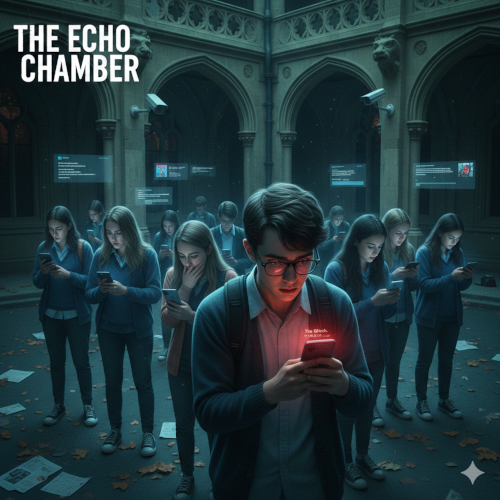
The notification didn’t chime; it pulsed. A low-frequency hum from the pocket of Leo’s blazer that felt like a tiny, electronic heartbeat.
“The Glitch has posted a new video.”
Around the courtyard of St. Jude’s Academy, the midday chatter died a synchronized death. Heads bowed in a modern mimicry of prayer as three hundred students looked at their screens. Leo didn’t open his phone immediately. He watched the faces of his peers—the sudden paleness of the student captain, the frantic tapping of the ‘influencer’ clique near the fountain.
“He’s at it again,” a voice whispered beside him. It was Sarah, her eyes wide as she scrolled. “It’s about the Year 12 formal. Someone leaked the private chat where the committee was joking about the scholarship kids.”
Leo finally looked. The video was a high-definition montage of the school’s ‘inner circle’ set to a distorted version of the school hymn. No faces were shown, just snippets of text, voice memos, and grainy footage taken through locker vents. It was a masterpiece of digital defamation.
The ‘Glitch’ was an anonymous account that had appeared three weeks ago, claiming to be the “moral firewall” of St. Jude’s. At first, it was harmless—pointing out students who didn’t recycle or who cheated on minor quizzes. But lately, the posts had turned surgical, dismantling social reputations with terrifying precision.
Leo felt a cold prickle of sweat. He was a scholarship student, a quiet observer who stayed in the margins. He had always felt invisible, which was his greatest strength—and his biggest fear.
A second notification buzzed. This one wasn’t a public post. It was a Direct Message.
The Glitch: I saw what you did in the chemistry lab after hours, Leo. Perception is everything. Do you want to be the next lead in my movie, or do you want to help me edit the final cut?
Leo looked up. The courtyard was a sea of teenagers, but for the first time, they didn’t look like friends. They looked like data points.
Comprehension Questions: Chapter 1
- Diction and Imagery: The author describes the students’ behavior as a “modern mimicry of prayer.” What does this metaphor suggest about the role of technology in their lives?
- Characterization: How does Leo’s status as a “scholarship student” and a “quiet observer” influence his reaction to the Glitch?
- Tone and Mood: How does the author create a sense of paranoia in the final paragraphs? List three specific words or phrases that contribute to this mood.
- Inference: What does the Glitch’s message to Leo imply about the “moral firewall” persona? Is the Glitch truly a whistleblower, or something more sinister?
- Critical Literacy: Discuss the concept of “digital defamation” in a school setting. How does anonymity change the power balance between students and the school administration?
Story 3: The Echo Chamber
Chapter 2: The Logic of the Lens
Leo didn’t reply. He slid his phone into his pocket, but the device felt like a live wire against his leg. He walked toward the Science Wing, his footsteps echoing in the suspiciously empty corridor. Everyone else was still outside, dissected by the latest upload, but Leo had a double period of Advanced Chemistry.
The lab smelled of sulfur and industrial cleaner. Mr. Henderson, the teacher, was hunched over a laptop at the front desk, his face illuminated by a spreadsheet. He didn’t look up.
Leo took his usual seat at the back, his mind racing. Three nights ago, he’d stayed late to finish a titration experiment. He had accidentally knocked over a flask of silver nitrate, staining the expensive lab bench. Panicked that his scholarship would be revoked for “negligence,” he’d used a harsh, unapproved solvent from the back cupboard to scrub it clean. He thought he was alone.
He pulled his phone out under the desk.
Leo: Who are you?
The reply was instantaneous.
The Glitch: I’m the person who sees the things you try to scrub away. The solvent you used is toxic if not ventilated properly, Leo. You broke the safety protocol. You lied on the sign-out sheet. Small cracks lead to big collapses.
Leo: What do you want?
The Glitch: St. Jude’s is a theater. Everyone is playing a part. The ‘Perfect Captain,’ the ‘Rebel,’ the ‘Scholar.’ I want to drop the curtain. Look at the vent above Henderson’s desk.
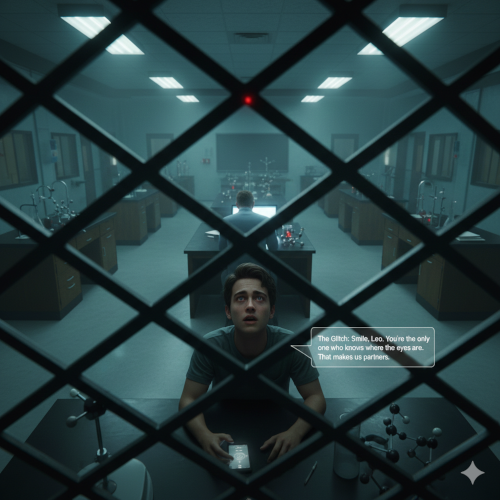
Leo looked up. Nestled inside the slatted metal of the HVAC vent was a tiny, unblinking red light. A pinhole camera. His stomach dropped. It wasn’t just phones; the Glitch had infiltrated the school’s physical infrastructure.
“Leo? Is there something fascinating about the ventilation?” Mr. Henderson’s voice snapped him back to reality. The teacher was staring at him, his brow furrowed.
“No, sir,” Leo stammered. “Just… thinking about the gas laws.”
As Henderson returned to his screen, Leo’s phone buzzed again. It was a photo—a high-angle shot taken from that very vent, showing Leo staring directly at the camera just a second ago.
The Glitch: Smile, Leo. You’re the only one who knows where the eyes are. That makes us partners.
Comprehension Questions: Chapter 2
- Setting and Symbolism: How does the setting of the chemistry lab—specifically the “stain” and the “unapproved solvent”—serve as a metaphor for the themes of the story?
- Narrative Perspective: How does the author use the Direct Messages (DMs) to change the pace of the narrative compared to the prose?
- Critical Literacy: The Glitch claims that “St. Jude’s is a theater.” Discuss how social media encourages students to “perform” their identities rather than live them authentically.
- Characterization: Why is Leo’s fear of losing his scholarship a powerful motivator for his silence? What does this suggest about the pressure on students from lower socio-economic backgrounds in elite schools?
- Foreshadowing: What does the phrase “Small cracks lead to big collapses” suggest about the Glitch’s ultimate goal for the school?
Story 3: The Echo Chamber
Chapter 3: The Ghost in the Server
The rest of the day was a blur of simulated normalcy. Leo sat through History and Math, but his eyes kept drifting to the corners of the rooms, searching for the tell-tale glint of a hidden lens. He realized with a jolt of horror that the school wasn’t a community anymore; it was a panopticon—a place where the few are watched by the many, or in this case, the many were watched by a ghost.
After the final bell, Leo’s phone vibrated with a set of coordinates. Not a room number, but a GPS location: the old rowing shed by the Brisbane River, a dilapidated structure that had been condemned after the last big flood.
The Glitch: Validation is a drug, Leo. And I’m about to cut the supply. Meet me at 4:00 PM. Alone.
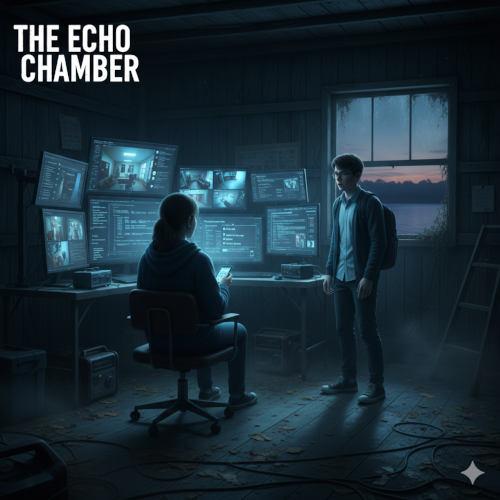
Leo arrived as the sun began to dip, casting long, skeletal shadows across the brown water of the river. The shed smelled of damp timber and river silt. Inside, the darkness was punctuated by the glow of a dozen high-end monitors, powered by a hum of portable generators.
Sitting in a swivel chair was a figure in a St. Jude’s hoodie, their face obscured by the backlight of the screens.
“You’re late,” the figure said. It was a girl’s voice—sharp, calculated, and familiar. She turned around. It was Chloe, the Year 12 Valedictorian, the girl whose face was on every school prospectus as the “Standard of Excellence.”
Leo gasped. “You? But you’re… you’re the perfect student. Why would you want to destroy the school’s reputation?”
Chloe laughed, a cold, hollow sound. “Perfect? I’m a product, Leo. I’m curated. Every grade, every extracurricular, every ‘spontaneous’ photo on the school’s Instagram is staged by my parents and the administration to sell a brand. I’m not destroying the school. I’m showing the world what it actually looks like behind the filter.”
She gestured to the screens. They weren’t just showing classrooms. They were showing the Principal’s office, the staff room, and private data folders.
“I need your help,” she said, leaning forward. “The school is about to install a new ‘Smart-ID’ system. They say it’s for safety, but it’s real-time biometric tracking. Once it’s live, no one will ever have a private moment again. I need you to use your chemistry lab access to help me ‘overload’ the server cooling system. We’re going to fry the brain of the school.”
Comprehension Questions: Chapter 3
- Vocabulary and Concept: Define the term “panopticon.” How does this architectural concept apply to the environment Chloe has created at St. Jude’s?
- Character Irony: Analyze the irony of Chloe being the “Glitch.” Why is the Valedictorian the most likely—and yet least suspected—candidate for this role?
- Themes of Identity: Chloe describes herself as a “product.” What does this suggest about the impact of institutional expectations on a student’s sense of self?
- Critical Literacy: Explore the justification Chloe gives for her actions. Is her attempt to “drop the curtain” an act of rebellion or an act of narcissism?
- Technical Inference: Why does Chloe need Leo’s help specifically? What does the “Smart-ID” system represent in the broader context of the story’s critique of surveillance?
Story 3: The Echo Chamber
Chapter 4: The Catalyst
The plan was as clinical as one of Chloe’s award-winning essays. While the school was distracted by the “Grand Opening” of the new Resource Centre, Leo was to enter the server basement. Using a concentrated saline solution he’d prepared in the lab, he would trigger a “leak” in the liquid-cooling pipes. It wouldn’t look like sabotage; it would look like a catastrophic hardware failure.
“Why me, Chloe?” Leo asked, his voice echoing in the damp rowing shed. “You have the tech. You have the access. Why drag me into the basement?”
Chloe stood up, her shadow dancing against the wall. “Because I’m the primary suspect if anything goes wrong. I’m always in the spotlight. But you? You’re the ‘Scholarship Ghost.’ You move through these halls without leaving a footprint. Besides,” she added, her voice dropping to a whisper, “if we get caught, who is the school going to believe? The Valedictorian with a clean record, or the kid who was already caught ‘vandalising’ lab equipment?”
The betrayal stung more than the threat. Leo realized then that Chloe wasn’t just fighting the system; she was using the very same power dynamics she claimed to hate. She was the architect of her own Echo Chamber.
The night of the Resource Centre opening was humid, the air thick with the scent of jasmine and expensive perfume. While the Principal gave a speech about “St. Jude’s commitment to a digital future,” Leo slipped through the side door of the Administration building.
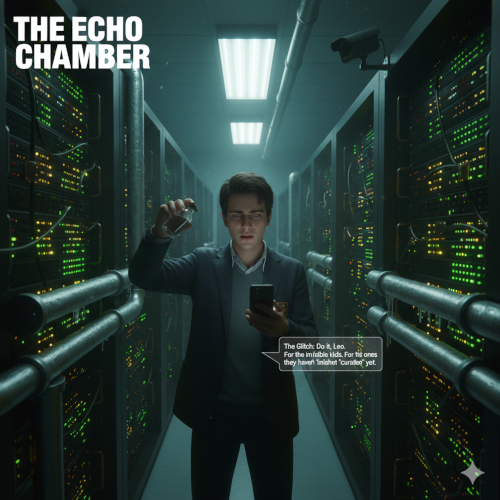
He reached the server room door. The lock clicked open—Chloe had provided the override code. Inside, the room hummed with a primal, electric energy. Rows of black towers blinked with thousands of green and amber lights, processing every email, every grade, and now, the biometric data of every student.
He pulled the vial of saline from his blazer. His hand hovered over the main intake pipe. If he did this, the Smart-ID system would be dead before it even started. Privacy would be restored. But Chloe would also have total control over the narrative of the “accident.”
His phone vibrated.
The Glitch: Do it, Leo. For the invisible kids. For the ones they haven’t finished ‘curating’ yet.
Leo looked at the pipe, then at the security camera in the corner of the room. He realized the red light wasn’t blinking. Chloe had turned it off. For the first time in weeks, no one was watching.
Comprehension Questions: Chapter 4
- Character Analysis: How does Chloe’s reasoning for choosing Leo (“Who is the school going to believe?”) reveal her true character? Does this align with her “moral firewall” persona?
- Vocabulary and Imagery: Analyze the description of the server room humming with “primal, electric energy.” How does this contrast with the “jasmine and perfume” of the school function upstairs?
- Thematic Conflict: Discuss the irony in Chloe’s message: “For the invisible kids.” Is she actually helping the marginalized students, or is she exploiting Leo’s invisibility?
- Structural Tension: How does the author use the “Principal’s speech” happening simultaneously with the sabotage to create a sense of dramatic irony?
- Ethical Evaluation: At the end of the chapter, Leo realizes he is finally not being watched. How does this “lack of surveillance” change the weight of his decision?
Here is the final chapter of The Echo Chamber.
Story 3: The Echo Chamber
Chapter 5: The Final Edit
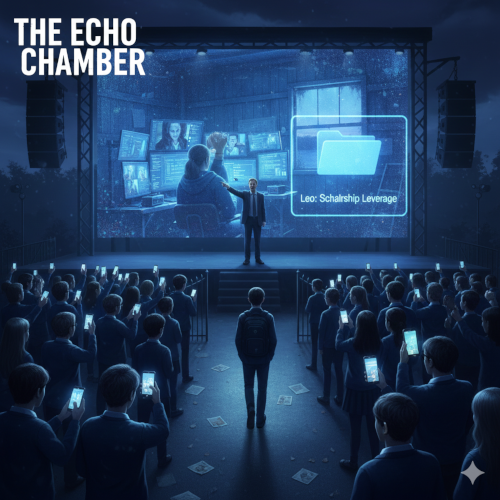
The saline solution felt cold against Leo’s palm. One twist of the cap and the “perfect” future of St. Jude’s would short-circuit. But as he looked at the humming servers, he didn’t see a “brain” to be fried; he saw a mirror.
If he destroyed the servers, he wasn’t just stopping the Smart-ID system. He was helping Chloe delete the evidence of her own digital footprint. Without the server logs, no one could ever prove who “The Glitch” really was. Chloe wasn’t just dropping the curtain; she was burning down the theater with herself safely outside.
Leo didn’t open the vial. Instead, he pulled a small, silver thumb drive from his pocket—one he had spent the last three hours preparing in the school library. He didn’t sabotage the cooling system. He plugged the drive into the main administrative port.
“You’re right, Chloe,” he whispered to the empty room. “Perception is everything.”
The thumb drive didn’t contain a virus. It contained a simple script: a “Redirect.” Instead of the servers crashing, every single piece of footage the Glitch had ever collected—every secret, every private chat, and every hidden camera feed—was set to be uploaded to a public cloud, but with one crucial addition. The login metadata was unmasked. The world wouldn’t just see the secrets; they would see the hand that held the camera.
Leo walked out of the basement and back into the humid night. On the main stage, the Principal was finishing his speech. “And now, to witness the first live feed from our new digital security initiative…”
The giant screen behind the Principal flickered. It didn’t show the “Safe Campus” welcome video. It showed the rowing shed. It showed Chloe, the Valedictorian, sitting amidst her monitors, her face illuminated by the data she had stolen. It showed the folder labeled Leo: Scholarship Leverage.
The silence that followed was different from the one in the courtyard. This wasn’t a silence of fear; it was a silence of realization. The school looked at the screen, then at Chloe, who was standing in the front row, her “perfect” mask finally shattering into a thousand digital shards.
Leo didn’t stay to watch the fallout. He walked toward the school gates, his phone buzzing in his pocket. He didn’t check it. He didn’t need a notification to tell him that for the first time in years, he was no longer a ghost, and he was no longer a puppet. He was just Leo.
Comprehension Questions: Chapter 5
- Character Transformation: How does Leo’s decision in the server room demonstrate a shift from being a “passive observer” to an “active agent” of change?
- Literary Devices: Analyze the metaphor of the theater in this final chapter. Why is it significant that Leo chooses to “unmask the hand” rather than “burn down the theater”?
- Thematic Resolution: The story explores the idea that “perception is everything.” How does the ending subvert this idea to show that “truth” can exist outside of curated perception?
- Critical Literacy: Compare the two types of silence mentioned in the story (Chapter 1 and Chapter 5). What do they communicate about the changing power dynamics of the student body?
- Reflective Evaluation: Do you believe Leo’s choice to expose everyone’s secrets along with Chloe’s was ethical? Was the “collateral damage” of leaking all the secrets justified to stop Chloe and the Smart-ID system?
このジャンルは、**デジタルフットプリント**、**パフォーマティブ・アイデンティティ**、そして現代の**権力構造**を探求するため、12年生の英語学習に最適です。
—
## ストーリー3:エコーチェンバー
**テーマ:** *監視、社会的評判、そして現実とデジタルキュレーションの曖昧な境界線。*
### 第1章:通知
通知はチャイムではなく、脈動していた。レオのブレザーのポケットから聞こえる低周波のブーンという音は、まるで小さな電子的な鼓動のようだった。
*「グリッチが新しい動画を投稿しました。」*
セント・ジュード・アカデミーの中庭では、昼間の雑談が一斉に消えた。300人の生徒たちが画面を見つめ、現代的な祈りの真似事のように頭を下げていた。レオはすぐには携帯電話を開かなかった。彼は仲間たちの顔を見渡した。生徒会長の突然の青ざめ、噴水近くの「インフルエンサー」集団が必死に叩く様子。
「またか」と、彼の隣でささやく声がした。サラだった。彼女は目を大きく見開いてスクロールしていた。「12年生のフォーマルについて。委員会が奨学生について冗談を言っていたプライベートチャットが誰かにリークされたのよ。」
レオはようやく動画を見た。動画は、学校の「内輪」の人々の高解像度モンタージュで、歪んだ校歌が流れていた。顔は映っておらず、テキストの断片、ボイスメモ、ロッカーの通気口から撮影された粗い映像だけが映っていた。デジタル誹謗中傷の傑作だった。
「グリッチ」とは、3週間前に現れた匿名アカウントで、セント・ジュード病院の「道徳的防火壁」を名乗っていた。最初は、リサイクルをしない生徒やちょっとしたテストでカンニングをした生徒を指摘するだけの、無害なものだった。しかし最近、投稿は手厳しいものになり、恐ろしいほどの精度で社会的な評判を貶めていた。
レオは冷や汗がにじむのを感じた。彼は特待生で、周囲から孤立する静かな観察者だった。常に自分が目に見えない存在だと感じていたが、それが彼の最大の強みであり、同時に最大の恐怖でもあった。
2つ目の通知が鳴った。今回は公開投稿ではなく、ダイレクトメッセージだった。
**不具合:** *レオ、君が勤務時間外に化学実験室で何をしたか見たよ。認識がすべてだ。僕の映画の次の主役になりたいのか、それともファイナルカットの編集を手伝ってくれるのか?*
レオは顔を上げた。中庭はティーンエイジャーの海だったが、初めて彼らは友達には見えなかった。データポイントのように見えた。
—
### 読解問題:第1章
1. **言葉遣いと比喩:** 著者は生徒たちの行動を「現代版祈りの模倣」と表現しています。この比喩は、彼らの生活におけるテクノロジーの役割について何を示唆していますか?
2. **人物描写:** レオの「特待生」であり「静かな観察者」であるという立場は、グリッチに対する彼の反応にどのような影響を与えていますか?
3. **語調と雰囲気:** 著者は最後の段落でどのようにパラノイア的な雰囲気を作り出していますか?この雰囲気に貢献している具体的な単語またはフレーズを3つ挙げてください。
4. **推論:** グリッチがレオに送ったメッセージは、「道徳的ファイアウォール」のペルソナについて何を示唆していますか?グリッチは本当に内部告発者なのでしょうか、それとももっと邪悪な存在なのでしょうか?
5. **批判的リテラシー:** 学校における「デジタル名誉毀損」の概念について論じてください。匿名性は、生徒と学校管理者の間の力関係をどのように変化させるのでしょうか?
—
## ストーリー3:エコーチェンバー
**第2章:レンズの論理**
レオは返事をしなかった。携帯電話をポケットにしまったが、脚に電流が走るような感触があった。理科棟へと歩みを進めた。足音は、不気味なほど空っぽの廊下にこだました。他の皆はまだ外で、最新のアップロードに気を取られていたが、レオは特別化学の授業を2時間分受けていた。
実験室は硫黄と工業用洗剤の匂いが漂っていた。ヘンダーソン先生は受付でノートパソコンにうつむき、スプレッドシートに照らされた顔をしていた。顔を上げようともしなかった。
レオはいつものように後ろの席に座り、頭の中はぐるぐると回っていた。3日前の夜、滴定実験を終わらせるために残業したのだ。誤って硝酸銀のフラスコを倒してしまい、高価な実験台を汚してしまったのだ。 「過失」で奨学金を取り消されるのではないかとパニックになり、彼は奥の戸棚から強力な未承認溶剤を使ってこすり落とした。自分だけだろうと思っていた。
彼は机の下から携帯電話を取り出した。
**レオ:** *君は誰だ?*
返事は即座に返ってきた。
**グリッチ:** *君がこすり落とそうとしているものが見えるのは私だ。君が使った溶剤は、適切に換気しないと有毒だ、レオ。君は安全手順に違反した。退出届に嘘をついた。小さな亀裂が大きな崩壊につながる。*
**レオ:** *何がしたいんだ?*
**グリッチ:** *セント・ジュード病院は劇場だ。誰もが役を演じている。「完璧な船長」「反逆者」「学者」。私は幕を下ろす。ヘンダーソンの机の上の通気口を見ろ。*
レオは顔を上げた。空調換気口の金属板の隙間に、小さな点滅しない赤いランプが埋め込まれていた。ピンホールカメラだ。レオはがくっと息を呑んだ。電話だけではない。グリッチは学校の物理的なインフラにまで侵入していたのだ。
「レオ?換気口に何か面白いことがあるのか?」ヘンダーソン先生の声で、レオは現実に引き戻された。先生は眉をひそめ、レオをじっと見つめていた。
「いえ、先生」レオはどもりながら言った。「ただ…気体の法則について考えていたんです。」
ヘンダーソンが画面に戻ると、レオの携帯が再び振動した。それは写真だった。まさにその通気口から撮影されたハイアングルショットで、レオがほんの一瞬前までカメラをじっと見つめていたのが映っていた。
**グリッチ:** *笑え、レオ。目がどこにあるか知っているのは君だけだ。それが私たちをパートナーにするのです。*
—
### 理解度チェック問題:第2章
1. **設定と象徴性:** 化学実験室という設定、特に「染み」と「未承認の溶媒」は、物語のテーマのメタファーとしてどのように機能していますか?
2. **物語の視点:** 作者は、散文と比較して物語のペースを変えるために、ダイレクトメッセージ(DM)をどのように利用していますか?
3. **批判的リテラシー:** グリッチは「セント・ジュード病院は劇場だ」と主張しています。ソーシャルメディアは、学生たちにアイデンティティをありのままに生きるのではなく、「演じる」ことをどのように促しているかを論じてください。
4. **登場人物の描写:** レオが奨学金を失うことへの恐怖を抱き、沈黙を守る強い動機となっているのはなぜですか?これは、エリート校に通う社会的・経済的に恵まれない家庭出身の学生に課されるプレッシャーについて何を示唆していますか?
5. **伏線:** 「小さな亀裂が大きな崩壊につながる」というフレーズは、グリッチが学校に対して抱いている最終的な目的について何を示唆しているでしょうか?
—
## ストーリー3:エコーチェンバー
**第3章:サーバーの幽霊**
その日の残りは、ぼんやりとした平凡な日々だった。レオは歴史と数学の授業を受けていたが、目は部屋の隅へとさまよい、隠しレンズのきらめきを探していた。彼は衝撃的な恐怖とともに、学校がもはや共同体ではなく、パノプティコン――少数の者が多数によって監視される場所、いや、この場合は、多数が幽霊に監視されている場所なのだと悟った。
終業のベルが鳴った後、レオの携帯電話が振動し、座標が表示された。部屋番号ではなく、GPSによる位置情報だった。ブリスベン川沿いの古いボート小屋。前回の大洪水の後、廃墟と化した建物だった。
**グリッチ:** *承認は麻薬だ、レオ。そして、私は今から供給を止める。午後4時に会おう。たった一人で。*
レオが到着したのは、太陽が沈みかけ、茶色い川面に長く骨のような影を落とし始めた頃だった。小屋からは湿った木材と川底の泥の匂いが漂っていた。中は暗闇の中、ポータブル発電機のブーンという音で稼働する12台の高性能モニターが輝きを放っていた。
回転椅子に座っているのはセント・ジュードのパーカーを着た人物で、スクリーンのバックライトに顔が隠れていた。
「遅刻したわね」と人物は言った。鋭く、計算高く、そしてどこかで聞いたことのある少女の声だった。彼女は振り返った。12年生の卒業生代表、クロエだった。どの学校のパンフレットにも「優秀の基準」として顔が載っている少女だ。
レオは息を呑んだ。「あなたが?でもあなたは…あなたは完璧な生徒だ。どうして学校の評判を落としたいの?」
クロエは冷たく、空虚な笑みを浮かべた。 「完璧だって?私は商品なんだよ、レオ。私は選別されているんだ。学年も課外活動も、学校のインスタグラムにアップされている写真も、すべて両親と学校側がブランドを売るために仕組んだもの。私は学校を壊しているんじゃない。フィルターの向こうにある本当の姿を世界に見せているだけ。」
彼女はスクリーンを指差した。映し出されているのは教室だけではない。校長室、職員室、そして個人のデータフォルダまでもが映し出されていた。
「あなたの助けが必要なの」と彼女は身を乗り出し、言った。「学校は新しい『スマートID』システムを導入しようとしているの。安全のためだと言っているけれど、実はリアルタイムの生体認証追跡システムなの。導入されれば、誰もプライベートな時間を持てなくなるわ。化学実験室のアクセス権限を使って、サーバーの冷却システムを『過負荷』にするのに協力してほしい。学校の脳を焼き尽くすつもりよ。」
—
### 理解度チェック問題:第3章
1. **語彙と概念:** 「パノプティコン」という用語を定義しなさい。この建築概念は、クロエがセント・ジュード病院で作り上げた環境にどのように当てはまるでしょうか。
2. **登場人物の皮肉:** クロエが「グリッチ」であることの皮肉を分析しなさい。なぜ卒業生代表がこの役割に最もふさわしい候補者でありながら、最も疑われていないのでしょうか。
3. **アイデンティティのテーマ:** クロエは自分自身を「商品」と表現しています。これは、組織からの期待が生徒の自己意識に与える影響について何を示唆していますか。
4. **批判的リテラシー:** クロエが自分の行動を正当化する理由を探りなさい。彼女の「カーテンを下ろす」試みは、反抗行為でしょうか、それともナルシシズムの行為でしょうか。
5. **技術的推論:** なぜクロエは特にレオの助けを必要としているのでしょうか。物語が監視を批判する広い文脈において、「スマートID」システムは何を象徴しているのでしょうか?
—
## ストーリー3:エコーチェンバー
**第4章:触媒**
計画は、クロエの受賞エッセイのように実に実に的確だった。学校が新しいリソースセンターの「グランドオープン」に気を取られている隙に、レオはサーバーの地下室に侵入する。実験室で調合した高濃度の生理食塩水を使って、液体冷却パイプの「漏れ」を引き起こすのだ。妨害工作のようには見えず、むしろハードウェアの壊滅的な故障のように見せかけるのだ。
「なぜ私が、クロエ?」レオは湿った漕艇小屋に声をこだました。「君には技術がある。アクセス権もある。なぜ私を地下室に引きずり込むんだ?」
クロエは立ち上がり、壁に影を落とした。「何かあったら私が第一容疑者になるから。いつも注目を浴びている。でもあなたは?あなたは『奨学金の幽霊』よ。」この廊下を歩くとき、足跡を残さない。それに」と彼女は声を落としながら付け加えた。「もし私たちが捕まったら、学校は誰を信じてくれるの? 前科のない卒業生代表?それとも、実験器具を『破壊』した罪で既に捕まっている生徒?」
脅迫よりも裏切りの方が辛かった。レオはその時、クロエがただシステムに抗っているのではなく、自分が憎んでいると公言していたまさにその力関係を利用していることに気づいた。彼女は自らエコーチェンバー(反響室)を作り上げていたのだ。
リソースセンター開館の夜は蒸し暑く、空気はジャスミンと高価な香水の香りで満たされていた。校長が「セント・ジュードのデジタル未来への取り組み」についてスピーチをしている間、レオは管理棟の脇のドアを抜けた。
彼はサーバールームのドアにたどり着いた。鍵がカチッと開いた。クロエがオーバーライドコードを渡していたのだ。中に入ると、部屋は原始的な電気のようなエネルギーで満ち溢れていた。黒い塔が何千もの緑と黄色の光を点滅させ、あらゆるメール、あらゆる成績、そして今や生徒全員の生体認証データを処理していた。
彼はブレザーから生理食塩水の小瓶を取り出した。手はメインの吸気管の上に置かれた。もし彼がそうすれば、スマートIDシステムは起動する前に停止してしまうだろう。プライバシーは回復する。しかし、クロエは「事故」の物語を完全に掌握してしまうだろう。
彼の携帯電話が振動した。
**グリッチ:** *やれ、レオ。見えない子供たちのために。まだ「キュレーション」が終わっていない子供たちのために。*
レオはパイプを見て、それから部屋の隅にある防犯カメラを見た。赤いランプが点滅していないことに気づいた。クロエが電源を切ったのだ。数週間ぶりに、誰も見ていない。
—
### 読解問題:第4章
1. **登場人物分析:** クロエがレオを選んだ理由(「学校は誰を信じるの?」)は、彼女の真の性格をどのように明らかにしていますか? これは彼女の「道徳的ファイアウォール」というペルソナと一致していますか?
2. **語彙とイメージ:** サーバールームが「原始的で活気に満ちたエネルギー」で賑わっているという描写を分析してください。これは、2階の学校行事の「ジャスミンと香水の香り」とどのように対照的ですか?
3. **テーマの対立:** クロエのメッセージ「見えない子供たちへ」の皮肉について論じてください。彼女は本当に疎外された生徒たちを助けているのでしょうか?それとも、レオの不可視性を悪用しているのでしょうか?
4. **構造上の緊張:** 作者は、妨害行為と同時に起こる「校長先生のスピーチ」をどのように利用して、劇的な皮肉を生み出しているのでしょうか?
5. **倫理的評価:** 章の終わりに、レオはついに監視されていないことに気づきます。この「監視の欠如」は、彼の決断の重みをどのように変えるのでしょうか?
—
## ストーリー3:エコーチェンバー
**第5章:最終編集**
レオの手のひらに冷たく感じられた生理食塩水。キャップをひねれば、セント・ジュード病院の「完璧な」未来はショートしてしまう。しかし、ブーンという音を立てるサーバーを見つめながら、レオは焼き尽くされるべき「脳」ではなく、鏡を見た。
サーバーを破壊すれば、スマートIDシステムを停止させるだけでなく、クロエが自身のデジタルフットプリントの証拠を消去するのを手伝うことになる。サーバーのログがなければ、「グリッチ」の正体を誰も証明できない。クロエはただ幕を下ろすだけでなく、劇場を燃やし尽くし、自らは安全な外にいるのだ。
レオは小瓶を開けなかった。代わりに、ポケットから銀色の小さなUSBメモリを取り出した。学校の図書館で3時間かけて準備していたものだ。冷却システムを破壊したわけではない。メインの管理ポートにUSBメモリを差し込んだ。
「クロエ、君の言う通りだ」レオは空っぽの部屋に向かって囁いた。「認識こそ全てだ」
USBメモリにはウイルスは入っていなかった。単純なスクリプト、「リダイレクト」が入っていた。サーバーがクラッシュする代わりに、グリッチが収集したあらゆる映像――あらゆる秘密、あらゆるプライベートチャット、そしてあらゆる隠しカメラ映像――がパブリッククラウドにアップロードされる予定だった。ただし、重要な点が一つだけ追加されていた。ログインメタデータがマスク解除されたのだ。世界は秘密だけでなく、カメラを握っている手も見ることになる。
レオは地下室を出て、蒸し暑い夜空へと戻った。メインステージでは、校長がスピーチを終えようとしていた。「それでは、新しいデジタルセキュリティ・イニシアチブのライブ映像を初めてご覧いただきます…」
校長の背後の巨大スクリーンが点滅した。「安全なキャンパス」のウェルカムビデオではなく、ボート小屋の映像が映し出されていた。そこには卒業生代表のクロエがモニターの前に座り、盗んだデータで顔を照らしている様子が映っていた。そこには「レオ:奨学金レバレッジ」というラベルの付いたフォルダが映っていた。
その後に続いた静寂は、中庭で感じた静寂とは違っていた。これは恐怖の静寂ではなく、悟りの静寂だった。学校中の人々はスクリーンに目を向け、そして最前列に立つクロエを見た。彼女の「完璧な」仮面はついに千ものデジタルの破片へと砕け散りつつあった。
レオは事態の収拾を待つ間、留まらなかった。ポケットの中で携帯電話が振動しながら、校門へと向かって歩いた。彼は確認しなかった。何年もぶりに、自分がもはや幽霊でも操り人形でもないことを知らせてくれる通知など必要なかった。彼はただのレオだった。
—
### 読解問題:第5章
1. **登場人物の変容:** サーバールームでのレオの決断は、彼が「受動的な観察者」から「能動的な主体」へと変化したことを、どのように示しているか?
2. **文学的表現:** この最終章における劇場のメタファーを分析しなさい。レオが「劇場を焼き払う」のではなく「手の正体を暴く」ことを選んだのはなぜ重要なのか?
3. **テーマの解決:** この物語は「認識がすべて」という考えを探求している。結末はこの考えをどのように覆し、「真実」はキュレーションされた認識の外にも存在し得ることを示しているか?
4. **批判的リテラシー:** 物語に登場する2種類の沈黙(第1章と第5章)を比較しなさい。それらは、生徒会における変化する力関係について何を伝えているのか?
5. **反省的評価:** レオがクロエだけでなく*全員の*秘密を暴露するという選択は倫理的だったと思いますか? クロエとスマートIDシステムを止めるために、すべての秘密を漏らすことによる「付随的損害」は正当化されましたか?
—