This is a fantastic prompt. Speculative fiction allows us to explore present-day anxieties through the lens of the future. For Year 12 students, this genre is excellent for analyzing world-building, allegory, and social commentary.
Here is the first chapter of our second story, set in a radically altered Brisbane.
Story 2: The Sunken Spire
Theme: Environmental consequences, class disparity, and the ethics of historical preservation.
Chapter 1: The Mud-Lark of Queen Street
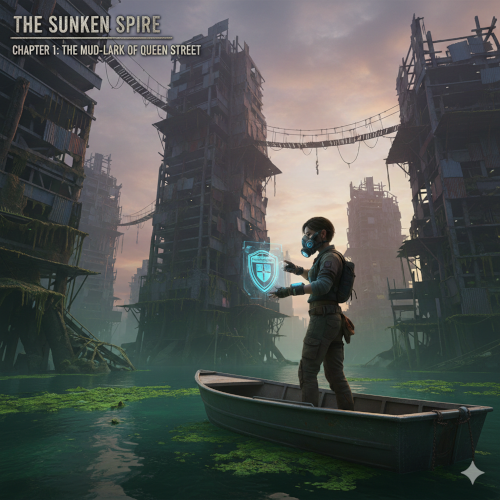
The humidity in Neo-Brisbane was different from the historical records Jax had read. The old texts described a “subtropical languor,” a lazy heat. This was different; this was an aggressive, suffocating blanket of moisture that clung to the skin like oil.
Jax killed the electric engine of their skiff, letting the momentum carry the flat-bottomed boat silently between the concrete canyons of what used to be Eagle Street. The water here was brackish, a murky soup of the tidal Coral Sea invading the old river system, choked with mats of bio-luminescent algae that glowed a faint, sickly green in the twilight.
Above them, the skeletal remains of skyscrapers pierced the waterline. The lower twenty stories of the old financial district were tombs of silt and barnacles, but the upper levels jutted out like broken teeth, connected by jury-rigged rope bridges and walkways scavenged from aluminum siding. This was the “Low-Town,” a Venice of the desperate, clinging to the husk of the Old City.
Jax was a ‘mud-lark’—a licensed salvager allowed to dive into the restricted zones of the submerged CBD to retrieve artifacts for the wealthy patrons living behind the massive sea walls of the “Ridge” (the fortified high ground of former Paddington and Red Hill). It was dangerous work; the currents swirling around the sunken Story Bridge pylon could drag a diver down into the unstable catacombs of the old Fortitude Valley tunnel system.
Jax adjusted their rebreather mask, preparing to dive for a cache of pre-Flood electronics rumored to be sealed in an old bank vault near Queen Street. Suddenly, their wrist-comm buzzed with a priority frequency shift. A holographic projection flickered to life above their console—the seal of the Municipal Authority.
“Salvager Unit 734,” the synthesized voice said. “Abort current trajectory. You have a new client. Level 5 Clearance required. Proceed immediately to the floating docks at New Farm.”
Jax frowned. Level 5 meant deep water. It meant government secrets. And it usually meant a one-way trip for a mud-lark looking for a quick payout.
Comprehension Questions: Chapter 1
- Sensory Imagery: How does the author use sensory details (humidity, water color, algae) to establish the dystopian atmosphere of Neo-Brisbane?
- World-Building via Inference: Based on the description of the “Low-Town” and the “Ridge,” explain the socio-economic structure of this future society. How does geography dictate social status?
- Vocabulary in Context: What does the term “skeletal remains” suggest about the current state of the old skyscrapers and the city’s past?
- Character Role: Describe Jax’s profession as a “mud-lark.” What are the inherent risks and rewards of this job in this specific setting?
- Narrative Hook: How does the sudden call from the Municipal Authority change the trajectory of the narrative and introduce tension at the end of the chapter?
Story 2: The Sunken Spire
Chapter 2: The Archive of the Abyss
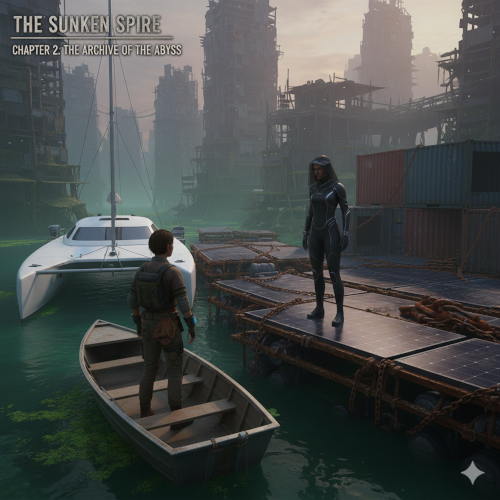
New Farm was no longer the leafy, boutique suburb of the 21st century. It was a sprawling network of decommissioned shipping containers and solar-glass rafts, lashed together with rusted chains and thick cables. This was the ‘Neutral Zone,’ the primary interface between the elite of the Ridge and the salvagers of the Low-Town.
Jax pulled their skiff alongside a sleek, white catamaran that looked like a shard of bone against the muddy river. Waiting on the dock was a woman whose attire screamed Ridge: a climate-controlled charcoal suit and a UV-filtering veil.
“Jax Unit 734,” she said, her voice filtered through a crisp, metallic translator. “I am Dr. Aris Thorne, Senior Archivist for the Municipal Authority. We don’t have much time before the tide turns and the ‘Silt-Wall’ becomes impassable.”
“You called for a mud-lark for a Level 5,” Jax said, staying in the skiff. “Usually, that means you want something the EPA doesn’t want found. Or something the Ridge wants to pretend never existed.”
Thorne didn’t flinch. “I want the Truth. Specifically, the ‘Seed-Core’ from the basement of the old State Library of Queensland.”
Jax let out a low whistle. The State Library sat in the heart of the Cultural Precinct at South Bank, now one of the deepest and most unstable parts of the submerged city. The building had partially collapsed fifty years ago, creating a labyrinth of jagged rebar and suffocating silt.
“The Seed-Core is a myth,” Jax argued. “A hard-drive containing the pre-warming weather models and corporate emails from the 2030s? The Company erased those decades ago to cover their tracks.”
“They tried,” Thorne whispered, leaning closer. “But our intelligence suggests the core was encased in a lead-lined vault that has remained airtight. If we can retrieve those models, we can prove the current sea-level rises weren’t ‘natural cycles’ as the Ridge council claims. We can hold them accountable for the lack of infrastructure in the Low-Town.”
Jax looked at the murky water. This wasn’t just a salvage job; it was political arson. If Jax brought that drive to the surface, the delicate peace between the drowning poor and the dry elite would evaporate.
Comprehension Questions: Chapter 2
- Diction and Connotation: Explore the author’s choice of the word “bone” to describe the white catamaran. What does this suggest about the aesthetics and presence of the Ridge elite?
- Thematic Conflict: Discuss the tension between “The Truth” and “The Myth.” Why is the Seed-Core considered such a dangerous object in this society?
- Metaphorical Analysis: Jax describes the mission as “political arson.” Explain the effectiveness of this metaphor in describing the potential consequences of the task.
- Setting as Character: How does the description of the old State Library—now a “labyrinth of jagged rebar”—serve to illustrate the decay of 21st-century civilization?
- Ethical Reasoning: Evaluate Jax’s hesitation. Is their concern born out of self-preservation, or a broader understanding of social stability? Use evidence from the text to support your answer.
Story 2: The Sunken Spire
Chapter 3: The Silent Stacks
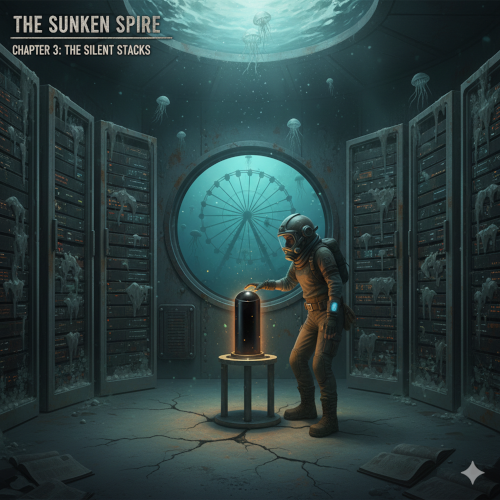
The South Bank Cultural Precinct was a ghost of its former self. As Jax’s skiff drifted over the submerged parklands, the great ‘Wheel of Brisbane’ loomed beneath the surface like a gargantuan, moss-covered halo, its gondolas now home to schools of silver-perch and stinging jellyfish.
“I’m going down,” Jax said, checking the seals on their pressurized diving suit. “Keep the skiff’s locator beacon on. If the silt shifts, I’ll need a thermal signature to find my way back to the surface.”
Dr. Thorne nodded, her expression unreadable behind her UV veil. “The vault is in the lower basement, Level 3. It was designed to be flood-proof, but the structural integrity of the surrounding building is… speculative.”
Jax rolled backward into the water. The transition was a shock of cold and silence. Below the surface, the sounds of Neo-Brisbane—the humming fans, the lapping waves, the distant shouting—vanished. There was only the rhythmic, mechanical rasp of the rebreather.
Navigating the State Library was like swimming through a nightmare made of concrete and paper. Thousands of books, once the pride of the city, had dissolved into a thick, gelatinous grey pulp that coated every surface. As Jax swam through the atrium, the remains of a grand staircase spiraled upward into the darkness, its marble steps slick with algae.
They reached the basement hatch. It was heavy, reinforced steel, untouched by the rot. Using a high-frequency acoustic drill provided by Thorne, Jax worked on the locking mechanism. The vibration echoed through the water, a dull thrumming that felt like a heartbeat.
When the hatch finally groaned open, a burst of trapped air—dry, stale, and centuries old—erupted into the water. Jax stepped inside the airlock and drained the chamber. For the first time in their life, Jax was standing in a dry room beneath the sea.
The vault was small, lined with server racks that looked like ossified ribs. In the center sat the Seed-Core: a black, obsidian-like cylinder pulsing with a faint, vestigial amber light. It was beautiful, and to the Ridge, it was the most seditious object on the planet.
As Jax reached for it, the floor beneath them shuddered. A groan of protesting metal vibrated through the soles of their boots. The library was settling further into the riverbed.
Comprehension Questions: Chapter 3
- Visual Imagery: Analyze the author’s description of the ‘Wheel of Brisbane.’ How does this image evoke a sense of “loss” or “re-purposing” by nature?
- Vocabulary and Tone: Define the word “ossified” as used in the text. How does this word choice contribute to the “skeletal” or “deathly” mood of the submerged library?
- Symbolism: In this chapter, Jax experiences a “dry room” for the first time. What might “dryness” symbolize in a world defined by rising sea levels?
- Literary Techniques: How does the author use the “mechanical rasp of the rebreather” to emphasize Jax’s isolation during the dive?
- Critical Literacy: Dr. Thorne describes the building’s integrity as “speculative.” What does this reveal about her character? Is she prioritizing the mission over Jax’s safety?
Story 2: The Sunken Spire
Chapter 4: The Silt Curtain
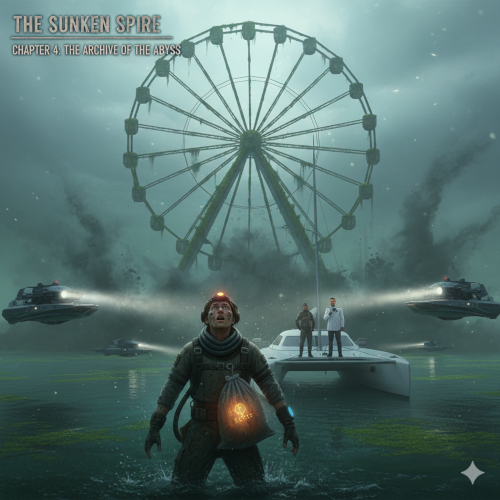
The “dry” sanctuary didn’t last long. With a sound like a gunshot, a hairline fracture appeared in the vault’s reinforced ceiling. A jet of seawater, pressurized by the weight of the river above, sliced through the air with the precision of a laser. It struck a server rack, sending a shower of ancient sparks flying before the room began to fill with a violent, swirling spray.
Jax shoved the Seed-Core into a lead-lined buoyancy bag and clipped it to their harness. The library wasn’t just settling; it was groaning, a deep, metal-on-metal scream that vibrated in Jax’s teeth. “Thorne! Do you copy? The foundations are blowing out!”
Static was the only reply. The water level in the vault was already at Jax’s waist. They scrambled back into the airlock, but as they sealed the inner hatch, a massive section of the atrium above collapsed. A ‘silt curtain’—a blinding wall of displaced river mud—erupted through the library, turning the already dim water into a thick, impenetrable blackness.
Jax switched their helmet lamps to infrared. The world became a grainy, ghostly red. They swam out of the basement hatch, but the familiar path was gone, replaced by a chaotic jumble of fallen support beams and floating, sodden furniture. Every movement was a gamble; one wrong turn could lead into a dead-end pocket of the ruins where the oxygen would run out long before the silt settled.
Their rebreather whistled—a low-oxygen warning. Jax ignored the spike of panic, focusing instead on the faint, rhythmic pulse of the locator beacon on their wrist-comm. It was weak, flickering like a dying star.
They kicked hard, ascending through the jagged skeleton of the ‘Wheel of Brisbane.’ As they broke the surface, gasping for the humid Neo-Brisbane air, they expected to see Thorne’s hand reaching out to pull them aboard.
Instead, they found themselves staring into the high-intensity floodlights of three Municipal Authority interceptors. Dr. Thorne was standing on the deck of her catamaran, but her UV veil was gone, revealing a face of cold, bureaucratic iron. Beside her stood a man in the crisp white uniform of the Ridge High Council.
“The Core, Jax,” Thorne said, her voice amplified by a megaphone. “Hand it over, and we might let you swim back to the Low-Town.”
Comprehension Questions: Chapter 4
- Literary Techniques: The author describes the water jet as having “the precision of a laser.” How does this simile enhance the reader’s understanding of the physical danger Jax is in?
- Vocabulary and Atmosphere: Define the term “silt curtain.” How does this environmental phenomenon function as a plot device to increase the story’s tension?
- Character Analysis: Compare Jax’s “spike of panic” with Thorne’s “cold, bureaucratic iron” face. What do these contrasting reactions tell us about the stakes for each character?
- Thematic Synthesis: In the context of speculative fiction, why is it significant that the “dry sanctuary” of the past is destroyed by the “pressurized weight” of the modern world?
- Critical Literacy: Evaluate the change in Dr. Thorne’s behavior. Was her plea for “The Truth” in Chapter 2 a genuine motivation, or a manipulation to get Jax to take the risk for her?
Here is the final chapter of The Sunken Spire.
Story 2: The Sunken Spire
Chapter 5: The Rising Tide
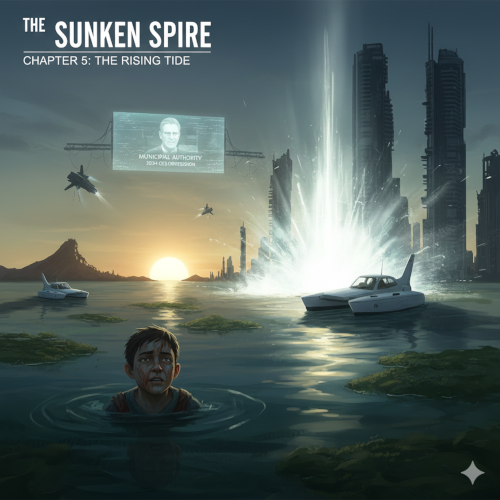
Jax bobbed in the water, the weight of the Seed-Core pulling at their shoulders like the anchor of a dead civilization. The interceptors’ floodlights turned the swirling silt into a blinding white fog.
“You didn’t want the truth for the Low-Town, Thorne,” Jax shouted, their voice cracking. “You wanted a bargaining chip. If the Ridge Council has the Core, they can rewrite the history of the Flood before anyone else sees the data. They can claim it was an act of God instead of an act of greed.”
The man in the white uniform stepped forward. “History is written by those who stay dry, Jax. Now, the bag. Don’t make us use the harpoon tether.”
Jax looked down. Through the murky water, they saw the faint amber pulse of the Seed-Core. It wasn’t just data; it was a heartbeat. If they handed it over, the people of the Low-Town would continue to be blamed for their own displacement, told that the rising tides were a natural cycle they simply had to endure.
“If you want it,” Jax said, their voice suddenly calm, “you’ll have to dive for it.”
Jax didn’t hand the bag to the guards. Instead, they reached for their utility belt and pulled out a localized EMP flare—a tool used to clear electronic interference in the deep trenches. With a sharp twist, they activated it and shoved it into the buoyancy bag with the Seed-Core.
The bag hissed, but instead of floating, Jax manually vented the air cells. As the interceptors lunged forward, Jax dove. Not toward the boats, but down into the tangle of the submerged ‘Wheel of Brisbane.’
The EMP flare detonated. It wasn’t a physical explosion, but a silent ripple of electromagnetic force. Above them, the interceptors’ lights flickered and died. The catamaran’s engines sputtered into silence. But more importantly, the Seed-Core’s amber light turned a brilliant, blinding white.
Kael had told Jax once that the Core was designed to broadcast its emergency cache if it detected a total system failure. By triggering the EMP, Jax hadn’t destroyed the data—they had forced it to ‘scream.’
Every wrist-comm in the Low-Town, every holographic billboard on the Ridge, and every screen in Neo-Brisbane suddenly flickered. A grainy video from 2034 began to play: a CEO admitting that the sea walls were only designed for the wealthy districts. The truth was out. It was in the air, in the clouds, and in the minds of everyone in the city.
Jax kicked away from the sinking bag, surfacing far from the dead boats. The sun was beginning to rise over the Stradbroke Island ruins, casting a long, golden light over a city that would never be the same.
Comprehension Questions: Chapter 5
- Critical Literacy: How does the man in the white uniform’s statement, “History is written by those who stay dry,” reflect the central theme of class struggle in the story?
- Character Motivation: Why does Jax choose to “force the Core to scream” rather than keeping it or handing it over? What does this reveal about their growth as a character?
- Literary Techniques: Analyze the symbolism of the “sunrise” at the end of the chapter. How does this contrast with the “artificial floodlights” used by the Municipal Authority?
- Inference: The story ends with the truth being “in the air.” What does this suggest about the power of information in a dystopian society?
- Synthesis: Reflecting on the whole story, how does the author use the physical setting of a submerged Brisbane to critique modern attitudes toward climate change?
これは素晴らしいテーマです。スペキュレイティブ・フィクションは、未来というレンズを通して現代の不安を探求することを可能にします。12年生にとって、このジャンルは世界観の構築、寓話、そして社会批評を分析するのに最適です。
劇的に変化したブリスベンを舞台にした、私たちの第二作目の第一章をご紹介します。
—
## ストーリー2:沈んだ尖塔
**テーマ:** *環境への影響、階級格差、そして歴史保存の倫理*
### 第1章:クイーン・ストリートの泥ヒバリ
ネオ・ブリスベンの湿度は、ジャックスが読んだ歴史記録とは異なっていました。古文書には「亜熱帯の倦怠感」、つまりのろのろとした暑さが記されていました。しかし、これは違いました。まるで油のように肌にまとわりつく、攻撃的で息苦しい湿気の毛布のようでした。
ジャックスはスキフの電動エンジンを切り、平底ボートの勢いに任せて、かつてイーグル・ストリートだったコンクリートの峡谷の間を静かに進んだ。ここの水は汽水で、かつての河川系に侵入した珊瑚海の潮汐が混じった濁ったスープのようだった。黄昏の中で、発光藻類がかすかに病的な緑色に光り輝いていた。
その上には、高層ビルの残骸が水面を突き破っていた。旧金融街の地下20階は泥とフジツボの墓場と化していたが、上層階は折れた歯のように突き出ており、間に合わせのロープ橋とアルミサイディングから削り出した歩道で繋がれていた。ここは「ロータウン」、旧市街の殻にしがみつく絶望的な人々のヴェネツィアだった。
ジャックスは「泥のヒバリ」――水没したCBDの立ち入り禁止区域に潜り、「リッジ」(かつてパディントンとレッドヒルがあった要塞化された高台)の巨大な防波堤の背後に住む裕福なパトロンのために遺物を回収することを許可された、認可されたサルベージャーだった。それは危険な仕事だった。沈没したストーリー・ブリッジの鉄塔の周りを渦巻く潮流は、ダイバーを旧フォーティテュード・バレー・トンネル・システムの不安定な地下墓地へと引きずり込む可能性があった。
ジャックスはリブリーザーマスクを調整し、クイーン・ストリート近くの古い銀行金庫室に封印されていると噂されている洪水以前の電子機器の山を求めて潜る準備をした。突然、リストバンドの通信機が優先周波数を切り替えてブザー音を鳴らした。コンソールの上にホログラム映像が点滅し、市当局の紋章が刻まれていた。
「サルベージャー・ユニット734」と合成音声が告げた。 「現在の軌道を中止せよ。新しい依頼人が来た。レベル5の許可が必要だ。ニューファームの浮き桟橋へ直ちに進入せよ。」
ジャックスは眉をひそめた。レベル5は深海を意味し、政府の機密事項を意味し、そして大抵は手っ取り早い金儲けを狙う泥棒にとっては片道の旅を意味する。
—
### 読解問題:第1章
1. **感覚的イメージ:** 作者は、感覚的な詳細(湿度、水の色、藻類)をどのように用いて、ネオブリスベンのディストピア的な雰囲気を作り出しているだろうか?
2. **推論による世界構築:** 「ロータウン」と「リッジ」の描写に基づいて、この未来社会の社会経済構造を説明しなさい。地理は社会的な地位をどのように規定しているだろうか?
3. **文脈における語彙:** 「骸骨」という言葉は、古い高層ビル群の現状と街の過去について何を示唆していますか?
4. **登場人物の役割:** ジャックスの職業を「泥まみれの」と表現してください。この特定の設定において、この仕事に固有のリスクとメリットは何ですか?
5. **物語のフック:** 市当局からの突然の電話は、物語の展開をどのように変え、章の終わりに緊張感をもたらしますか?
—
## ストーリー2:沈んだ尖塔
**第2章:深淵のアーカイブ**
ニューファームは、もはや21世紀の緑豊かなブティック住宅街とは程遠い場所だった。そこは、錆びた鎖と太いケーブルで繋ぎ合わされた、廃棄された輸送コンテナとソーラーガラスのいかだの広大なネットワークだった。ここは「中立地帯」、リッジのエリート層とロータウンのサルベージ業者たちを繋ぐ主要な接点だった。
ジャックスは、泥だらけの川に浮かぶ骨片のように見える、洗練された白い双胴船の横に、スキフを寄せた。埠頭で待機していたのは、リッジであることを如実に物語る女性がいた。空調付きのチャコールグレーのスーツと紫外線カットのベールだ。
「ジャックス・ユニット734です」と彼女は言った。その声は、くっきりとした金属的な通訳を通して聞こえた。 「私はアリス・ソーン博士、市当局の上級アーキビストの一人です。潮が引いて『シルトウォール』が通行不能になるまで、もう時間がありません。」
「レベル5の泥まみれの捜索を頼んだな」とジャックスは小舟に乗ったまま言った。「普通、それはEPAが発見して欲しくないもの、あるいはリッジが存在を否定したいものを求めているってことだ。」
ソーンはひるまなかった。「真実を知りたい? 具体的には、旧クイーンズランド州立図書館の地下室にある『シードコア』です。」
ジャックスは低い口笛を吹いた。州立図書館はサウスバンクの文化地区の中心に位置していた。そこは今、水没した街の中でも最も深く、最も不安定な地域の一つだ。建物は50年前に部分的に崩壊し、ギザギザの鉄筋と息苦しいシルトの迷路を作り出していた。
「シード・コアなんて作り話だ」ジャックスは反論した。「温暖化前の気象モデルと2030年代の社内メールが入ったハードドライブだって? 会社は痕跡を隠すために何十年も前にそれを消去したんだぞ」
「彼らは試みました。」ソーンは身を乗り出し、囁いた。「だが、我々の情報筋によると、コアは鉛で覆われた金庫に収められ、気密状態を保っていたようだ。もしあのモデルを回収できれば、現在の海面上昇がリッジ評議会が主張するような『自然サイクル』ではなかったことを証明できる。ロータウンのインフラ整備不足の責任を彼らに負わせることができる」
ジャックスは濁った水を見上げた。これは単なるサルベージではなく、政治的な放火だ。もしジャックスがそのドライブを水面に浮かび上がらせれば、溺れる貧困層と禁欲的なエリート層の間の繊細な平和は消え去ってしまうだろう。
—
### 読解問題:第2章
1. **語彙と含意:** 作者が白い双胴船を表すために「骨」という言葉を選んだ理由を探りなさい。これはリッジのエリート層の美意識と存在について何を示唆しているでしょうか。
2. **テーマ的対立:** 「真実」と「神話」の間の緊張関係について論じなさい。なぜシード・コアはこの社会においてそれほど危険な物体とみなされているのでしょうか。
3. **比喩的分析:** ジャックスはこの任務を「政治的放火」と表現しています。この比喩が任務の潜在的な結果を描写する上でどのように効果的であるかを説明しなさい。
4. **登場人物としての設定:** 今では「ギザギザの鉄筋の迷路」となっている旧州立図書館の描写は、21世紀文明の衰退をどのように描写しているでしょうか。
5. **倫理的推論:** ジャックスの躊躇を評価しなさい。彼らの懸念は自己保存から生まれたものでしょうか、それとも社会の安定に対するより広い理解から生まれたものでしょうか?本文中の証拠を用いて、あなたの答えを裏付けてください。
—
## ストーリー2:沈んだ尖塔
**第3章:静まり返った積み重ね**
サウスバンク文化地区はかつての面影を失っていた。ジャックスのスキフが水没した公園の上を漂う中、巨大な「ブリスベンの輪」が水面下に巨大な苔むした後光のように浮かび上がり、ゴンドラにはシルバーパーチの群れや毒針を持つクラゲが棲みついていた。
「潜るぞ」ジャックスは与圧潜水服のシールを確認しながら言った。「スキフの位置情報ビーコンはオンにしたままにしておいてくれ。もし泥が動いたら、水面に戻るには熱信号が必要だ。」
ソーン博士は頷いたが、紫外線ベールの向こうで表情は読み取れなかった。 「金庫は地下3階にあります。浸水対策として設計されていますが、周囲の建物の構造的な健全性は…疑わしいものです。」
ジャックスは後ろ向きに転がり、水の中に飛び込んだ。その変化は、冷気と静寂の衝撃だった。水面下では、ネオブリスベンの音――扇風機のブンブンという音、打ち寄せる波の音、遠くの叫び声――は消え失せた。リブリーザーのリズミカルで機械的なガラガラという音だけが響いていた。
州立図書館の中を進むのは、コンクリートと紙でできた悪夢の中を泳ぐようなものだった。かつて街の誇りだった何千冊もの書物は、あらゆる表面を覆う、ゼラチン状の灰色のパルプへと溶け落ちていた。ジャックスがアトリウムを泳いでいると、壮大な階段の残骸が暗闇の中へと螺旋状に伸びており、大理石の階段は藻でぬめっていた。
彼らは地下室のハッチにたどり着いた。それは重厚な鉄筋で、腐食の影響を受けていなかった。ソーンから支給された高周波音響ドリルを使い、ジャックスは施錠機構の修理に取り掛かった。振動が水中に響き渡り、心臓の鼓動のような鈍い音を立てた。
ハッチがついに軋む音を立てて開くと、閉じ込められていた空気――乾燥して淀んだ、何世紀も前の空気――が一気に水中に噴き出した。ジャックスはエアロック内に足を踏み入れ、空気を抜いた。生まれて初めて、ジャックスは海底の乾いた部屋に立ったのだ。
金庫室は小さく、骨化した肋骨のようなサーバーラックが並んでいた。中央にはシード・コアが鎮座していた。黒曜石のような黒い円筒形で、かすかな琥珀色の光を放っていた。それは美しく、リッジにとって、この惑星で最も反逆的な物体だった。
ジャックスがそれに手を伸ばすと、足元の床が震えた。金属が抵抗する軋む音がブーツの底から響いた。図書館は川底へと沈みつつあった。
—
### 読解問題:第3章
1. **視覚的イメージ:** 作者による「ブリスベンの車輪」の描写を分析しなさい。このイメージは、自然による「喪失」や「再利用」の感覚をどのように喚起しているだろうか。
2. **語彙と語調:** 本文中で使われている「骨化した」という言葉を定義しなさい。この言葉の選択は、水没した図書館の「骨ばった」あるいは「死にそうな」雰囲気にどのように貢献しているだろうか。
3. **象徴性:** この章で、ジャックスは初めて「乾いた部屋」を体験する。海面上昇によって定義される世界において、「乾燥」は何を象徴しているだろうか。
4. **文学技法:** 作者は、潜水中のジャックスの孤独を強調するために、「リブリーザーの機械的な音」をどのように用いているだろうか。
5. **批判的リテラシー:** ソーン博士は建物の健全性を「推測の域を出ない」と表現しています。これは彼女の性格について何を明らかにしているのでしょうか?彼女はジャックスの安全よりも任務を優先しているのでしょうか?
—
## ストーリー2:沈んだ尖塔
**第4章:沈泥のカーテン**
「乾いた」聖域は長くは続かなかった。銃声のような音とともに、金庫室の補強された天井に細い亀裂が生じた。上を流れる川の重みで加圧された海水の噴流が、レーザー光線のような精密さで空気を切り裂いた。水はサーバーラックに当たり、古代の火花を散らし、部屋は激しく渦巻く水しぶきで満たされ始めた。
ジャックスはシードコアを鉛で裏打ちされた浮力袋に押し込み、ハーネスにクリップで留めた。図書館はただ沈下しただけではない。金属同士がぶつかり合うような深い悲鳴が、ジャックスの歯に響き渡った。「ソーン!聞こえるか?基礎が吹き飛ぶぞ!」
返ってきたのは静電気だけだった。金庫室の水位はすでにジャックスの腰まで達していた。彼らはエアロックに戻ろうとしたが、内側のハッチを閉めた途端、上部のアトリウムの大部分が崩落した。「シルトのカーテン」――移動した川泥でできた目もくらむような壁――が図書館を突き破り、ただでさえ薄暗かった水面を、さらに濃く、見通せない黒へと変えた。
ジャックスはヘルメットのランプを赤外線に切り替えた。世界はざらついた、幽霊のような赤色に染まった。彼らは地下室のハッチから泳ぎ出したが、見慣れた道は消え、倒れた支柱と水浸しの家具が漂う、無秩序な雑然とした光景が広がっていた。あらゆる動きが賭けだった。一歩間違えれば、遺跡の行き止まりに迷い込み、シルトが沈殿するずっと前に酸素が尽きてしまうかもしれない。
リブリーザーが笛を鳴らした――酸素不足の警告だ。ジャックスはパニックの高まりを無視し、手首の通信機に搭載されたロケータービーコンの微かでリズミカルな脈動に集中した。それは弱々しく、死にゆく星のように明滅していた。
彼らは激しく足を蹴り上げ、ギザギザの「ブリスベンの車輪」の骨組みをすり抜けて上昇していった。水面を割って、湿ったネオブリスベンの空気を切望しながら、ソーン博士の手が伸びてきて船内へ引き上げてくれるのを期待した。
ところが、彼らは3台の市当局迎撃機の高輝度投光照明を見つめているだけだった。ソーン博士は双胴船のデッキに立っていたが、紫外線ベールは消え、冷たく官僚的な鉄の顔が露わになっていた。彼女の隣には、リッジ高等評議会のパリッとした白い制服を着た男が立っていた。
「コアだ、ジャックス」ソーンはメガホンで声を増幅しながら言った。「渡せば、ロータウンまで泳いで帰らせてもらえるかもしれない」
—
### 読解問題:第4章
1. **文学技法:** 作者は水流を「レーザーの精度」と表現しています。この比喩表現は、ジャックスが直面している物理的な危険に対する読者の理解をどのように深めているでしょうか?
2. **語彙と雰囲気:** 「シルトカーテン」という用語を定義してください。この環境現象は、物語の緊張感を高めるプロット装置としてどのように機能しているでしょうか?
3. **登場人物分析:** ジャックスの「パニックの突発」とソーンの「冷たく官僚的な鉄の顔」を比較してください。これらの対照的な反応は、それぞれの登場人物の置かれた状況について何を示唆しているでしょうか?
4. **テーマの統合:** スペキュレイティブ・フィクションの文脈において、過去の「乾いた聖域」が現代世界の「重圧」によって破壊されることは、なぜ重要なのでしょうか?
5. **批判的リテラシー:** ソーン博士の行動の変化を評価してください。第2章で彼女が「真実」を求めたことは、純粋な動機だったのでしょうか、それともジャックスに危険を冒させるための策略だったのでしょうか?
—
**沈んだ尖塔** の最終章です。
—
## ストーリー2:沈んだ尖塔
**第5章:満ち潮**
ジャックスは水に浮かんでいた。シード・コアの重みが、死にゆく文明の錨のように肩を引っ張っていた。迎撃機の投光器が、渦巻く泥を眩しい白い霧に変えた。
「ソーン、お前はロータウンの真実など欲していなかった」ジャックスは声を震わせながら叫んだ。「お前は交渉材料が欲しかったんだ。リッジ評議会がコアを手に入れれば、他の誰もデータを見る前に洪水の歴史を書き換えることができる。貪欲な行為ではなく、神の行為だったと主張できる。」
白い制服を着た男が前に出た。「歴史は濡れずにいられる者によって書かれる、ジャックス。さあ、袋だ。銛の鎖を使わせるな。」
ジャックスは下を見た。濁った水を通して、シードコアのかすかな琥珀色の脈動が見えた。それは単なるデータではなく、鼓動だった。もしこれを渡せば、ロータウンの人々は、自分たちが追放されたのは自分たちのせいだと責められ続け、満潮はただ耐えなければならない自然のサイクルだと教え込まれることになるだろう。
「欲しければ」ジャックスは急に落ち着いた声で言った。「潜って取りに来なさい」
ジャックスはバッグを警備員に渡さなかった。警備員たちはユーティリティベルトに手を伸ばし、局所EMPフレアを取り出した。深い溝の電波干渉を除去するのに使われる道具だ。彼らはそれを鋭くひねり、起動させ、シードコアと共に浮力袋に押し込んだ。
バッグはシューという音を立てたが、浮かぶどころか、ジャックスは手動でエアセルを排気した。迎撃機が突進してくると、ジャックスは潜水した。ボートの方へではなく、水没した「ブリスベンの車輪」の渦の中へと。
EMPフレアが爆発した。物理的な爆発ではなく、電磁力の静かな波紋だった。頭上では、迎撃機のライトが点滅し、消えた。双胴船のエンジンはガタガタと音を立てて静まり返った。しかし、もっと重要なのは、シード・コアの琥珀色の光が、眩しいほどの白に変わったことだ。
ケイルはかつてジャックスに、コアはシステム全体の故障を検知すると緊急キャッシュを送信するように設計されていると話していた。EMPを発動させたことで、ジャックスはデータを破壊したのではなく、データを「叫ばせる」ように仕向けたのだ。
ロータウンのすべてのリスト型通信機、リッジのすべてのホログラム看板、そしてネオ・ブリスベンのすべてのスクリーンが突然点滅した。 2034年の粗い映像が流れ始めた。CEOが防波堤は富裕層地区のためだけに設計されたと認める場面だ。真実は明らかになった。空気の中に、雲の中に、そして街のあらゆる人々の心の中に。
ジャックスは沈みゆくバッグを蹴り飛ばし、沈没船から遠く離れた場所で浮上した。ストラドブローク島の遺跡の上に太陽が昇り始め、二度と元には戻らない街に長く黄金色の光を投げかけていた。
—
### 読解問題:第5章
1. **批判的リテラシー:** 白い制服を着た男の「歴史は濡れずにいる者によって書かれる」という言葉は、物語の中心テーマである階級闘争をどのように反映しているだろうか?
2. **登場人物の動機:** ジャックスはなぜコアを保管したり手渡したりするのではなく、「コアに叫ばせる」ことを選んだのだろうか?これは、彼らのキャラクターとしての成長について何を明らかにしているだろうか?
3. **文学技法:** 章末の「日の出」の象徴性を分析してください。これは、市当局が使用する「人工の投光照明」とどのように対照的でしょうか?
4. **推論:** 物語は真実が「空気中にある」というところで終わります。これは、ディストピア社会における情報の力について何を示唆しているでしょうか?
5. **統合:** 物語全体を振り返って、著者は水没したブリスベンという物理的な設定をどのように用いて、気候変動に対する現代の態度を批判しているでしょうか?