It’s a pleasure to help you with this. For Year 12 students in Queensland following the QCAA curriculum, the reading level generally focuses on critical literacy, nuanced themes, and sophisticated vocabulary. These stories will explore contemporary Australian issues, speculative futures, and complex human experiences to mirror the texts often encountered in English or Essential English.
Here is the first chapter of our first story.
Story 1: The Red Dust
Theme: Environmental fragility and corporate control in rural Queensland.
Chapter 1: The Hollow Bore
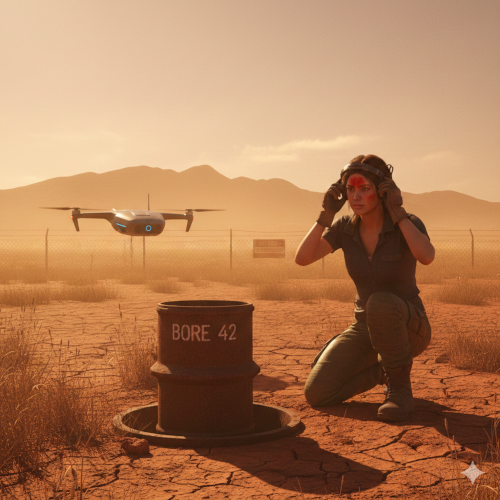
The heat in Winton didn’t just sit on you; it pressed. It was a physical weight, a heavy, dusty blanket that smelled of baked iron and ancient, evaporated salt. Elara knelt by the mouth of Bore 42, her hands gloved against the searing metal of the casing. Around her, the landscape was a monochrome of ochre and rust, the Mitchell grass having long since surrendered to the unrelenting drought.
She adjusted her headset, the static of the ‘Aquifer Central’ feed crackling in her ear. “AC, this is Elara. I’m at forty-two. Pressure is nominal, but the flow rate is… well, it’s abysmal. We’re pulling up more silt than liquid.”
There was a pause, then the voice of Miller, the shift supervisor, drifted through the heat haze of the signal. “Understood, Elara. Keep it running. The coastal hubs are hitting peak demand. We can’t afford to let the pressure drop, even if it means scouring the pipes.”
Elara looked out across the shimmering horizon. In the distance, the silhouette of the Great Dividing Range was barely visible through the suspended dust. She knew the ethics of the situation were as dry as the soil. Every drop she pumped toward the lush, gated communities of the Gold Coast was a drop stolen from the local ecosystems that had sustained this land for millennia.
She stood up, wiping a streak of red grime across her forehead. As she turned to pack her toolkit, a flash of something metallic caught her eye—a drone, sleek and unmarked, hovering silently near the restricted boundary of the ‘Dry-Zone.’ It wasn’t a Company drone.
Comprehension Questions: Chapter 1
- Vocabulary in Context: What does the author imply by describing the heat as a “physical weight”? How does this establish the atmosphere of the setting?
- Character Motivation: Why is Elara hesitant about the instructions she receives from Miller at Aquifer Central?
- Inference: Based on the text, what is the primary conflict between the rural “Dry-Zones” and the “coastal hubs”?
- Literary Devices: Identify an example of personification in the first paragraph and explain its effect on the reader’s perception of the environment.
- Prediction: What might the presence of an “unmarked drone” signify for the plot moving forward?
Story 1: The Red Dust
Chapter 2: The Ghost in the Machine
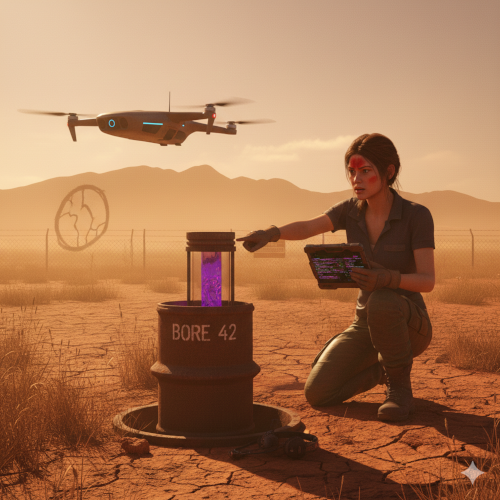
The drone didn’t zip away as Elara expected. Instead, it hovered with a predatory stillness, its lens fixated on the bore casing. In the silence of the scrub, she could hear the faint, rhythmic hum of its rotors—a sound that felt invasive, a digital insect in a dying garden.
Elara reached for her tablet to run a local frequency sweep, but the screen flickered and died. A localized jammer. This wasn’t just a hobbyist taking photos of the desert; this was high-level interference. Whoever was operating that drone didn’t want the data from Bore 42 leaving the site through official channels.
“Miller, do you copy?” she whispered into her headset, though she knew the answer. Static was her only companion.
Taking a breath that tasted of salt and dust, Elara moved toward the bore’s main intake valve. The silt she’d mentioned earlier wasn’t just settling; it was darkening. As the pump groaned, straining against the friction, the liquid spilling into the glass observation chamber turned from a murky tan to a bruised, oily purple.
She felt a chill that had nothing to do with the desert heat. This wasn’t natural sediment from a depleting aquifer. This looked like chemical leaching—the kind associated with the ‘Deep-Tier’ fracking projects the government had promised were confined to the northern basins. If the chemicals were here, in Winton’s primary water source, the entire system was compromised.
Suddenly, the drone dipped low, nearly clipping the top of her utility vehicle before banking sharply toward the ‘Dry-Zone’ boundary. On its underside, visible for only a second, was a decal she recognized: not a corporate logo, but a hand-painted symbol of a cracked earth. The ‘Gully-Rakers’—the underground activist collective.
Comprehension Questions: Chapter 2
- Symbolism: Re-read the description of the drone as a “digital insect in a dying garden.” What does this metaphor suggest about the relationship between technology and the environment in this narrative?
- Structural Analysis: How does the author use the failure of Elara’s tablet and headset to build tension within the scene?
- Critical Literacy: The “bruised, oily purple” liquid serves as a visual catalyst for the plot. What does Elara’s immediate suspicion of ‘Deep-Tier’ fracking suggest about the political climate of this fictional world?
- Tone and Mood: How does the mood shift from the beginning of the chapter to the end? Cite specific word choices that contribute to this change.
- Characterization: What do Elara’s actions—staying to investigate rather than fleeing a jammed zone—reveal about her professional ethics or personal curiosity?
Story 1: The Red Dust
Chapter 3: The Weighted Silence
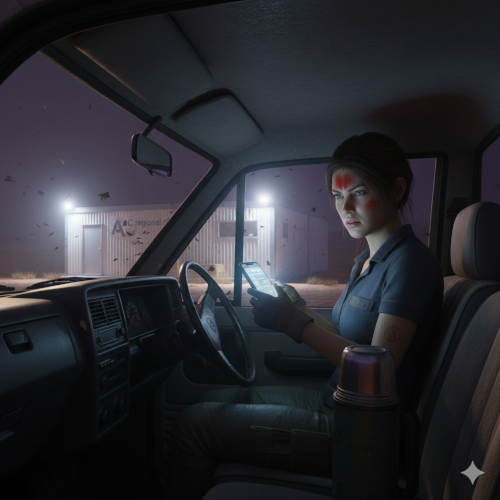
By the time Elara reached the main compound in Winton, the sky had bruised into a deep violet, mimicking the poisoned water she had hidden in a thermos under her seat. The jammer’s effect had vanished as soon as she left the perimeter of Bore 42, but she hadn’t called Miller back. A heavy, instinctual caution had taken root in her chest.
The AC regional office was a modular, sterile box of white corrugated iron, glaring under floodlights that attracted clouds of frantic moths. Inside, Miller was hunched over a bank of monitors, the blue light reflecting off his glasses. He didn’t look up as she entered.
“You took your time getting back, Elara. We lost your telemetry for forty minutes,” he said, his voice flat.
“The signal dropped near the Dry-Zone boundary. Atmospheric interference, maybe,” Elara lied. The ease of the falsehood surprised her. “But Miller, the flow at forty-two… it wasn’t just silt. There’s a discoloration. I think there’s a breach from the Deep-Tier sites.”
Miller finally turned. His expression wasn’t one of concern, but of a weary, practiced indifference. “The Deep-Tier projects are three hundred kilometers north, Elara. Geologically impossible. What you saw was likely just mineral oxidation from the aging pipes. I’ve already adjusted the filtration parameters for the Gold Coast feed. It’s handled.”
“Handled?” Elara’s voice rose. “If those chemicals hit the main line, the filtration units won’t catch everything. We’re supposed to report any variance over five percent to the Environmental Protection Agency.”
Miller stood up, his shadow stretching long across the floor. “The EPA is currently ‘under-resourced,’ as the news likes to say. AC is self-regulating this quarter. Don’t be a hero, Elara. You’re a technician, not a whistleblower. Go home, get some sleep, and stay away from the Dry-Zone tomorrow. We’re sending a specialized crew to ‘clean up’ Bore 42.”
As Elara walked back to her ute, the weight of the thermos felt like a lead brick. She knew what a ‘specialized crew’ meant: a scrubbing team that would erase the evidence of the purple sludge before sunrise. If she stayed silent, she was complicit. If she spoke, she was unemployed—or worse.
She reached for her phone, her thumb hovering over the contact for the local paper. Then, she remembered the drone and the symbol of the cracked earth. If the authorities were blind, perhaps she needed to look toward the people who were already watching.
Comprehension Questions: Chapter 3
- Character Analysis: Compare and contrast Elara’s and Miller’s reactions to the contamination. What does Miller’s indifference suggest about his position within the corporate hierarchy?
- Vocabulary and Subtext: Miller uses the term “self-regulating.” In the context of the story, why is this term ironic or dangerous?
- Themes of Power: How does the physical description of the AC office (a “sterile box” with “glaring floodlights”) reflect the corporate presence in the rural landscape?
- Literary Techniques: How does the author use the thermos as a symbol for Elara’s internal conflict in this chapter?
- Critical Reflection: Miller warns Elara, “You’re a technician, not a whistleblower.” Discuss the ethical dilemma Elara faces. Does she have a moral obligation that supersedes her professional contract?
Story 1: The Red Dust
Chapter 4: The Cracked Earth
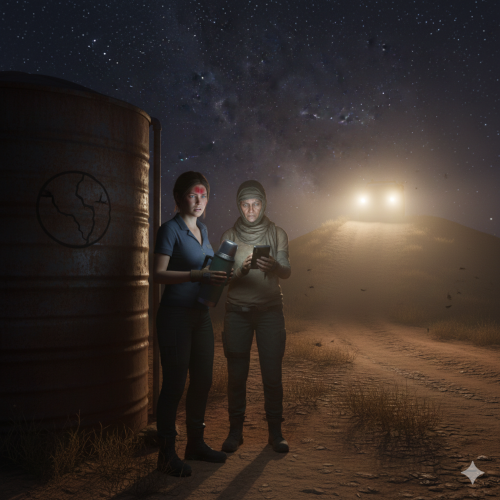
Elara didn’t go home. Instead, she drove her ute toward the old stock routes, turning off her headlights and navigating by the pale, milky light of the Southern Cross. The ‘Dry-Zone’ wasn’t just a geographical area; it was a political scar—land deemed “economically unviable” and left to wither so its water rights could be diverted.
She stopped at a crumbling windmill that hadn’t spun in a decade. As she stepped out, the silence of the desert felt precarious, like a glass vase perched on the edge of a shelf. She took the thermos and walked toward the rusted tank, tracing the hand-painted symbol of the cracked earth she’d seen on the drone.
“You’re late, Technician,” a voice rasped from the shadows.
A figure emerged from behind the tank. It was a woman, her skin as lined and weathered as the landscape she inhabited. She wore a patched tactical vest and a scarf wrapped around her face to filter the dust. This was Kael, a former hydro-geologist who had ‘disappeared’ from the government payroll three years ago.
“I have the sample,” Elara said, her voice steadier than she felt. She handed over the thermos.
Kael didn’t open it. She held it up to a small, handheld spectrometer. As the digital reading flickered, her eyes darkened. “Benzene, toluene, and a proprietary polymer used in high-pressure fracking. They aren’t just leaching, Elara. They’re using the abandoned bores as injection wells for their waste. It’s cheaper than treating it.”
Elara felt a wave of nausea. “If they’re pumping waste into the aquifer, the damage is permanent. The ‘Specialized Crew’… they aren’t cleaning the water. They’re sealing the sensors so the contamination doesn’t show up on the Gold Coast monitors.”
“Exactly,” Kael said, handing the thermos back. “The city gets its water, the company gets its profit, and the outback becomes a toxic graveyard. But we have the drone footage of the injection truck at Bore 42. With your physical sample and your login credentials for the internal server, we can bypass the Company’s firewalls and broadcast this to every news outlet in the country.”
A sudden roar of an engine shattered the quiet. A pair of high-beam lights crested the ridge behind them—white, clinical, and fast. The Company’s security detail had arrived.
Comprehension Questions: Chapter 4
- Contextual Analysis: How does the description of the ‘Dry-Zone’ as a “political scar” contribute to the story’s critique of resource management?
- Characterization through Dialogue: What does Kael’s explanation of the chemicals reveal about the scale of the corporate malpractice?
- Imagery: Analyze the simile “like a glass vase perched on the edge of a shelf.” What does this suggest about the tension of the scene?
- Critical Literacy: Compare the “milky light of the Southern Cross” with the “white, clinical” lights of the security detail. What symbolic contrast is the author drawing between nature and the corporation?
- Evaluating Choices: Elara is asked to provide her login credentials. What are the potential consequences of this action, both for her and for the mission of the Gully-Rakers?
Here is the final chapter of our first story.
Story 1: The Red Dust
Chapter 5: The Breaking Point
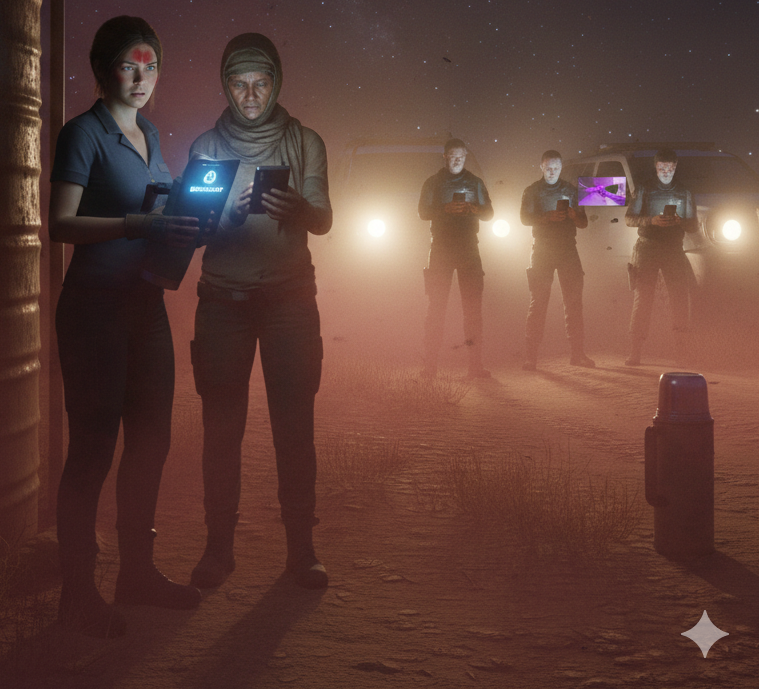
The dust kicked up by the approaching security vehicles turned the air into a thick, gritty soup. Elara’s heart hammered against her ribs, a frantic rhythm that drowned out the distant hum of the pump stations.
“The tablet, Elara! Now!” Kael shouted over the roar of the engines.
Elara didn’t hesitate. She pulled her company-issued tablet from her belt, her fingers trembling as she punched in her high-level encryption key. The screen glowed a defiant blue. “I’m in. I’ve bypassed the local relay. If I link to your drone’s transmitter, we can bypass the Winton tower entirely.”
“Do it,” Kael commanded, her eyes fixed on the white SUVs charging up the ridge. “Once the upload starts, it can’t be stopped by a local jammer. It goes straight to the satellite array.”
A spotlight cut through the darkness, pinning them against the rusted tank like specimens on a board. A loudspeaker crackled to life. “Technician 402, this is AC Security. You are in a restricted zone. Power down all devices and step away from the civilian.”
Elara’s thumb hovered over the ‘Broadcast’ icon. In that split second, she saw her entire life in Winton flash before her: her steady paycheck, the comfortable modular home, the respect of the townspeople who relied on her to keep the water flowing. To press the button was to incinerate that life.
She looked at Kael, then at the thermos of purple poison sitting on the ute’s tailgate. She pressed the button.
A progress bar appeared on the screen: 5%… 22%… 48%…
The SUVs screeched to a halt, and three guards in tactical gear jumped out. But before they could reach the tank, a series of pings erupted from their own handheld devices. The upload hadn’t just gone to the news; Kael had programmed the script to blast the data to every AC employee’s personal phone.
The lead guard stopped, staring at his screen. Even under the harsh floodlights, Elara could see the color drain from his face as he watched the footage of the toxic injection at Bore 42.
The silence that followed was longer than any Elara had ever known. The ‘Specialized Crew’ wouldn’t be arriving to clean up the water anymore; they would be arriving to answer to a nation that had finally seen what was hidden beneath the red dust.
Comprehension Questions: Chapter 5
- Themes of Sacrifice: What does Elara lose by choosing to upload the data? In your opinion, does the outcome justify her personal cost?
- Structural Tension: How does the author use the “progress bar” to create suspense during the climax of the story?
- Critical Literacy: The story ends with a “silence.” Analyze the significance of this silence—is it a silence of defeat, or a silence of transformation?
- Character Arc: Reflecting on Chapter 1, how has Elara’s perspective on her role as a “technician” evolved by the end of Chapter 5?
- Authorial Intent: Many Australian Gothic or environmental texts use an “open ending” where the long-term future of the characters is uncertain. Why might the author have chosen to end the story here rather than showing the legal trial or the aftermath?
クイーンズランド州のQCAAカリキュラムに従う12年生の読解レベルは、一般的に**批判的読解力**、**ニュアンスのあるテーマ**、そして**洗練された語彙**に重点を置いています。これらの物語は、現代のオーストラリアの問題、未来への希望、そして複雑な人間体験を探求し、英語やEssential Englishでよく見られるテキストを反映しています。
これが最初の物語の第1章です。
—
## 物語1:赤い塵
**テーマ:** *クイーンズランド州の農村部における環境の脆弱性と企業支配*
### 第1章:空洞の穴
ウィントンの暑さは、ただ体の上にのしかかるだけでなく、圧迫感を与えました。それは物理的な重み、重く埃っぽい毛布のようで、焼けた鉄と古代の蒸発した塩の匂いがしました。エララは42号穴の口のそばにひざまずき、焼けつく金属のケーシングに手袋をはめたまま手を突っ込んでいました。周囲の風景は黄土色と錆色のモノクロームで、ミッチェルグラスは容赦ない干ばつにとっくに屈服していた。
彼女はヘッドセットを調整した。「帯水層センター」からの送電の雑音が耳元でパチパチと音を立てていた。「帯水層センター、こちらエララ。42号穴です。圧力は正常ですが、流量は…まあ、ひどいですね。液体よりも泥のほうが多く汲み上げられています。」
少し間があり、それからシフト監督のミラーの声が、陽炎の信号に混じって聞こえてきた。「了解しました、エララ。稼働を続けてください。沿岸部のハブがピーク需要に達しています。配管を洗浄する必要が生じたとしても、圧力を下げてはいけません。」
エララはきらめく地平線を見渡した。遠くには、漂う塵埃を通してグレートディバイディング山脈のシルエットがかろうじて見えていた。この状況の倫理観は、土壌と同じくらい乾いていることを彼女は知っていた。ゴールドコーストの緑豊かなゲートコミュニティに向けて注ぎ込む水の一滴一滴は、何千年もこの土地を支えてきた地元の生態系から盗まれた水の一滴なのだ。
彼女は立ち上がり、額に浮かんだ赤い汚れの筋を拭った。工具箱を片付けようと振り返った時、金属的なものが目に飛び込んできた。それは、なめらかで目印のないドローンで、「ドライゾーン」の制限区域付近で静かにホバリングしていた。それは会社のドローンではなかった。
—
### 読解問題:第1章
1. **文脈における語彙:** 作者は熱を「物理的な重さ」と表現することで何を示唆しているのだろうか?これはどのように舞台の雰囲気を醸し出しているのだろうか?
2. **登場人物の動機:** エララはなぜ、アクイファー・セントラルのミラーから受けた指示にためらいを感じているのだろうか?
3. **推論:** 本文に基づいて、農村部の「乾燥地帯」と「沿岸の中心都市」の間の主な対立点は何でしょうか?
4. **文学的技法:** 最初の段落で擬人化の例を挙げ、それが読者の環境認識にどのような影響を与えるか説明してください。
5. **予測:** 「目印のないドローン」の存在は、今後のプロットにどのような意味を持つでしょうか?
—
## ストーリー1:赤い塵
**第2章:機械の中の幽霊**
ドローンはエララの予想通り、飛び去ることはなかった。捕食者のようにじっとホバリングし、レンズはボアケーシングに釘付けになっていた。灌木の静寂の中で、彼女はローターの微かでリズミカルな音を聞いた。それはまるで、枯れゆく庭に潜むデジタル昆虫のように、侵入してくるような音だった。
エララはタブレットに手を伸ばし、ローカル周波数スイープを実行しようとしたが、画面がちらついて消えた。局所的な妨害装置だ。これは単なる趣味人が砂漠の写真を撮っているのではなく、高レベルの干渉だ。ドローンを操作している者が誰であれ、公式チャンネルを通して外部に報じられるボア42のデータを望んではいない人だった。
「ミラー、聞こえる?」彼女はヘッドセットに囁いた。答えは分かっていたが。雑音だけが彼女の唯一の友だった。
塩と埃の味がする息を吐きながら、エララは掘削孔のメイン取水バルブへと歩み寄った。先ほど彼女が言っていた泥は、ただ沈殿しているだけでなく、黒ずんできていた。ポンプが軋み、摩擦に抵抗するにつれ、ガラス製の観測窓に流れ込む液体は、濁った黄褐色から、傷ついたような油っぽい紫色へと変化した。
彼女は砂漠の暑さとは全く関係のない寒気を感じた。これは枯渇しつつある帯水層から自然に生じた堆積物ではない。これは化学物質の浸出のように見えた。政府が北部の盆地に限定すると約束した「ディープティア」水圧破砕プロジェクトに関連する類のものだ。もしその化学物質がウィントンの主要水源であるこの地にあったとしたら、水系システム全体が危険にさらされることになる。
突然、ドローンは高度を下げ、彼女の多目的車両の屋根にぶつかりそうになった後、「乾燥地帯」の境界線に向かって急旋回した。ほんの一瞬だけ見えたその底面には、彼女が見覚えのあるデカールが貼られていた。企業ロゴではなく、手描きで描かれたひび割れた大地のシンボル。地下活動家集団「ガリー・レイカーズ」のものだ。
—
### 読解問題:第2章
1. **象徴性:** ドローンを「死にゆく庭のデジタル昆虫」と表現している部分を読み返してください。この比喩は、この物語におけるテクノロジーと環境の関係について何を示唆しているでしょうか?
2. **構造分析:** 作者は、エララのタブレットとヘッドセットの故障をどのように利用して、場面の緊張感を高めているでしょうか?
3. **批判的リテラシー:** 「傷ついた、油っぽい紫色の」液体は、プロットの視覚的な触媒として機能しています。エララが「ディープティア」の水圧破砕法に即座に疑念を抱いたことは、この架空世界の政治情勢について何を示唆しているでしょうか?
4. **トーンとムード:** 章の冒頭から終わりにかけて、ムードはどのように変化していますか?この変化に貢献している具体的な言葉遣いを挙げてください。
5. **キャラクター設定:** エララの行動(妨害された場所から逃げるのではなく、調査を続けること)は、彼女の職業倫理や個人的な好奇心について何を明らかにしていますか?
—
## ストーリー 1: 赤い塵
**第3章: 重苦しい沈黙**
エララがウィントンの本部に到着した頃には、空は深い紫色に染まっており、座席の下に魔法瓶に隠しておいた毒水を彷彿とさせていた。妨害装置の効果はボア42の境界線を抜けるとすぐに消えたが、彼女はミラーを呼び戻さなかった。胸に、重く、本能的な警戒心が芽生えていた。
帯水層センターの地域事務所は、白い波形鉄板でできたモジュール式の無菌室で、投光照明の下で燦々と輝き、狂乱した蛾の群れを惹きつけていた。中では、ミラーがモニターに覆いかぶさり、青い光が眼鏡に反射していた。彼女が入ってくる時、彼は顔を上げなかった。
「エララ、戻るのが遅かったな。40分間、テレメトリが途絶えていたんだ」と彼は、無表情に言った。
「乾燥地帯の境界付近で信号が途絶えたわ。大気の干渉かもしれない」エララは嘘をついた。その嘘の安易さに彼女は驚いた。「でもミラー、42番地の流量は…ただのシルトじゃなかったの。変色しているわ。ディープティアの施設から水が漏れ出したんだと思う」
ミラーはようやく振り返った。彼の表情は心配そうではなく、疲れた、慣れた無関心だった。「ディープティアのプロジェクトは300キロ北にあるんだよ、エララ。地質学的にあり得ないよ。あなたが見たのは、老朽化したパイプからの鉱物の酸化だろう。ゴールドコーストへの供給水のろ過パラメータはすでに調整したよ。対処済み」
「対処済み?」エララの声が高くなった。「あの化学物質が本管に流れ込むと、ろ過装置がすべてを捕らえられなくなるの。5%を超える変動があれば、環境保護庁に報告することになっているの」
ミラーは立ち上がり、その影が床に長く伸びた。 「EPAは現在、ニュースでよく言われるように『リソース不足』だ。帯水層センターは今四半期、自主規制している。エララ、英雄ぶるな。お前は技術者であって、内部告発者じゃない。家に帰って、少し寝て、明日はドライゾーンに近づかないように。専門チームを派遣して、ボア42を『清掃』する。」
エララは自分の小型トラックに戻りながら、魔法瓶の重さが鉛のレンガのように重く感じられた。『専門チーム』が何を意味するかは分かっていた。日の出前に紫色のヘドロの痕跡を消し去る清掃チームだ。黙っていれば共犯者扱い。口を開けば失職、あるいはそれ以上の目に遭う。
彼女は携帯電話に手を伸ばし、親指を地元紙の連絡先にかざした。その時、ドローンとひび割れた地面のシンボルを思い出した。当局が盲目だとしたら、もしかしたら既に監視している人々に目を向ける必要があるのかもしれない。
—
### 読解問題:第3章
1. **登場人物分析:** 汚染に対するエララとミラーの反応を比較対照しなさい。ミラーの無関心は、企業階層における彼の立場について何を示唆しているでしょうか。
2. **語彙とサブテキスト:** ミラーは「自己制御」という言葉を用いています。物語の文脈において、この言葉が皮肉的、あるいは危険なのはなぜでしょうか。
3. **権力のテーマ:** 空調設備のオフィスの物理的な描写(「まぶしい投光照明のある無菌の箱」)は、田園風景における企業の存在をどのように反映しているでしょうか。
4. **文学的技法:** この章で、著者は魔法瓶をどのようにエララの内面的な葛藤の象徴として用いているでしょうか。
5. **批判的考察:** ミラーはエララに「あなたは技術者であって、内部告発者ではない」と警告します。エララが直面する倫理的なジレンマについて論じなさい。彼女には、職務上の契約よりも優先される道徳的義務があるのでしょうか?
—
## ストーリー 1: 赤い塵
**第4章: ひび割れた大地**
エララは家に帰らなかった。ヘッドライトを消し、南十字星の淡く乳白色の光を頼りに、かつての畜産ルートへと小型トラックを走らせた。「乾燥地帯」とは単なる地理的な地域ではなく、政治的な傷跡だった。「経済的に採算が取れない」と判断され、水利権を転用するために荒廃させられた土地のことだ。
彼女は10年も回っていない崩れかけた風車の前で立ち止まった。外に出ると、砂漠の静寂は棚の端に置かれたガラスの花瓶のように、不安定に感じられた。彼女は魔法瓶を手に取り、錆びたタンクへと歩み寄り、ドローンで見たひび割れた大地の手描きのシンボルをなぞった。
「技術者、遅いぞ」影からかすれた声が聞こえた。
タンクの後ろから人影が現れた。女性だった。彼女の肌は、彼女が住む土地と同じように、皺だらけで風雨にさらされていた。つぎはぎのタクティカルベストを着て、埃を濾過するために顔にスカーフを巻いていた。彼女はケイルだった。3年前に政府の給与台帳から「姿を消した」元水文地質学者だった。
「サンプルは私が持っています」エララは言った。声は体感よりも落ち着いていた。彼女は魔法瓶を渡した。
ケイルは魔法瓶を開けなかった。彼女はそれを小型の携帯型分光計にかざした。デジタル表示が点滅するにつれ、彼女の目は暗くなった。「ベンゼン、トルエン、そして高圧水圧破砕法で使われる特殊なポリマー。ただ浸出しているだけじゃないのよ、エララ。廃坑を廃棄物の注入井として使っているの。処理するより安いんだよ。」
エララは吐き気がこみ上げてきた。 「もし彼らが帯水層に廃棄物を注入しているなら、その被害は永久に残る。『専門チーム』は…水を浄化しているわけではない。ゴールドコーストの監視カメラに汚染物質が表示されないようにセンサーを封印しているだけだ。」
「その通りだ」とケイルは魔法瓶を返しながら言った。「街は水を手に入れ、会社は利益を得て、アウトバックは有毒物質の墓場と化す。だが、我々はボーリング42号の注入トラックのドローン映像を持っている。君の体液サンプルと社内サーバーのログイン情報があれば、会社のファイアウォールを回避し、これを全国の報道機関に放送できる。」
突然、エンジンの轟音が静寂を破った。彼らの背後の尾根に、二つのハイビームが白く、冷静沈着で、速い光を放っていた。会社の警備部隊が到着したのだ。
—
### 読解問題:第4章
1. **文脈分析:** 「ドライゾーン」を「政治的な傷跡」と表現することは、物語における資源管理批判にどのように貢献していますか?
2. **会話による人物描写:** ケールによる化学物質の説明は、企業の不正行為の規模について何を明らかにしていますか?
3. **比喩表現:** 「棚の端に置かれたガラスの花瓶のように」という比喩を分析してください。これは、場面の緊張感について何を示唆していますか?
4. **批判的読解力:** 「南十字星の乳白色の光」と警備員の「白く無機質な」光を比較してください。著者は自然と企業の間にどのような象徴的な対比を描いていますか?
5. **選択の評価:** エララはログイン認証情報の提供を求められています。この行動は、彼女自身とガリー・レイカーズの任務の両方にとって、どのような結果をもたらす可能性がありますか?
—
—
## 物語1:赤い塵
**第5章:限界点**
接近する警備車両が巻き上げる塵が、空気を濃厚で砂っぽいスープに変えた。エララの心臓は肋骨に激しく打ち付け、その激しいリズムは遠くのポンプ場の騒音をかき消した。
「タブレットを、エララ!今すぐ!」エンジンの轟音にかき消され、ケイルは叫んだ。
エララはためらわなかった。彼女はベルトから会社支給のタブレットを取り出し、震える指で高レベル暗号キーを入力した。画面が反抗的な青色に輝いた。「接続完了。ローカル中継をバイパスした。あなたのドローンの送信機に接続すれば、ウィントンタワーを完全に迂回できる。」
「やって!」ケイルは尾根を駆け上がる白いSUVに視線を固定しながら命令した。 「アップロードが始まれば、地元の妨害装置では止められない。衛星アレイに直行する。」
スポットライトが暗闇を切り裂き、彼らを錆びたタンクに、まるで板の上の標本のように押し付けた。スピーカーがパチパチと音を立てて作動した。「技術者402、こちらは帯水層センターセキュリティです。ここは立ち入り禁止区域です。全ての機器の電源を切り、一般人から離れてください。」
エララの親指は「放送」アイコンに重なっていた。その一瞬、ウィントンでの人生の全てが目の前に浮かんだ。安定した給料、快適なユニットハウス、水道の供給を頼りにしてくれる町民からの尊敬。ボタンを押すことは、その命を焼き尽くすことだった。
彼女はケイルを見て、それから小型トラックのテールゲートに置かれた紫色の毒の魔法瓶を見た。そしてボタンを押した。
画面に進捗バーが表示された。*5%… 22%… 48%…*
SUVが急ブレーキをかけ、タクティカルギアを身につけた3人の警備員が飛び降りた。しかし、彼らがタンクに辿り着く前に、彼らの携帯端末から一連の信号が鳴り響いた。アップロードされたデータはニュースに流れただけではない。ケールは帯水層センター社員全員の個人用携帯電話にデータを送信するようスクリプトをプログラムしていたのだ。
先頭の警備員は立ち止まり、画面を見つめていた。強い照明の下でも、エララは、ボア42への毒物注入の映像を見ながら彼の顔色が悪くなっていくのがわかった。
その後の沈黙は、エララにとってかつて経験したことのないほど長かった。「専門チーム」はもはや水を浄化するために到着するのではない。彼らは、赤い塵の下に隠されたものをついに発見した国民に説明するために到着するのだ。
—
### 読解問題:第5章
1. **犠牲のテーマ:** エララはデータをアップロードすることを選択したことで何を失いますか?その結果は彼女の個人的な犠牲を正当化するものだと思いますか?
2. **構造上の緊張:** 作者は物語のクライマックスで「進捗状況バー」をどのように用いてサスペンスを生み出していますか?
3. **批判的読解力:** 物語は「沈黙」で終わります。この沈黙の意味を分析してください。それは敗北の沈黙でしょうか、それとも変革の沈黙でしょうか?
4. **登場人物の弧:** 第1章を振り返り、第5章の終わりまでにエララの「技術者」としての役割に対する見方はどのように変化しましたか?
5. **作者の意図:** 多くのオーストラリアのゴシック文学や環境文学では、登場人物の長期的な未来が不確かな「オープンエンド」が用いられています。なぜ作者は、法廷闘争やその後の展開を描かずに、ここで物語を終わらせたのでしょうか?
—
**これでストーリー1は終了です!