Excellent choice. We are shifting gears from the future to the past. Historical Fiction in the Queensland curriculum often focuses on how social values and attitudes of a specific time period (the context of production) shape the characters’ identities and conflicts.
The 1950s in the Darling Downs was a time of rigid social expectations, but also the beginning of a shift in the Australian identity.
Story 4: The Script of Seasons
Chapter 1: The Golden Harvest
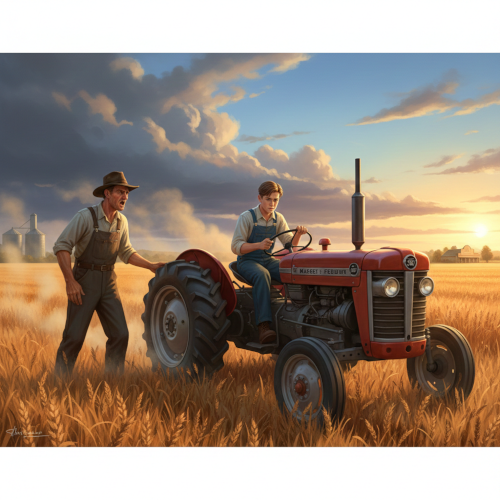
The wheat fields of the Darling Downs stretched toward the horizon like a sea of molten copper. For seventeen-year-old Thomas, the view from the cabin of the family’s Massey Ferguson tractor was the only world that existed. It was 1954, and the harvest was “the script” that every boy in Toowoomba and its surrounds was expected to follow.
“Keep the line straight, Tom!” his father, Arthur, shouted over the mechanical roar. Arthur stood at the edge of the paddock, his skin leathered by thirty years of sun, his hat pulled low. He didn’t see the wheat as beauty; he saw it as mortgage payments, school shoes, and the legacy of the name Fairweather & Son.
Thomas nodded, but his right hand wasn’t just gripping the steering wheel. Tucked into the pocket of his overalls was a notebook, its edges curled from the heat. In it, he didn’t record grain yields or rainfall. He wrote dialogue. He wrote about the way the dust danced in the light like stage spirits and the way the wind through the stalks sounded like a rising ovation.
To Thomas, the farm was a stage, but he was a reluctant lead actor in the wrong play.
“The rain’s coming early this year,” Arthur said later that evening, sitting at the heavy jarrah dining table. He was tracing a map of the north paddock. “We’ll need you to skip the Saturday dance at the hall. We need every hand to get the grain into the silos before the clouds break.”
Thomas felt the weight of the “script” pressing down on him. The Saturday dance wasn’t just a social event; a traveling theatre troupe from Brisbane was stopping in town to hold auditions for a summer production of The Tempest.
“Of course, Dad,” Thomas heard himself say. The words were the ones his father expected, but they felt like ash in his mouth.
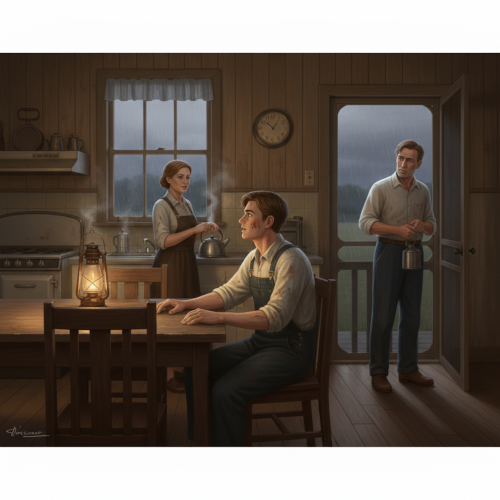
His mother, Mary, looked up from her mending, her eyes catching the lamplight. She saw the bulge of the notebook in his pocket. She didn’t say anything, but she moved the kerosene lamp a little closer to him, as if offering a spotlight in the dark.
Chapter 1: Comprehension & Analysis Questions
1. Literal: What is the specific historical year and location of the story?
2. Inferential: What does the name of the family business, Fairweather & Son, imply about Arthur’s expectations for Thomas’s future?
3. Evaluative: The author uses the metaphor of a “script” to describe Thomas’s life. How does this connect his secret passion (theatre) with his external conflict?
4. Aesthetic Features: Contrast the way Arthur views the wheat (mortgage, legacy) with the way Thomas views it (stage spirits, ovation). What does this reveal about their differing values?
5. Prediction: Mary notices the notebook but remains silent. How might her character influence Thomas’s decision to follow the “script” or pursue the “audition” in later chapters?
Story 4: The Script of Seasons
Chapter 2: The Sound of Thunder
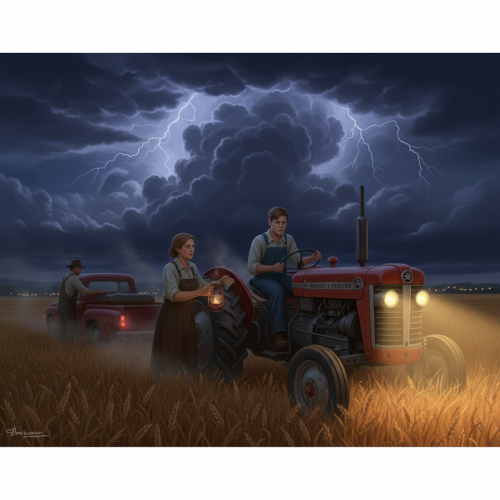
By Thursday, the air over the Downs had turned thick and oppressive, the kind of heat that made the crows sit silent and panting on the fence posts. The horizon was stained with a charcoal smudge of storm clouds, advancing like an invading army.
Thomas was in the tool shed, ostensibly sharpening the blades of the harvester. However, his eyes were fixed on a crumpled flyer pinned beneath a box of rusted bolts. It was a call for the auditions: Toowoomba Town Hall, Saturday, 2:00 PM. All welcome.
“Thomas!” Arthur’s voice cracked like a whip. He was standing by the truck, wiping grease from his forehead. “The moisture meter is peaking. We start the north paddock now. We work through the night if we have to.”
“Now?” Thomas stepped out into the blinding glare. “But the dance… the town is supposed to be—”
“Forget the town,” Arthur snapped, his eyes hard. “Nature doesn’t care about your social calendar, son. On this land, you move when the weather tells you to. That’s the law.”
As the sun dipped behind the range, the paddock became a world of shadows and artificial light. The headlights of the tractor cut yellow tunnels through the standing grain. Thomas sat in the high seat, his body vibrating with the engine’s pulse. He was exhausted, but his mind was rehearsing.
“Our revels now are ended. These our actors, as I foretold you, were all spirits and are melted into air…”
He whispered Prospero’s lines into the roar of the machinery. To any observer, he was the model of the hardworking country boy, the dutiful son following the family trade. But inside, he was a thousand miles away, standing on a stage of wood and velvet instead of a floor of dirt and diesel.
At midnight, his mother brought a thermos of tea out to the edge of the field. When Arthur climbed down to refuel the truck, Mary walked over to the tractor. She handed a cup to Thomas, her fingers brushing against the notebook still tucked in his overalls.
“The wind has shifted,” she said softly, looking toward the town lights in the distance. “If the rain holds off until tomorrow evening, the harvest will be finished by noon.”
She looked at him—really looked at him—with a gaze that pierced through the “dutiful son” mask. “Toowoomba is only a forty-minute drive, Thomas. If the truck is back in the shed by one o’clock, your father will likely sleep through the afternoon.”
Chapter 2: Comprehension & Analysis Questions
1. Literal: Why does Arthur insist on starting the harvest immediately and working through the night?
2. Inferential: What does Arthur mean when he says, “On this land, you move when the weather tells you to. That’s the law”? What does this reveal about his relationship with the environment?
3. Evaluative: Thomas recites lines from Shakespeare’s The Tempest while working. How does the choice of this specific play (which deals with storms and magic) create a parallel with the story’s setting?
4. Aesthetic Features: The author describes the storm clouds as “advancing like an invading army.” How does this personification heighten the tension of the scene?
5. Prediction: Mary suggests a specific timeline that would allow Thomas to attend the audition. Do you think Thomas will take the risk of “stealing” the afternoon, or will his fear of his father’s “law” keep him on the farm?
Story 4: The Script of Seasons
Chapter 3: The Midday Interval
Saturday dawned with a sky the color of a tarnished silver coin. The air was so heavy it felt like a physical weight, thick with the scent of dry straw and the ozone of the approaching storm. By 11:00 AM, the last of the north paddock had been shorn bare, leaving a landscape of jagged stubble.
Arthur climbed down from the truck, his face a mask of grey dust and exhaustion. “It’s done,” he grunted, wiping his hands on a greasy rag. “The silos are full. We beat the clouds, Tom.”
Thomas felt a surge of adrenaline that had nothing to do with the harvest. He watched his father stumble toward the farmhouse, shoulders slumped. “I’ll wash the machinery down, Dad. You go and get some rest.”
Arthur paused, squinting at his son. For a second, Thomas feared his father saw the “rehearsal” in his eyes. But Arthur merely nodded. “Good lad. Don’t be too long. That rain’s going to break by three, and I want the shed doors bolted tight before it does.”
The moment the screen door clicked shut behind his father, the “script” of the farmhand was discarded. Thomas didn’t wash the tractor. Instead, he ran to the old washhouse behind the kitchen. Hidden behind a pile of flour sacks was a clean white shirt and his Sunday trousers, pressed flat by his mother earlier that morning.
As he changed, he heard the low murmur of the radio from the kitchen—the midday news reporting on the record-breaking heatwave across the Darling Downs. Then, a light knock on the washhouse door.
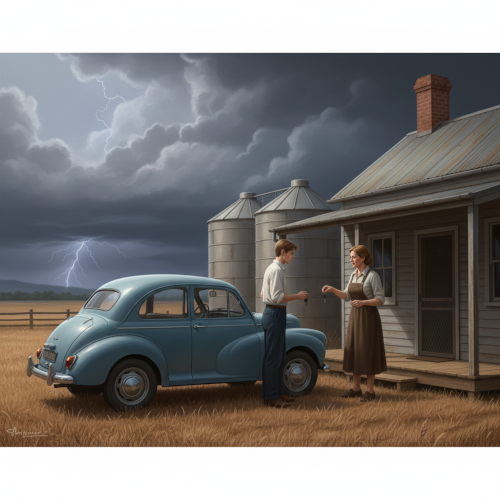
Mary stood there, holding a set of keys. Not the keys to the heavy farm truck, but the keys to her own small, dusty Morris Minor.
“The truck is too loud,” she whispered, her eyes darting toward the farmhouse where Arthur was surely already asleep. “Take the car. And Thomas?”
He paused, his hand on the door handle.
“Don’t just read the lines,” she said, a rare, fierce spark in her expression. “Make them believe you’re the one who can control the storm.”
He pulled out of the driveway in neutral, letting the car roll down the slight incline of the gravel track before starting the engine. As he hit the main road to Toowoomba, the first distant roll of thunder echoed across the range—a drumroll for a performance he wasn’t sure he was ready to give.
Chapter 3: Comprehension & Analysis Questions
1. Literal: What task does Thomas volunteer to do so that his father will go inside to sleep?
2. Inferential: Why does Mary give Thomas the keys to her Morris Minor instead of letting him take the farm truck? What does this choice tell us about her role in his “rebellion”?
3. Evaluative: Mary tells Thomas to “make them believe you’re the one who can control the storm.” How does this advice bridge the gap between his life on the farm and his role as Prospero in The Tempest?
4. Aesthetic Features: The author describes the sky as “the color of a tarnished silver coin.” What does this choice of imagery suggest about the atmosphere and the stakes of this particular day?
5. Prediction: Thomas is driving toward the town as the storm begins to break. How might the weather act as both a literal and a symbolic obstacle in the next chapter?
Story 4: The Script of Seasons
Chapter 4: The Audition of the Air
The drive to Toowoomba was a race against the sky. By the time Thomas reached the outskirts of town, the “tarnished silver” had turned to a bruised, swirling black. The wind whipped the heavy branches of the camphor laurel trees, and the first fat drops of rain splattered against the windshield of the Morris Minor like lead pellets.
He found the Town Hall, a grand sandstone building that looked even more imposing under the flickering lightning. He parked the car and ran, shielding his notebook under his shirt. Inside, the lobby was a sanctuary of polished wood and the scent of damp wool. A dozen other young men were there, pacing and muttering lines, but they all looked like “town boys”—their shirts perfectly starched, their hands soft.
“Thomas Fairweather?” a woman with a clipboard called out.
Thomas stepped into the main hall. It was vast and dim, the stage illuminated by a single row of footlights. Three people sat in the front row of the stalls, their faces hidden in shadow.
“Whenever you’re ready,” a voice rang out from the darkness.
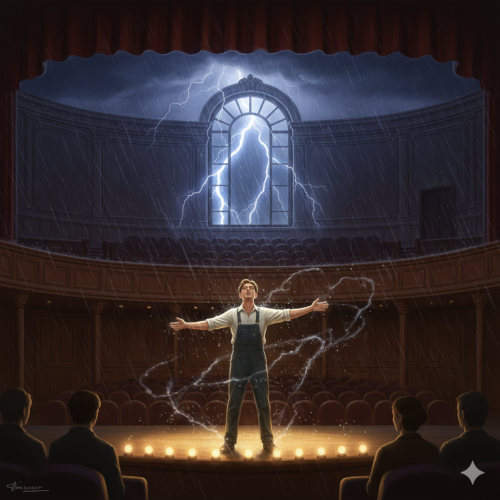
Thomas stood in the center of the stage. He felt the grit of the north paddock still under his fingernails. He felt the vibration of the tractor still in his bones. Outside, the storm finally broke. A massive crack of thunder shook the building, and the sound of rain on the tin roof became a deafening roar.
One of the judges sighed. “We’ll never hear him over that. Perhaps we should wait—”
“No,” Thomas said, his voice ringing out with a strength that surprised him.
He didn’t need to imagine the magic of Prospero. He had spent his life watching his father try to command the earth and the sky. He closed his eyes and channeled the exhaustion of the harvest, the frustration of the “script,” and the raw power of the storm outside.
“Hast thou, spirit, perform’d to point the tempest that I bade thee?” he began.
He didn’t just speak; he commanded. He used the roar of the rain as his backing orchestra. Every time the thunder rolled, he leaned into the lines, his voice rising to meet the elements. For those few minutes, he wasn’t a farmer’s son from the Downs. He was the master of the island, the weaver of storms, and the man who chose his own ending.
When he finished, the hall was silent, save for the rhythmic drumming of the rain.
Chapter 4: Comprehension & Analysis Questions
1. Literal: Describe the physical appearance of the other boys waiting in the lobby. How do they contrast with Thomas?
2. Inferential: Why does the storm actually help Thomas’s audition rather than hindering it?
3. Evaluative: Thomas says he channeled his father’s attempts to “command the earth and the sky.” What does this suggest about Thomas’s underlying respect for his father, despite their conflict?
4. Aesthetic Features: How does the author use auditory imagery (the rain on the tin roof, the thunder) to enhance the “theatrical” quality of this chapter?
5. Prediction: The audition is over, but Thomas still has to get back to the farm. What do you think will happen when he returns and faces the “script” of his real life?
Story 4: The Script of Seasons
Chapter 5: The Final Act
The drive back to the farm was a slow crawl through a world turned to liquid. The black soil of the Downs, so fertile and welcoming during the harvest, had transformed into a treacherous, chocolate-colored sludge. Thomas pushed the little Morris Minor to its limits, the wipers slashing frantically at the deluge.
He pulled into the equipment shed just as the grey light of evening began to fail. He quickly changed back into his grease-stained overalls, hiding his Sunday clothes in the bottom of a tool chest. His heart was still thudding with the rhythm of Prospero’s monologue.
When he stepped into the kitchen, the air was thick with the smell of damp wool and fried sausages. Arthur was sitting at the table, his head in his hands. He looked older, somehow—shrunken by the very rain he had worked so hard to beat.
“The creek is up,” Arthur said, not looking up. “The lower paddock is a wash-out. Good thing we got the grain in when we did, Tom.”
“Yes, Dad,” Thomas said, taking his seat.
“I went out to the shed an hour ago,” Arthur continued, his voice low. Thomas froze, his fork halfway to his mouth. “Wanted to check the seals on the silos. Saw the Morris was gone. Saw the tractor hadn’t been washed.”
The silence in the kitchen was absolute. Mary stood by the stove, her back to them, but Thomas saw her shoulders tense.
“I drove into town,” Thomas said. He didn’t whisper. He didn’t look at the floor. “There were auditions. For a play.”
Arthur finally looked up. His eyes weren’t angry; they were tired and filled with a confused sort of grief. “A play, Tom? You’re a Fairweather. There’s a thousand acres out there that don’t care about plays.”
“I know,” Thomas replied. “But the people in that hall… they didn’t see the acres. They saw me. And for the first time, I felt like I was standing on my own ground, not yours.”
Arthur stared at him for a long time. Outside, the rain finally began to ease, tapering off into a soft, persistent drizzle. He looked at Thomas’s hands—calloused and stained, but steady.
“Did you get it?” Arthur asked gruffly.
“I don’t know yet,” Thomas admitted.
Arthur grunted and stood up, heading toward the porch to check the rain gauge. He paused at the door, his hand on the frame. “If you did… I suppose the north paddock can wait a few weeks for the winter planting. But don’t expect me to learn the lines with you.”
It wasn’t an ovation. It wasn’t a standing row in a theatre. But as Thomas looked at his mother, who was smiling softly into the steam of the kettle, he knew the “script” had finally been rewritten.
Chapter 5: Comprehension & Analysis Questions
1. Literal: What physical change in the environment makes the drive home difficult for Thomas?
2. Inferential: Why does Arthur’s anger seem to be replaced by “tired grief” when Thomas confesses where he was? What does this suggest about Arthur’s realization regarding his son’s identity?
3. Evaluative: “But don’t expect me to learn the lines with you.” In the context of 1950s Australian masculinity, how should the reader interpret this statement from Arthur?
4. Aesthetic Features: Analyze the symbolism of the “black soil” turning to “sludge.” How does this reflect the difficulty of Thomas’s transition from his old life to his new ambition?
5. Thematic Synthesis: This story explores the tension between Tradition and Individual Agency. How does the ending suggest a compromise rather than a total break from the past?
That concludes the fourth story! We have one final journey left.
Story 5: Liminal Spaces is a work of Magical Realism set in a modern rural Queensland school. It explores the blurred lines between the structured world of education and the ancient, untamed Australian bush.
********************************************************************************************************************************************************
未来から過去へと視点をシフトさせています。クイーンズランド州のカリキュラムにおける**歴史小説**は、特定の時代(*作品の文脈*)における**社会的価値観や態度**が、登場人物のアイデンティティや葛藤をどのように形作っているかに焦点を当てることがよくあります。
1950年代のダーリング・ダウンズは、社会的な期待が厳格であったと同時に、オーストラリア人のアイデンティティの転換期でもありました。
—
## 第4話:四季の台本
### 第1章:黄金の収穫
ダーリング・ダウンズの小麦畑は、溶けた銅の海のように地平線まで広がっていました。17歳のトーマスにとって、家族のマッセイ・ファーガソン・トラクターのキャビンから見える景色だけが、唯一存在する世界でした。時は1954年、収穫はトゥーンバとその周辺地域のすべての少年たちが従うべき「台本」でした。
「トム、まっすぐに!」父アーサーが機械の轟音にかき消されて叫んだ。アーサーは牧草地の端に立っていた。30年間の太陽に焼けた肌は硬く、帽子を深くかぶっていた。彼は小麦を美しさとして見ていなかった。彼はそれを住宅ローンの支払い、学校の靴、そして「フェアウェザー&サン」という名の伝統として見ていた。
トーマスはうなずいたが、右手はハンドルを握っていただけではなかった。オーバーオールのポケットにはノートが挟まっていたが、熱で端が丸まっていた。そこには穀物の収穫量や降雨量は記録されていなかった。彼は台詞を書いた。光の中で舞台の精霊のように舞い踊る埃や、茎を吹き抜ける風が沸き立つような拍手喝采のように響く様子を書き留めていた。
トーマスにとって農場は舞台だったが、彼は不本意ながら間違った芝居の主役を演じていた。
「今年は雨が早いな」アーサーはその晩遅く、重厚なジャラ材のダイニングテーブルに座って言った。彼は北側の牧場の地図をなぞっていた。「土曜のダンスパーティーは欠席してもらいたい。雲が切れる前に穀物をサイロに運び込むのに、みんなの協力が必要だ。」
トーマスは「台本」の重みが重くのしかかるのを感じた。土曜のダンスパーティーは単なる社交行事ではない。ブリスベンから旅回りの劇団が町に立ち寄り、夏の公演『テンペスト』のオーディションを行うのだ。
「もちろんだよ、パパ」トーマスはそう言った。父親が予想していた通りの言葉だったが、まるで口の中に灰が詰まっているようだった。
母のメアリーは繕い物をするのを止め、ランプの明かりに目を留めた。息子のポケットの中のノートの膨らみが見えた。彼女は何も言わなかったが、暗闇にスポットライトを当てるかのように、灯油ランプを少し息子に近づけた。
—
### 第1章:読解と分析の問題
**1.文字通り:** 物語の舞台となる具体的な年と場所は?
**2. 推論:** 家業である「フェアウェザー・アンド・サン」という名前は、アーサーがトーマスの将来に抱いていた期待について何を示唆しているだろうか?
**3. 評価:** 作者はトーマスの人生を描写するために「脚本」という比喩を用いている。これは、彼の秘めた情熱(演劇)と外的な葛藤とをどのように結びつけているだろうか?
**4. 美的特徴:** アーサーが小麦(住宅ローン、遺産)をどのように捉えているかと、トーマスが小麦(舞台の精霊、喝采)をどのように捉えているかを対比させなさい。これは、二人の価値観の違いについて何を明らかにしているだろうか?
**5. 予測:** メアリーはノートに気づくが、沈黙している。彼女の性格は、後の章でトーマスが「脚本」に従うか「オーディション」を受けるかの決断にどのような影響を与えるだろうか?
—
## 第4話:四季の脚本
### 第2章:雷鳴
木曜日になると、ダウンズの上空は濃く、息苦しい空気に変わり、カラスたちが柵の柱の上で息を切らしながら静かに座り込むような暑さになっていた。地平線は、まるで侵略軍のように迫り来る嵐雲の炭のような染みで染まっていた。
トーマスは道具小屋で、表向きは収穫機の刃を研いでいた。しかし、彼の目は錆びたボルトの箱の下に挟まれた、くしゃくしゃになったチラシに釘付けになっていた。オーディションの募集だった。「トゥーンバ・タウンホール、土曜日午後2時。どなたでも歓迎します。」
「トーマス!」アーサーの声が鞭のようにかすれた。彼はトラックのそばに立ち、額のグリースを拭っていた。「水分計がピークに達している。北側の牧場を今から始める。必要なら夜通し作業する。」
「さて?」トーマスはまばゆい光の中に足を踏み出した。「でも、ダンスパーティーは…町は…」
「町のことなんて忘れろ」アーサーは鋭い目で言い放った。「自然はお前の社交の予定なんか気にしない。この土地では、天候が命じたら動く。それが掟だ」
太陽が牧場の向こうに沈むにつれ、牧草地は影と人工の光の世界へと変わった。トラクターのヘッドライトが、立っている穀物に黄色いトンネルを描いていた。トーマスは高い座席に座り、エンジンの鼓動で体が震えていた。疲れ果てていたが、心はリハーサルを続けていた。
*「我々の祝宴はこれで終わりだ。予言した通り、役者たちは皆亡霊となり、空気と化してしまった…」*
彼は機械の轟音の中、プロスペローの台詞を囁いた。誰が見ても、彼は勤勉な田舎者、家業を継ぐ孝行息子の典型だった。しかし、心の中では、彼は千マイルも離れた場所にいた。土とディーゼル燃料の床ではなく、木とベルベットの舞台の上に立っていたのだ。
真夜中、母親は魔法瓶に入ったお茶を畑の端に持ってきた。アーサーがトラックに燃料を補給するために降りると、メアリーはトラクターのところまで歩み寄った。彼女はトーマスにカップを渡し、オーバーオールの中にまだしまわれたノートに指を触れた。
「風向きが変わったわ」とメアリーは遠くの街の明かりを見ながら、優しく言った。「明日の夕方まで雨が降らなければ、収穫は正午までに終わるわ。」
彼女は彼を見つめた。本当に彼を見つめていた。その視線は「孝行息子」の仮面を突き抜けていた。「トゥーンバまでは車でたったの40分よ、トーマス。トラックが1時までに小屋に戻れば、お父さんは午後まで寝ていられるわ。」
—
### 第2章:読解と分析の問題
**1.文字通りの意味:** アーサーはなぜすぐに収穫を始め、夜通し働くことにこだわるのでしょうか?
**2. 推論的解釈:** アーサーが「この土地では、天候が命じたら動く。それが掟だ」と言ったのはどういう意味でしょうか?これは彼と環境との関係について何を明らかにしているでしょうか?
**3. 評価的解釈:** トーマスは作業中にシェイクスピアの『テンペスト』の台詞を暗唱します。嵐と魔法を扱ったこの劇を選んだことは、物語の舞台設定とどのように類似点を生み出しているでしょうか?
**4. 美的特徴:** 作者は嵐の雲を「侵略軍のように進軍してくる」と表現しています。この擬人化は、どのように場面の緊張感を高めているでしょうか?
**5. 予測的解釈:** メアリーは、トーマスがオーディションに参加できる具体的なスケジュールを提案しています。トーマスは午後を「盗む」リスクを冒すでしょうか?それとも、父の「掟」への恐怖から農場に留まるでしょうか?
—
## 第4話:四季の脚本
### 第3章:正午の合間
土曜日の夜明け、空はくすんだ銀貨のような色に染まっていた。空気は重く、まるで物理的な重みを感じるほどだった。乾いた藁の匂いと、迫り来る嵐のオゾンが濃く漂っていた。午前11時までに、北側の牧草地の最後の草が刈り取られ、ギザギザの刈り株が一面に残っていた。
アーサーはトラックから降りた。顔には灰色の埃と疲労がこみ上げていた。「終わった」と、油まみれの布で手を拭きながら、アーサーはうめいた。「サイロは満杯だ。トム、雲に打ち勝ったぞ。」
トーマスは収穫とは関係のないアドレナリンの奔流を感じた。肩を落としてよろめきながら農家へと向かう父親を見送った。「機械を洗っておくから、お父さん。あなたは休んで。」
アーサーは立ち止まり、目を細めて息子を見つめた。一瞬、トーマスは父親に「リハーサル」の色が見えるのではないかと不安になった。しかしアーサーはただ頷いただけだった。「いい子だ。あまり焦るなよ。3時には雨がやむだろう。そうなる前に小屋の扉をしっかり締めておいてくれ。」
父親の後ろで網戸がカチッと閉まった瞬間、農夫としての「台本」は消え去った。トーマスはトラクターを洗わず、台所の裏にある古い洗濯場へと走って行った。小麦粉袋の山の陰に、今朝早く母親にアイロンをかけられた清潔な白いシャツとサンデーパンツが隠されていた。
着替えていると、台所からラジオの低い音が聞こえてきた。ダーリング・ダウンズを襲う記録的な猛暑を報じる昼間のニュースだった。その時、洗濯場のドアを軽くノックする音がした。
メアリーが鍵を持ってそこに立っていた。重い農場のトラックの鍵ではなく、彼女自身の小さくて埃っぽいモーリス・マイナーの鍵だった。
「トラックの音がうるさいわ」と彼女は囁き、アーサーがきっともう寝ているであろう農家へと視線を走らせた。「車に乗って。トーマスは?」
彼はドアハンドルに手を置いたまま、言葉を切った。
「台詞だけを読むんじゃないの」と彼女は言った。その表情には珍しく、激しい輝きが宿っていた。「嵐を制御できるのはあなただと信じ込ませるのよ」
彼はニュートラルギアで私道から車を出し、砂利道の緩やかな坂を下ってからエンジンをかけた。トゥーンバへの幹線道路に出ると、遠くで最初の雷鳴が山脈に響き渡った。それは、彼が演奏できるかどうか確信が持てない演奏のためのドラムロールだった。
—
### 第3章:読解と分析の問題
**1.文字通り:** トーマスは、父親が家の中で眠れるように、どのような仕事を自ら引き受けたのでしょうか?
**2. 推論:** なぜメアリーは、トーマスに農場のトラックを使わせる代わりに、自分のモーリス・マイナーの鍵を渡すのでしょうか? この選択は、トーマスの「反抗」における彼女の役割について何を示唆しているのでしょうか?
**3. 評価:** メアリーはトーマスに「あなたが嵐を制御できる人だと信じさせなさい」と言います。このアドバイスは、農場での生活と『テンペスト』におけるプロスペロとしての役割との間に、どのような橋渡しとなるのでしょうか?
**4. 美的特徴:** 作者は空を「曇った銀貨の色」と表現しています。この比喩表現の選択は、この日の雰囲気と重要な問題について何を示唆しているのでしょうか?
**5. 予測:** 嵐が収まり始める中、トーマスは町に向かって車を走らせています。次の章では、天候は文字通りの障害として、また象徴的な障害としてどのように作用するのでしょうか?
—
## 第4話:四季の脚本
### 第4章:空気のオーディション
トゥーンバへのドライブは、まるで空との競争だった。トーマスが町外れに着く頃には、「曇った銀色」の空は、傷つき、渦巻く黒に変わっていた。風がクスノキの太い枝をはためかせ、最初の大きな雨粒が鉛の弾丸のようにモーリス・マイナーのフロントガラスに叩きつけられた。
彼は市庁舎を見つけた。砂岩でできた壮大な建物は、揺らめく稲妻の下で、より一層威厳を増していた。彼は車を停め、ノートをシャツの下に隠して走った。中に入ると、ロビーは磨き上げられた木材と湿ったウールの香りが漂う聖域だった。そこには他にも十数人の若者が歩き回り、ぶつぶつと詩を唱えていたが、皆「町の少年」のようだった。シャツは完璧に糊がきいていて、手は柔らかだった。
「トーマス・フェアウェザー?」クリップボードを持った女性が声をかけた。
トーマスはメインホールに足を踏み入れた。広大で薄暗いホールで、舞台は一列のフットライトで照らされていた。最前列の客席には3人が座り、顔は影に隠れていた。
「いつでもどうぞ」暗闇から声が響いた。
トーマスはステージの中央に立っていた。北側の牧場のざらざらした感触がまだ爪の裏に残っていた。トラクターの振動もまだ骨に染み込んでいた。外では、ついに嵐が収まった。巨大な雷鳴が建物を揺らし、トタン屋根に降り注ぐ雨音は耳をつんざくような轟音に変わった。
審査員の一人がため息をついた。「こんなことでは彼の声が聞こえないだろう。もう少し待った方がいいかもしれない…」
「いや」トーマスは、彼自身も驚くほど力強く言った。
プロスペローの魔法を想像する必要などなかった。彼は人生を通して、父が大地と空を支配しようとするのを見てきたのだ。彼は目を閉じ、収穫の疲れ、「台本」の苛立ち、そして外の嵐の荒々しい力に心を委ねた。
*「精霊よ、私が命じた嵐を、お前は示し示したのか?」* 彼は語り始めた。
彼はただ話すのではなく、命令した。雨の轟音をバックオーケストラのように使った。雷鳴が轟くたびに、彼は台詞に身を委ね、声を大自然へと響かせた。その数分間、彼はダウンズ出身の農家の息子ではなかった。彼は島の支配者であり、嵐を操り、自らの結末を選ぶ男だった。
彼が語り終えると、ホールは雨のリズミカルな太鼓の音を除いて静まり返った。
—
### 第4章:読解と分析の問題
**1. 文字通り:** ロビーで待っている他の少年たちの容姿を描写しなさい。彼らはトーマスとどのように対照的ですか?
**2. 推論的考察:** なぜ嵐はトーマスのオーディションを妨げるどころか、むしろ助けているのでしょうか?
**3. 評価的考察:** トーマスは、父親が「大地と空を支配しようとした」試みを模倣したと述べています。これは、父親との対立にもかかわらず、トーマスが父親を深く尊敬していたことを示唆しているのでしょうか?
**4. 美的特徴:** 作者は、聴覚的イメージ(トタン屋根に降り注ぐ雨、雷鳴)をどのように用いて、この章の「演劇的」な質感を高めているのでしょうか?
**5. 予測:** オーディションは終わりましたが、トーマスはまだ農場に戻らなければなりません。彼が農場に戻り、現実の人生という「台本」と向き合ったとき、何が起こると思いますか?
—
## 第四話:四季の脚本
### 第五章:終幕
農場への帰路は、液体と化した世界をゆっくりと進むようなものだった。収穫期には肥沃で心地よかったダウンズの黒い土は、危険なチョコレート色の泥濘と化していた。トーマスは小さなモーリス・マイナーを限界まで押し上げ、ワイパーは洪水を必死に切り裂いた。
夕暮れの灰色の光が薄れ始めたちょうどその時、彼は機材小屋に車を停めた。彼は油で汚れたオーバーオールに急いで着替え、日曜日の服を道具箱の底に隠した。彼の心臓はまだプロスペローの独白のリズムに合わせてドキドキと高鳴っていた。
彼が台所に足を踏み入れると、湿ったウールと揚げソーセージの匂いが辺り一面に漂っていた。アーサーはテーブルに座り、頭を抱えていた。なぜか彼は老けて見えた。あれほど苦労して打ち負かした雨のせいで、縮こまってしまったようだった。
「小川の水位が上がった」アーサーは顔を上げずに言った。「下の牧草地は水浸しだ。穀物をちゃんと入れておいてよかった、トム」
「ああ、パパ」トーマスは席に着きながら言った。
「一時間前に小屋に行ったんだ」アーサーは低い声で続けた。トーマスはフォークを口に運んだところで凍りついた。「サイロのシールを確認したかったんだ。モーリスがなくなっていた。トラクターが洗われていなかった」
キッチンは完全に静まり返っていた。メアリーはストーブのそばに背を向けて立っていたが、トーマスは彼女の肩が緊張しているのに気づいた。
「町へ車で行ったんだ」トーマスは言った。小声で話したり、床を見たりするようなことはしなかった。「オーディションがあったんだ。芝居の」
アーサーはようやく顔を上げた。彼の目に怒りの色はなかった。疲れた色と、混乱したような悲しみが満ちていた。 「芝居だって?トム、君はフェアウェザーだ。芝居なんか気にしない土地が世の中に1000エーカーもあるんだぞ。」
「分かってるよ」とトーマスは答えた。「でも、あのホールの人たちは…エーカーなんて見てない。僕を見てたんだ。そして初めて、君の土地じゃなくて、自分の土地に立っているような気がしたんだ。」
アーサーは長い間彼を見つめていた。外では雨がようやく小降りになり、しつこく続く霧雨になっていた。彼はトーマスの手を見た。タコだらけで汚れているが、それでもしっかりと握っていた。
「わかったか?」アーサーはぶっきらぼうに尋ねた。
「まだわからない」とトーマスは認めた。
アーサーはうなり声を上げて立ち上がり、雨量計を確認するためにポーチに向かった。彼はドアのところで立ち止まり、枠に手を置いた。「わかったなら…北側のパドックは冬の植え付けまで数週間待てるだろう。でも、君と一緒にセリフを覚えるとは思わないでくれ。」
それは喝采でもなければ、劇場でスタンディング・ロウイングを繰り広げるわけでもなかった。しかし、やかんの湯気の中で優しく微笑む母親を見つめたトーマスは、「脚本」がついに書き換えられたことを悟った。
—
### 第5章:読解と分析の質問
**1. 文字通り:** 環境のどのような物理的な変化が、トーマスにとって帰宅の運転を困難にしているのだろうか?
**2. 推論:** トーマスが自分がどこにいたかを告白したとき、アーサーの怒りが「疲れた悲しみ」に変わったように見えるのはなぜだろうか?これは、アーサーが息子のアイデンティティについてどのように認識したかを示唆しているだろうか?
**3. 評価:** 「でも、僕が君と一緒にセリフを覚えるとは思わないでくれ。」1950年代のオーストラリアの男性像という文脈において、読者はアーサーのこの発言をどのように解釈すべきだろうか?
**4. 美的特徴:** 「黒い土」が「ヘドロ」に変わることの象徴性を分析しなさい。これは、トーマスが古い生活から新しい野心へと移行する際の困難さをどのように反映しているでしょうか?
**5. テーマの統合:** この物語は、*伝統*と*個人の主体性*の間の緊張関係を探求しています。結末は、過去との完全な決別ではなく、どのように妥協を示唆しているでしょうか?
—
**これで第4話は終了です!あと1つ、最後の旅が残っています。**
**第5話:「Liminal Spaces」***は、現代のクイーンズランド州の田舎の学校を舞台にした**マジカルリアリズム**の作品です。体系化された教育の世界と、古くから続く手つかずのオーストラリアの森との間の、曖昧な境界線を探求しています。
**「Liminal Spaces」の第1章を読み始めますか?**