Now that we’ve concluded Leo’s journey in the digital “hollows” of Brisbane, are you ready to head up the coast for our second story?
This one moves away from Speculative Fiction and into Contemporary Realism, focusing on the internal pressures of Year 11 life.
Story 2: Salt on the Skin
Chapter 1: The Weight of the Blue
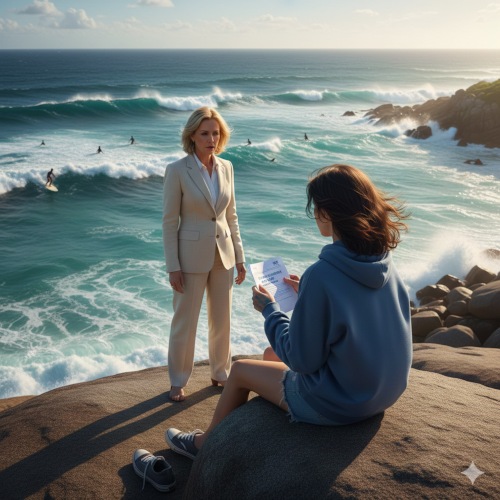
The Noosa National Park headland was usually Chloe’s sanctuary, but today, even the rhythm of the turquoise waves hitting the rocks couldn’t steady her breathing. She sat on the edge of a granite slab, her heels dangling over a drop that led straight into the churning foam.
In her hand, she crumpled a letter from the University of Queensland’s “Early Entry” program. To anyone else, the “Conditional Offer” would be a trophy. To Chloe, it felt like a life sentence.
“There you are,” a voice called out, cutting through the salt spray.
Chloe didn’t turn around. She knew the sound of those footsteps—expensive sneakers on dry gravel. It was her mother, Sarah, looking every bit the successful Sunshine Coast real estate mogul in her linen suit.
“I saw the mail on the counter, Chlo,” Sarah said, stepping onto the rock. Her voice was bright, like a polished kitchen surface. “Medicine! Just like we planned. We should book a table at Sails for dinner to celebrate. Your father is already telling the neighbors.”
“I haven’t accepted it yet,” Chloe said, her voice small against the roar of the Pacific.
The silence that followed was heavier than the humidity. Her mother’s shadow stretched out over the rock, long and imposing. “Don’t be silly, darling. You’ve worked since Year 7 for this. The ATAR prep, the tutoring, the volunteer hours at the clinic… it’s all led to this.”
Chloe looked down at her hands. They were stained with blue ink from her practice exams, but beneath the ink, her skin felt cold. She looked out at a group of surfers catching a break further down the coast. They looked weightless.
“I think I want to take a gap year,” Chloe whispered. “In Exmouth. Working on the whale shark boats.”
She heard her mother’s sharp intake of breath—the sound of a dream cracking.
Chapter 1: Comprehension & Analysis Questions
1. Literal: Where is the story set, and what specific news has Chloe received?
2. Inferential: What does the phrase “Her voice was bright, like a polished kitchen surface” suggest about Sarah’s personality and her relationship with her daughter?
3. Evaluative: Contrast the symbolism of the “blue ink” on Chloe’s hands with the “turquoise waves” of the ocean. What do these two different shades of blue represent in Chloe’s life?
4. Aesthetic Features: How does the author use the physical setting (the cliff edge and the “churning foam”) to reflect Chloe’s internal emotional state?
5. Prediction: Based on Sarah’s reaction, how do you think the conflict between Chloe’s desires and her family’s expectations will escalate in the next chapter?
Story 2: Salt on the Skin
Chapter 2: The Glass House
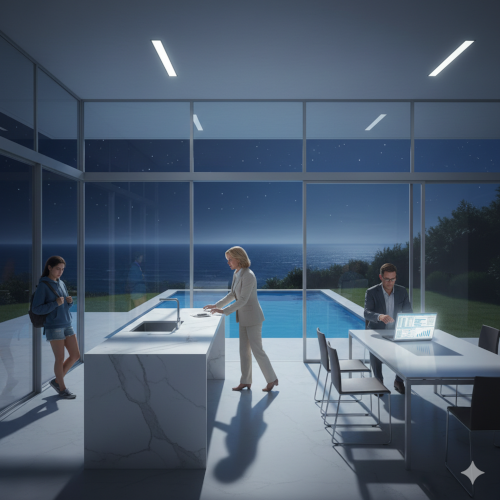
The dinner at Sails didn’t happen. Instead, the tension followed them back to their house—a masterpiece of minimalist architecture perched on the hills of Sunshine Beach. It was a house made almost entirely of glass, designed to invite the light in, but tonight, Chloe felt like a specimen under a microscope.
“Exmouth?” Sarah’s voice had lost its “polished surface” sheen. It was now sharp and rhythmic, like the ticking of a clock. She paced the length of the marble kitchen island. “Chloe, that isn’t a plan. That’s a detour. You don’t ‘take a break’ from a trajectory like yours. You’ll lose your momentum. You’ll lose your spot.”
“It’s just a year, Mum,” Chloe said, leaning against the cold glass of the sliding door. Outside, the pool was a perfect, chlorinated rectangle of blue, mocking the wild, messy ocean she’d just left. “I’ve spent five years looking at textbooks. I want to see something real. I want to be around something that doesn’t have a syllabus.”
Her father, David, sat at the dining table, his laptop open. He was a consultant who specialized in “optimizing performance,” and he treated his family like his biggest client.
“Chlo, look at the data,” David said, turning the screen toward her. He’d already pulled up a spreadsheet of career earnings and postgraduate pathways. “The burnout rate for medical students who defer is statistically higher. If you start now, you’re a consultant by thirty-two. You defer, and you’re already behind the curve.”
“The curve,” Chloe repeated. The word felt like a physical weight. “Is that all I am? A point on a graph?”
She didn’t wait for an answer. She grabbed her backpack and headed for the garage.
“Where are you going?” Sarah called out.
“To see Jax,” Chloe replied. “He doesn’t care about my ATAR.”
As she backed her old, salt-rusted hatchback out of the pristine driveway, she saw her parents framed in the massive glass windows of the living room. They looked like figures in a gallery—expensive, static, and perfectly composed.
Chapter 2: Comprehension & Analysis Questions
1. Literal: Describe the setting of the family home. How does it contrast with the setting in Chapter 1?
2. Inferential: What does David’s use of a “spreadsheet” to talk to his daughter reveal about his parenting style and his values?
3. Evaluative: Chloe says she wants to be around something that “doesn’t have a syllabus.” What does this suggest about her current perception of her life and education?
4. Aesthetic Features: The author describes the house as being “made almost entirely of glass.” How does this function as a metaphor for Chloe’s life?
5. Prediction: Who do you think “Jax” is, and how might his lifestyle or perspective offer a foil (a contrast) to Chloe’s parents?
Story 2: Salt on the Skin
Chapter 3: The Rust and the Resin
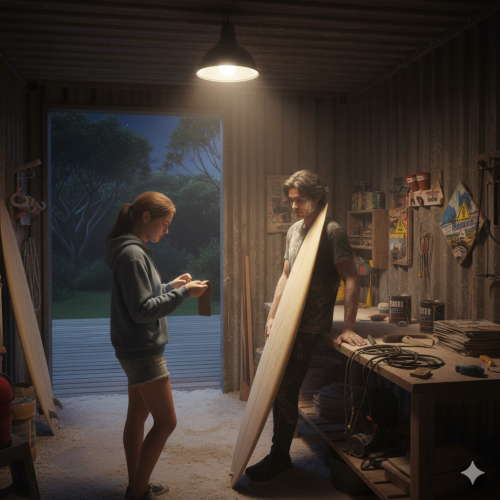
Jax lived in a converted shipping container tucked away on a bushy block in Peregian, just far enough from the coast that the air smelled of eucalyptus instead of pure salt. The space was a chaotic symphony of half-finished surfboards, tins of resin, and tangled leashes. There were no glass walls here—only corrugated steel and a wide, wooden deck that Jax had built himself.
When Chloe pulled up, Jax was under a spotlight, sanding the rails of a longboard. He was covered in a fine white dust that made him look like a ghost in the humid night air.
“You look like you just escaped a high-security facility,” Jax said without looking up, the rhythmic scritch-scritch of the sandpaper never faltering.
“Feels like it,” Chloe muttered, dropping her bag onto a stack of old surf magazines. She breathed in the sharp, chemical tang of the resin. To her parents, this smell was “industrial waste”; to Chloe, it was the smell of something being made by hand.
Jax stopped sanding and wiped his brow, leaving a smear of white dust across his forehead. “Offer came today, didn’t it?”
“Early entry. Medicine. The whole package.”
“And?”
“And I told them I wanted to go to Exmouth. My dad literally opened a spreadsheet, Jax. He tried to ‘optimize’ my life choices.”
Jax leaned against his workbench, eyeing the sleek lines of the board. “Your old man sees life as a race to the finish line. But the thing about the ocean is, there is no finish line. You just stay out there as long as the swell holds, and when it’s over, you paddle back in. No one wins a sunset.”
Chloe looked at the longboard. It was beautiful—imperfect, hand-shaped, and real. “They think I’m throwing my life away. That I’ll become… I don’t know, ‘unproductive’.”
“You’re nineteen soon, Chlo,” Jax said softly, handing her a piece of fine-grit sandpaper. “The only person who has to live in your head for the next sixty years is you. You want to spend them in a sterile lab, or do you want to see if the whale sharks are as big as they say?”
Chloe took the sandpaper. She felt the grit against her thumb—rough, honest, and certain.
Chapter 3: Comprehension & Analysis Questions
1. Literal: Where does Jax live, and what is he doing when Chloe arrives?
2. Inferential: How does the setting of Jax’s home (the “chaotic symphony” of surfboards and resin) act as a foil to Chloe’s parents’ home?
3. Evaluative: Jax says, “No one wins a sunset.” How does this philosophy challenge the values of “optimization” and “data” represented by Chloe’s father?
4. Aesthetic Features: Analyze the author’s use of sensory imagery in this chapter (e.g., the smell of resin vs. the smell of eucalyptus). How does this imagery reinforce the theme of “authenticity”?
5. Prediction: Chloe takes the sandpaper at the end of the chapter. What might this action symbolize regarding her decision-making process?
Story 2: Salt on the Skin
Chapter 4: The Pressure Cooker
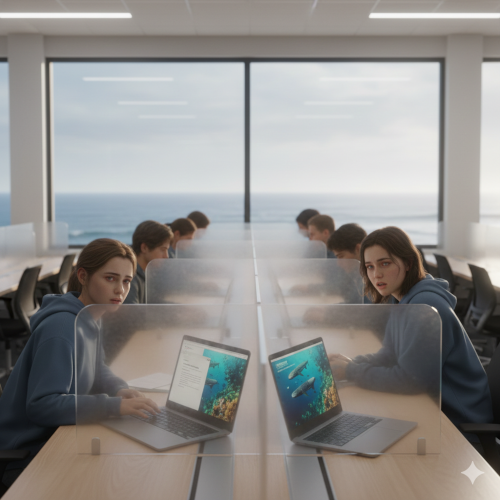
Monday morning at St. Jude’s College felt like stepping into a high-velocity wind tunnel. The school sat on a prime ridge overlooking the ocean, but the windows in the “Senior Excellence Centre” were tinted and double-glazed, muffling the sound of the waves into a low, insignificant hum. Here, the only sound that mattered was the synchronized tapping of four hundred keyboards.
“Did you hear about the UQ offers?” Mia whispered, leaning over the partition of their study nook. Mia was Chloe’s best friend, or at least, they had been in the same high-achieving orbit since primary school. Mia’s eyes were bloodshot; she’d stayed up until 2:00 AM perfecting her Chemistry IA.
“I got one,” Chloe said, keeping her voice flat.
Mia’s face transformed into a mask of pure, envious adoration. “Oh my god, Chlo! Medicine? You’re literally the first one in our year level. That’s it. You’re set. You’re officially ‘The Success Story’.”
“I’m thinking of deferring,” Chloe said.
Mia’s smile didn’t just fade; it collapsed. “Deferring? For what? To travel? Chlo, people like us don’t defer. We accelerate. If you step off the treadmill, you’ll never get back on. You know what they say about gap years—they’re just a fancy way of falling behind.”
Chloe looked at her laptop screen. An email from the school counselor sat in her inbox: Subject: Career Pathway Mapping – Final Confirmation Required. Below it, she had a tab open for a Ningaloo Reef research collective. The images were vibrant—shades of cobalt and emerald that made the beige walls of the study centre look like a tomb.
“I just feel like I’m suffocating, Mia,” Chloe said, her voice rising slightly. “Doesn’t it feel like we’re being processed? Like we’re products being packaged for a shelf?”
“I’d rather be a premium product than a clearance item,” Mia retorted, turning back to her screen. “My parents didn’t pay forty grand a year for me to go find myself in a tent in Western Australia.”
The bell rang—a sharp, digital tone that signaled the end of the study period. As Chloe packed her bag, she realized that the “success” Mia was talking about felt more like a cage than a trophy.
Chapter 4: Comprehension & Analysis Questions
1. Literal: How does Mia describe a gap year, and what does she think happens if you “step off the treadmill”?
2. Inferential: Describe the atmosphere of St. Jude’s College. How does the author use the “tinted and double-glazed” windows as a symbol for the school’s culture?
3. Evaluative: Mia says she’d rather be a “premium product than a clearance item.” What does this metaphor reveal about how the students at St. Jude’s have been taught to view their own self-worth?
4. Aesthetic Features: Contrast the color palette used to describe the school (beige, tinted, muffled) with the colors used to describe Chloe’s dream (cobalt, emerald). How does this use of color reinforce the conflict of the story?
5. Prediction: The email from the counselor requires “Final Confirmation.” Do you think Chloe will click ‘confirm’ to satisfy her social circle, or will she delete it?
Story 2: Salt on the Skin
Chapter 5: The Horizon Line
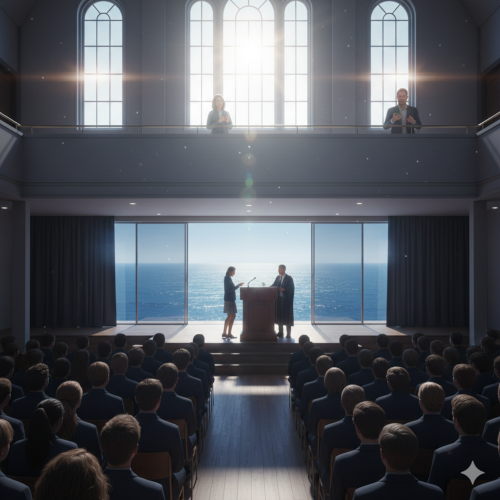
The final assembly of Term 3 was a sea of blazers and polished brass. The air in the Great Hall was thick with the scent of floor wax and nervous sweat. On the stage, the Principal stood behind a mahogany lectern, ready to announce the “Academic Excellence Awards.”
Chloe sat in the third row, her fingers tracing the rough edge of the sandpaper she had kept in her pocket since visiting Jax. It was her grounding point, a tactile reminder of the world outside the glass walls.
“And finally,” the Principal’s voice boomed, “a special recognition for a student who has secured early entry into one of the state’s most prestigious medical programs. Could Chloe Evans please come forward?”
The applause was thunderous. Her mother and father were standing in the gallery, her mother filming on her phone, her father nodding with a look of quiet, calculated victory.
Chloe stood up. Her legs felt like lead, but as she walked toward the stage, she didn’t look at the Principal. She looked past him, through the high clerestory windows where the midday sun was hitting the ocean. The water was a brilliant, defiant blue.
She reached the lectern. The Principal handed her a certificate, his hand already reaching for the next one. “A few words, Chloe? For the younger students?”
Chloe looked at the microphone. She thought of the “premium products” in the seats before her. She thought of the salt on Jax’s skin and the “Dead Zone” in Silas’s Brisbane.
“I’m grateful for the opportunity,” Chloe said, her voice clear and surprisingly steady. “But I won’t be taking the spot. At least, not this year.”
The applause didn’t just stop; it evaporated. The silence was so absolute that Chloe could hear the faint hum of the air conditioning. She saw her mother’s phone drop a few inches. She saw her father’s brow furrow as if he were trying to solve a broken equation.
“I’m going to Exmouth,” Chloe continued, a small smile tugging at the corner of her mouth. “I’m going to see the whale sharks. Because I realized that if I don’t learn how to breathe out there first, I’ll never be any use to anyone in a hospital.”
She handed the certificate back to the stunned Principal, stepped off the stage, and walked down the center aisle. She didn’t run. She walked with the rhythm of someone who had finally found their own swell. As she pushed through the heavy oak doors, the smell of the salt spray hit her face, and for the first time in years, Chloe felt light.
Chapter 5: Comprehension & Analysis Questions
1. Literal: What does Chloe do with the certificate the Principal hands to her?
2. Inferential: Why does Chloe say she needs to “learn how to breathe out there” before she can be a doctor? What does this imply about her view of the medical profession or her own maturity?
3. Evaluative: How does the reaction of the audience (the “evaporated” applause) highlight the social pressure of the school environment?
4. Aesthetic Features: The “sandpaper” is mentioned again in this chapter. How has its meaning changed or evolved from Chapter 3 to Chapter 5?
5. Thematic Synthesis: The title of the story is Salt on the Skin. Reflecting on the whole story, what does “salt” symbolize in contrast to the “glass” and “ink” mentioned in earlier chapters?
ブリスベンのデジタル空間「ホロウズ」を旅したレオの旅はこれで終わり。さて、第二話は海岸沿いへと向かう準備はいいかい?
今回はスペキュレイティブ・フィクションから**現代リアリズム**へと移り、11年生(Year 11)の生活における内的プレッシャーに焦点を当てる。
## ストーリー2:皮膚の塩
### 第一章:青の重み
ヌーサ国立公園の岬は普段ならクロエの聖域だが、今日はターコイズブルーの波が岩に打ち寄せるリズムさえも、彼女の呼吸を整えることができなかった。彼女は花崗岩の岩盤の端に座り、かかとをぶら下げたまま、渦巻く泡の中へと続く崖に足を踏み入れた。
彼女の手には、クイーンズランド大学の「早期入学」プログラムからの手紙がくしゃくしゃに丸まっている。他の人にとって、「条件付きオファー」はトロフィーのようなものだろう。クロエには、まるで終身刑のように感じられた。
「そこにいたわ」と、塩水しぶきを切り裂く声が響いた。
クロエは振り返らなかった。足音は覚えていた――乾いた砂利の上を高級スニーカーが歩く音だ。リネンのスーツを着た、サンシャインコーストの成功した不動産王の風格を漂わせる母親、サラだった。
「カウンターに郵便物があったの、クロ」サラは岩の上に足を踏み入れながら言った。彼女の声は、磨き上げられた台所の天板のように明るかった。「薬よ!計画通りね。お祝いにセイルズで夕食のテーブルを予約しておこう。お父さんはもう近所の人たちに話してるわよ」
「まだ受け入れてないわ」クロエは太平洋の轟音にかき消され、小さな声で言った。
その後の静寂は、湿気よりも重かった。母親の影が岩の上に長く、堂々と伸びていた。 「馬鹿言わないで、ダーリン。中学2年生の時からずっとこのために頑張ってきたのよ。ATAR対策、個別指導、クリニックでのボランティア…全部がこうなったのよ。」
クロエは自分の手を見下ろした。模擬試験の青いインクで染まっていたが、その下の肌は冷たかった。彼女は海岸のずっと先で波に乗ろうとするサーファーの集団を見た。彼らはまるで無重力のようだった。
「ギャップイヤーを取ろうかな」とクロエはささやいた。「エクスマスで。ジンベイザメ漁の船で働いているの。」
彼女は母親の鋭い息を吸い込む音を聞いた。夢が崩れ落ちる音だった。
—
### 第1章:読解と分析の問題
**1. 文字通り:** 物語の舞台はどこですか?そしてクロエは具体的にどんなニュースを受け取りましたか?
**2.推論的考察:**「彼女の声は、磨かれた台所の台所のように明るく輝いていた」という表現は、サラの性格と娘との関係について何を示唆しているでしょうか?
**3. 評価的考察:** クロエの手の「青いインク」と海の「ターコイズブルーの波」の象徴性を対比させてください。この2つの異なる青の色合いは、クロエの人生において何を象徴しているのでしょうか?
**4. 美的特徴:** 作者は、崖っぷちと「渦巻く泡」という物理的な設定をどのように用いて、クロエの内面的な感情状態を表現しているのでしょうか?
**5. 予測的考察:** サラの反応に基づいて、次章でクロエの願望と家族の期待の葛藤はどのようにエスカレートしていくと思いますか?
—
**『Salt on the Skin』の第2章に進みましょうか?それとも、まずはこの章の分析について議論しますか?**
## ストーリー2:皮膚の塩
### チャプター2:ガラスの家
*セイルズ*でのディナーは実現しなかった。その代わりに、緊張感は彼らの家へと引きずり込まれた。サンシャインビーチの丘に佇む、ミニマリスト建築の傑作。ほぼ全面がガラス張りで、光を取り込むように設計されていたが、今夜、クロエはまるで顕微鏡の下にいる標本のようだった。
「エクスマス?」サラの声は「磨き上げられた表面」のような輝きを失っていた。今や、時計のチクタク音のように、鋭くリズミカルだった。彼女は大理石のキッチンアイランドをゆっくりと歩き回った。「クロエ、それは計画じゃない。回り道よ。あなたのような軌跡から『休憩』なんてしちゃダメよ。勢いを失ってしまうわ。自分の立場を失ってしまうわ。」
「たった1年よ、ママ」クロエは冷たい引き戸のガラスに寄りかかりながら言った。外のプールは、塩素で真っ青な完璧な長方形を描いていた。彼女がたった今出て来た荒々しく混沌とした海を嘲笑うように。「5年間も教科書ばかり見てきた。本物が見たい。シラバスのないものに接したい。」
彼女の父親、デイビッドはダイニングテーブルに座り、ノートパソコンを開いていた。彼は「パフォーマンスの最適化」を専門とするコンサルタントで、家族を最大の顧客のように扱っていた。
「クロエ、データを見て」デイビッドはそう言って、彼女の方に画面を向けた。彼はすでに、キャリア収入と大学院進学の進路に関するスプレッドシートを開いていた。「医学生で留年した人の燃え尽き症候群の率は統計的に高いんだ。今から始めれば、32歳までにコンサルタントになれる。留年した時点で、もう時代遅れだ。」
「曲線」クロエは繰り返した。その言葉は、まるで物理的な重みのように感じられた。「私はそれだけ?グラフ上の点?」
彼女は答えを待たなかった。彼女はバックパックを掴み、ガレージに向かった。
「どこへ行くの?」サラが声をかけた。
「ジャックスに会いに行くのよ」とクロエは答えた。「彼は私のATARなんか気にしないわ。」
古くて塩で錆びたハッチバックを真新しい私道からバックさせると、リビングルームの巨大なガラス窓に両親の姿が映し出された。まるでギャラリーに飾られた人形のようだった。高級感があり、動きがなく、完璧な構図だった。
—
### 第2章:読解と分析の質問
**1. 文字通り:** 実家の状況を説明しなさい。第1章の状況とどのように対照的ですか?
**2. 推論:** デイビッドが娘に話しかけるために「スプレッドシート」を使ったことは、彼の子育てスタイルと価値観について何を明らかにしていますか?
**3. 評価的:** クロエは「シラバスのない」ものに関わりたいと言っています。これは、彼女の現在の人生観と教育観について何を示唆しているでしょうか?
**4. 美的特徴:** 著者は家が「ほぼガラスでできている」と表現しています。これはクロエの人生にとってどのようなメタファーとして機能しているでしょうか?
**5. 予測:** 「ジャックス」とは誰だと思いますか?また、彼のライフスタイルや考え方は、クロエの両親とどのような対照をなしているでしょうか?
—
## ストーリー2:皮膚の塩
### 第三章:錆と樹脂
ジャックスはペレジャンの茂みに覆われた一角にひっそりと佇む、改造された輸送コンテナに住んでいた。海岸から程よく離れた場所で、空気は純粋な塩ではなくユーカリの香りが漂っていた。その空間は、作りかけのサーフボード、樹脂の缶、絡まったリーシュが入り乱れた、混沌としたシンフォニーのようだった。ガラスの壁はなく、波形鋼板と、ジャックスが自ら作った広い木製デッキがあるだけだった。
クロエが車を停めると、ジャックスはスポットライトを浴びながらロングボードのレールを研磨していた。彼は白い粉塵に覆われ、湿った夜空に浮かぶ幽霊のようだった。
「まるで厳重警備施設から逃げ出したみたいだな」ジャックスは顔を上げずに言った。サンドペーパーのリズミカルな「ガリガリ」という音は、決して揺らぐことはなかった。
「そんな感じね」クロエは呟き、古いサーフィン雑誌の山の上にバッグを落とした。樹脂の鋭く化学的な匂いを吸い込んだ。両親にとってはこの匂いは「産業廃棄物」だったが、クロエにとっては何か手作りされている匂いだった。
ジャックスはヤスリを止め、額を拭った。額には白い埃がこびりついた。「今日、オファーが来たんだろ?」
「早期入学。医学。全部込みでね。」
「それで?」
「それで、エクスマス大学に行きたいって言ったんだ。父さんは文字通りスプレッドシートを開いたんだよ、ジャックス。僕の人生の選択を『最適化』しようとしてくれたんだ。」
ジャックスは作業台に寄りかかり、ボードの滑らかなラインを見つめた。 「お前の親父は人生をゴールまでのレースと捉えている。でも海にはゴールがない。波が続く限りそこにいて、波が去ったらまた漕いで戻ってくるだけ。夕日に勝てる人間なんていない。」
クロエはロングボードを見つめた。それは美しく、不完全で、人の手によって形作られ、そして本物だった。「みんな、私が人生を無駄にしていると思っているの。私が…何だか分からないけど、『非生産的』になるって。」
「もうすぐ19歳になるぞ、クロエ」ジャックスは優しく言い、目の細かいサンドペーパーを彼女に手渡した。「これからの60年間、お前の頭の中で生きなければならないのはお前だけだ。無菌実験室で過ごしたいのか、それともジンベイザメが噂通り大きいのか確かめたいのか?」
クロエはサンドペーパーを受け取った。親指にサンドペーパーの感触を感じた。荒々しく、正直で、そして確信に満ちていた。
—
### 第3章:理解と分析に関する質問
**1. 文字通りの意味:** ジャックスはどこに住んでいて、クロエが到着したとき、彼は何をしていましたか?
**2. 推論的意味:** ジャックスの家(サーフボードと樹脂の「混沌とした交響曲」)の舞台設定は、クロエの両親の家とどのように対照的になっていますか?
**3. 評価的意味:** ジャックスは「夕日に勝るものはない」と言います。この哲学は、クロエの父親が象徴する「最適化」と「データ」という価値観にどのように挑戦していますか?
**4. 美的特徴:** この章における著者の感覚的イメージ(例:樹脂の香り vs. ユーカリの香り)の用い方を分析してください。これらのイメージは、「本物らしさ」というテーマをどのように強調していますか?
**5. 予測的意味:** クロエは章の終わりにサンドペーパーを取ります。この行動は、彼女の意思決定プロセスにおいて何を象徴しているのでしょうか?
## ストーリー2:皮膚の塩
### 第4章:プレッシャークッカー
セント・ジュード・カレッジの月曜日の朝は、まるで高速風洞に足を踏み入れたかのようだった。学校は海を見下ろす絶好の尾根に位置していたが、「シニア・エクセレンス・センター」の窓は色付きガラスと二重ガラスで、波の音は低く取るに足らない音にかき消されていた。ここで唯一聞こえるのは、400台のキーボードが同期して叩く音だけだった。
「UQのオファー、聞いた?」ミアは勉強部屋の仕切りに身を乗り出し、ささやいた。ミアはクロエの親友だった。少なくとも、小学校時代からずっと同じくらいの成績優秀者だった。ミアの目は充血していた。化学IAの試験に午前2時まで徹夜で合格したのだ。
「私、合格したの」クロエは声を抑えながら言った。
ミアの表情は、純粋な羨望と崇拝の表情に変わった。「あらまあ、クロ!医学?本当に、学年で一番でしょ。これで決まり。あなたは正式に『サクセスストーリー』よ。」
「延期しようと思っているの」とクロエは言った。
ミアの笑顔は消えたどころか、崩れ落ちた。「延期?何のために?旅行?クロエ、私たちのような人間は延期なんかしないわ。加速するのよ。トレッドミルから降りたら、二度と乗れないわ。ギャップイヤーって言うでしょ?ただ、遅れをとるためのちょっと変わった方法よ。」
クロエはノートパソコンの画面を見た。受信トレイには、スクールカウンセラーからのメールが届いていた。*件名:キャリアパスウェイマッピング – 最終確認が必要です。* その下に、ニンガルーリーフ研究団体のタブが開いていた。映像は鮮やかだった。コバルトとエメラルドの色合いが、学習センターのベージュの壁を墓場のように見せていた。
「ミア、息苦しいわ」とクロエは声を少し上げて言った。「まるで加工されているみたいじゃない?棚に並べるために包装されている商品みたいじゃない?」
「クリアランス品よりプレミアム商品になりたい」とミアは言い返し、画面に戻った。「両親は、西オーストラリアのテントで暮らすために年間4万ドルも払ってくれたわけじゃないのよ」
ベルが鳴った。鋭く響くデジタル音が、学習期間の終了を告げた。クロエはバッグに荷物を詰めながら、ミアが言っていた「成功」がトロフィーというより檻のようなものだと感じていることに気づいた。
—
### 第4章:読解と分析の質問
**1.文字通り:** ミアはギャップイヤーをどのように描写していますか?また、「トレッドミルから降りる」としたら何が起こると考えていますか?
**2. 推論:** セント・ジュード・カレッジの雰囲気を描写してください。著者は「色付き二重ガラス」の窓を、学校の文化の象徴としてどのように用いていますか?
**3. 評価:** ミアは「在庫処分品よりも高級品になりたい」と言っています。この比喩は、セント・ジュード・カレッジの生徒たちが自分の価値をどのように捉えるように教えられてきたかについて、何を明らかにしていますか?
**4. 美的特徴:** 学校を表現するために使われている色彩(ベージュ、色付き、くすんだ色)と、クロエの夢を表現するために使われている色彩(コバルト、エメラルド)を対比させてください。この色使いは、物語の葛藤をどのように強調していますか?
**5. 予測:** カウンセラーからのメールには「最終確認」が必要です。クロエは社交界の仲間を満足させるために「確認」をクリックすると思いますか?それとも削除すると思いますか?
—
**クロエの物語の最終章の準備が整いました。「Salt on the Skin」の第5章に進みましょうか?それとも休憩を取りますか?**
## ストーリー2:皮膚の塩
### 第5章:地平線
第3学期の最終集会は、ブレザーと磨き上げられた真鍮の服で溢れていた。大広間には、床ワックスの匂いと緊張の汗の匂いが充満していた。壇上では、校長がマホガニーの演台の後ろに立ち、「学業優秀賞」の発表を待っていた。
クロエは3列目に座り、ジャックスを訪れて以来ポケットにしまっておいたサンドペーパーのざらざらした表面を指でなぞっていた。それは彼女の心の拠り所であり、ガラスの壁の外の世界を触覚的に思い出させてくれるものだった。
「最後に」と校長の声が響いた。「州で最も名声の高い医学部の一つへの早期入学を勝ち取った生徒への特別表彰です。クロエ・エヴァンスさん、前に出ていただけますか?」
割れんばかりの拍手が沸き起こった。両親は傍聴席に立っていた。母親は携帯電話で動画を撮影し、父親は静かに計算高い勝利の表情で頷いていた。
クロエは立ち上がった。足は鉛のように重かったが、ステージに向かって歩きながら、校長先生には目を向けなかった。校長先生の向こう、高い天窓から真昼の太陽が海に差し込む景色を眺めた。海は鮮やかで、挑戦的な青色だった。
彼女は演台に着いた。校長先生は彼女に賞状を手渡し、その手はすでに次の賞状に伸びていた。「クロエ、ちょっと一言お願いします。下の生徒さんたちに」
クロエはマイクに目をやった。目の前の席に並べられた「高級品」のことを考えた。ジャックスの肌についた塩分や、サイラスのブリスベンに描かれた「デッドゾーン」のことを思った。
「この機会をいただき、感謝しています」とクロエははっきりと、驚くほど落ち着いた声で言った。「でも、この席は引き受けません。少なくとも今年は。」
拍手は止まったどころか、消え去った。静寂はあまりにも深く、クロエはエアコンのかすかな音さえ聞こえた。母親の携帯が数インチ落ちるのが見えた。父親の眉間にしわが寄ったのは、まるで壊れた方程式を解こうとしているようだった。
「エクスマスに行くの」とクロエは口角に小さな笑みを浮かべながら続けた。「ジンベイザメを見に行くの。だって、まずそこで呼吸の仕方を学ばなければ、病院で誰の役にも立たないって気づいたから。」
彼女は驚愕する校長に卒業証書を返し、ステージを降りて中央通路を歩いた。走らなかった。ついに自分の波を見つけた人のように、軽やかに歩いた。重厚なオーク材の扉を押し開けると、潮風の匂いが顔に漂い、クロエは数年ぶりに体が軽くなったように感じた。
—
### 第5章:読解と分析の質問
**1. 文字通りの意味:** クロエは校長から渡された証明書をどうしますか?
**2. 推論的意味:** クロエはなぜ医者になる前に「外で呼吸する方法を学ぶ」必要があると言うのでしょうか?これは、彼女の医療専門家としての見方、あるいは彼女自身の成熟度について何を示唆しているのでしょうか?
**3. 評価的意味:** 観客の反応(「蒸発した」拍手)は、学校環境における社会的プレッシャーをどのように浮き彫りにしていますか?
**4. 美的特徴:** この章で「サンドペーパー」が再び言及されています。第3章から第5章にかけて、その意味はどのように変化または進化しましたか?
**5. テーマの統合:** この物語のタイトルは*Salt on the Skin*です。物語全体を振り返ってみると、これまでの章で触れた「ガラス」や「インク」とは対照的に、「塩」は何を象徴しているのでしょうか?
—
**これで第2話は終了です!ハイテクな未来と、プレッシャーのかかる現代を描いてきました。