Hello! I have Story 3 ready for you, continuing the series for a Year 7 Australian reader.
This story, “The Sunken City of Cardwell,” focuses on a thrilling school excursion and a secret environmental mystery in Far North Queensland.
📚 Story 3: The Sunken City of Cardwell
Chapter 1: The Beachcomber’s Warning

Story Text
The humidity of Far North Queensland hit Zac like a damp, warm blanket. His Year 7 class was on a marine science excursion near Cardwell, a sleepy coastal town nestled between rainforest and reef. Their task was to monitor tidal pools for coral bleaching and marine life health—a task Zac found infinitely better than algebra.
They were staying at a conservation centre near the beach, a stretch of sand littered with shells, driftwood, and the inevitable plastic debris. On their first afternoon, Zac found something far more interesting: a bottle, sealed with wax, containing a tightly rolled map.
He took it straight to his teacher, Mrs. Chen. She unsealed it carefully. The map was detailed, but bizarre—it showed a submerged town, complete with a jetty and a clock tower, located exactly where the modern Cardwell harbour now stood. Written beneath the sketch was a cryptic warning: They didn’t just rebuild. They sealed it. The pulse will find it. Protect the glass.
As they discussed the find, a local beachcomber named Old Man Kai shuffled up. He rarely spoke to tourists. He pointed a gnarled finger at the map. “You found the legend,” he rasped, his voice rough from the sea air. “The old town was swallowed by the sea in the cyclone of ’18. The council rebuilt on the higher ground. But they didn’t want the ruin disturbing the new docks. The engineers—they capped it. Sealed the old foundations down there with concrete and steel. You leave that map alone, son. Some secrets should stay drowned.” He gave one last anxious look at the churning, turquoise water and shuffled away.
Comprehension Questions
- Setting: Describe the location of the school excursion. What two natural features is the town of Cardwell situated between?
- Characterisation: What is Zac’s attitude towards the marine science excursion, and how does this contrast with his feelings about school subjects like algebra?
- Analysis: What are the three main elements of the warning written on the map (They didn’t just rebuild. They sealed it. The pulse will find it. Protect the glass.)?
- Information Gathering: According to Old Man Kai, what event caused the original town to sink, and what specific action did the council take to deal with the ruins?
- Prediction: What do you think “the pulse” mentioned in the warning might be? (Consider the marine science setting.)
Chapter 2: The Acoustic Field
Story Text
Mrs. Chen, a scientist first and a teacher second, couldn’t ignore the possibility of a large underwater structure affecting the local currents. She contacted the centre director, who agreed to let Zac and two responsible students, Chloe and Ben, accompany her on a shallow dive near the old dock site the next morning.
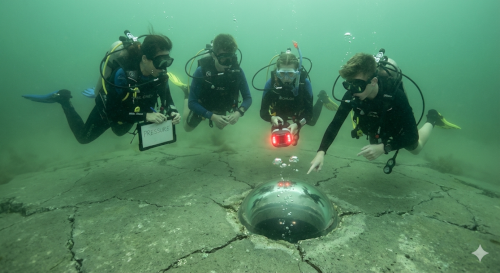
Beneath the deceptively calm surface, the water was murky, tinted green by fine silt. After twenty minutes of searching, they found it: a vast, flat expanse of grey, poured reinforced concrete covering the seafloor. It was enormous, stretching for hundreds of metres.
Chloe, using the school’s handheld acoustic sensor, picked up a reading. “Mrs. Chen, the sensor is going crazy. It’s detecting a low-frequency, repetitive sound pulse, right beneath the concrete. It’s too deep to be boat traffic.”
Suddenly, the dive became dangerous. The temperature of the water around the concrete field dropped instantly. Small, perfectly spherical bubbles of air began seeping up through tiny fissures in the concrete, carrying a faint, acrid smell of decay.
Ben pointed frantically toward a small, circular section in the centre of the cap. Embedded in the concrete was a thick, dome-shaped piece of glass, perhaps a metre wide, acting as a bizarre, underwater window into the sealed city below. The sensor pulse was loudest directly beneath it. Mrs. Chen quickly wrote a single word on her slate for Zac to read: PRESSURE. They had to leave before the water conditions grew worse.
Comprehension Questions
- Scientific Method: Why does Mrs. Chen decide to investigate the area, even though Old Man Kai warned them not to?
- Environmental Detail: What two unusual changes in the surrounding environment alert the divers that the site is potentially dangerous?
- Setting: Describe the structure they found on the seafloor. What material was it made of, and what was its apparent purpose?
- Vocabulary: The concrete is described as reinforced. Based on the context of the sealed city, why would the engineers have used reinforced concrete?
- Inference: Based on the smell and the bubbles rising from the fissures, what is likely happening to the structures of the old, sealed city beneath the concrete cap?
Chapter 3: The Pulse Device
Story Text
Back on shore, they reviewed the acoustic sensor data. The recurring pulse was indeed an engineered frequency, not a natural phenomenon. It was strong enough to create constant acoustic vibration within the concrete cap.
Mrs. Chen frowned at the readings. “This isn’t just to keep the old city down. It’s to keep something out. Or maybe, to test how much pressure the concrete can handle.”
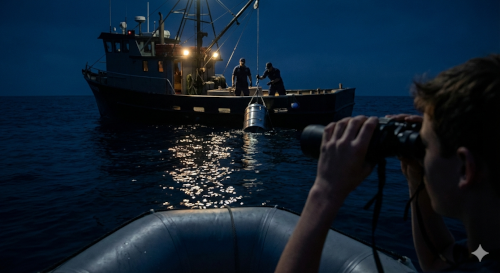
Later that evening, Zac was sitting by the centre’s research shed when he noticed a boat leaving the dock, not for fishing, but heading straight for the concrete cap site. Its lights were minimal, but the sound of its engine was unmistakable. Following an instinct, Zac quickly snuck onto the centre’s unused survey dinghy.
He reached the location about 200 metres from the boat. Peering through the darkness with binoculars, he saw two figures dressed in dark, official-looking uniforms. They were lowering a large, cylindrical device on a thick cable, positioned precisely over the glass dome they had seen earlier.
Zac realised what they were doing. The device was an acoustic amplifier, designed to increase the power of the pressure pulse beneath the concrete. He remembered the map’s last instruction: Protect the glass. The glass dome wasn’t a window; it was the weakest point—a pressure relief valve. If the pulse was amplified, the glass might shatter, leading to a catastrophic collapse of the entire cap, potentially flooding the old city and creating a dangerous vortex near the new harbour.
Comprehension Questions
- Conflict Introduction: What is the motivation of the two figures in the dark boat, and what is the device they are lowering into the water?
- Cause and Effect: Explain the sequence of events that Zac predicted would happen if the ‘acoustic amplifier’ was activated over the glass dome.
- Vocabulary: The sound is described as creating constant acoustic vibration. What does the term “acoustic” refer to, and why is this vibration dangerous in this context?
- Interpretation: Why did Zac conclude that the glass dome was a “pressure relief valve” rather than just a window?
- Action and Suspense: What risky decision does Zac make in this chapter, and how does this decision increase the level of suspense for the reader?
Chapter 4: Race Against the Clock
Story Text
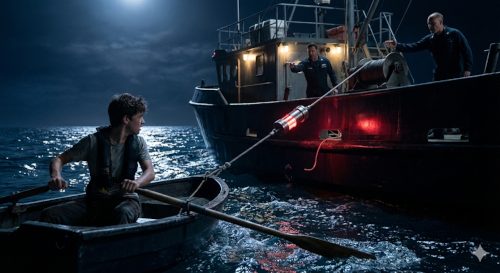
Zac knew he couldn’t confront the figures in the boat. They were well-equipped and likely dangerous. He had to disable their device. He checked the centre’s dinghy: rusty anchor, a length of thin rope, and a rusty boat hook. That was it.
He silently rowed the dinghy closer, staying low in the hull, letting the darkness and the slight swell conceal him. The two figures finished positioning the cylindrical device and were now checking their monitoring equipment. They were wearing badges marked with a symbol Zac vaguely recognised: a stylised wave over a cracked shield—the logo of a private, high-level coastal infrastructure firm.
The amplifier device was suspended just a foot above the water’s surface, attached to a thick winch cable. It was emitting a faint, pulsating red light. Zac waited until one of the figures moved to the bow. In that moment of distraction, Zac raised the boat hook. With a strong, high arc, he managed to snag the loop of the cable directly above the device.
He quickly secured the boat hook handle to the dinghy’s unused anchor rope. Then, he rowed the dinghy in a tight, fast circle around the enemy boat. He was trying to tangle the thin rope around the thick cable, jamming the winch.
“Hey! What’s that dinghy doing?” one of the figures shouted, seeing the ghostly shape moving in the dark.
Zac didn’t stop. He gave one final, powerful pull on the rope, yanking it taut. There was a horrible screech of metal and a thunk. The thin rope had successfully wedged itself into the winch gears. The men couldn’t raise or lower the amplifier, and the tension of the rope was pulling the cylinder dangerously close to the side of their boat.
Comprehension Questions
- Character Analysis: What qualities does Zac demonstrate in this chapter (despite his limited resources) that make him an effective protagonist?
- Detail/Setting: What does the logo on the men’s badges suggest about their motivation for amplifying the pulse beneath the city?
- Problem Solving: What was Zac’s precise, two-step plan for disabling the device, given his available equipment?
- Figurative Language: The text describes the boat hook action as a “strong, high arc.” What does this vivid description communicate about Zac’s action and the risk he is taking?
- Suspense and Foreshadowing: Why is the fact that the men now cannot raise or lower the amplifier a temporary victory, and what dangerous situation has Zac created for himself?
Chapter 5: Dawn’s Proof
Story Text
The figures rushed to the side of their boat, shouting curses into the night. Zac frantically rowed away, disappearing into the dark, choppy waves. He managed to return the dinghy and bolt the shed door just as the first glimmer of dawn broke.
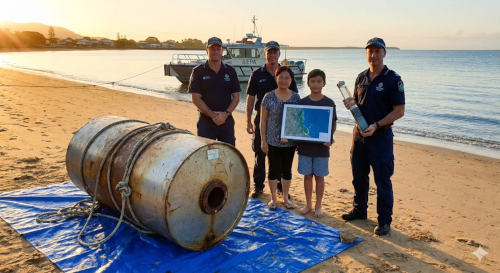
He quickly woke Mrs. Chen, whispering the entire story, from the logo to the jammed winch. She immediately called the regional police and the environmental protection authority (EPA).
By the time the police arrived, the figures’ boat was gone. However, the private infrastructure firm’s amplifier—now disabled and listing in the water due to Zac’s jammed rope—was undeniable evidence.
The EPA divers recovered the device and, more importantly, took deep-core samples from the concrete cap. Their final report revealed the truth: The engineers who sealed the old town in 1918 had also trapped an underground aquifer (a water source) contaminated by the original town’s gas and sewage systems. The acoustic pulse was a method used by the infrastructure firm to slowly destabilise the old cap. They intended to collapse it, releasing the contaminated water into the sea to artificially lower the new town’s property values, allowing the firm to buy cheap land for a large-scale resort development. They needed to “clear the way” for their new docks.
Zac and the students’ intervention stopped a massive ecological and financial disaster. At the school assembly the next week, Zac was awarded a special commendation for his “outstanding marine protection work.” He looked at the bottle map he had framed. The cryptic warning, Protect the glass, was a message from the past, ensuring that the environmental truth of the sunken city would not stay drowned forever.
Comprehension Questions
- Resolution: What were the police and EPA able to recover from the site, and why was this evidence crucial?
- Analysis of the Villains’ Plan: What was the true, complex motivation of the private infrastructure firm? Explain the two main reasons they wanted the concrete cap to collapse.
- Science/Geography Connection: What is an aquifer, and why was the contamination of the one trapped beneath the city such a major ecological threat?
- Clarity of Theme: How does the framing of the map and the final thought about the “environmental truth” highlight the main theme of the story?
- Character Conclusion: How does Zac’s commendation for “outstanding marine protection work” resolve the initial tension between his love for marine science and his dismissal of subjects like algebra?
************************************************************************
こんにちは!オーストラリアの7年生向けのシリーズの続き、ストーリー3をお届けします。
このストーリー「沈んだ街、カードウェル」は、クイーンズランド州ファー・ノースを舞台にした、スリリングな修学旅行と秘密の環境ミステリーに焦点を当てています。
📚 ストーリー3:沈んだ街、カードウェル
第1章:ビーチコマーの警告
ストーリーテキスト
クイーンズランド州ファー・ノースの湿気は、まるで湿っぽくて温かい毛布のようにザックを襲いました。7年生のクラスは、熱帯雨林とサンゴ礁に囲まれた静かな海辺の町、カードウェル近郊の海洋科学遠足に参加していました。彼らの課題は、サンゴの白化現象と海洋生物の健康状態を調べるために潮だまりを監視することでした。ザックにとっては、代数よりもはるかに楽しい課題でした。
彼らはビーチ近くの保護センターに滞在していました。そこは、貝殻、流木、そして避けられないプラスチックごみが散らばる砂浜でした。最初の午後、ザックはもっと興味深いものを見つけた。蝋で封印された瓶の中に、きつく巻かれた地図が入っていたのだ。
彼はそれをすぐに先生のチェン先生に持って行った。先生は丁寧に封を切った。地図は詳細だったが、奇妙なものだった。水没した町が描かれ、桟橋と時計塔まで残っていた。それはまさに現在のカードウェル港がある場所にあった。スケッチの下には謎めいた警告が書かれていた。「ただ再建しただけではない。封印したのだ。脈が見つけるだろう。ガラスを守れ」
彼らがその発見について話し合っていると、地元の海岸探検家カイ老人がよろよろと近づいてきた。彼はめったに観光客に話しかけない。彼は節くれだった指で地図を指差した。「伝説を見つけたな」潮風で声がかすれていた。 「旧市街は18年のサイクロンで海に飲み込まれてしまった。市議会は高台に再建した。だが、廃墟が新しい埠頭の邪魔になるのを望まなかった。技術者たちは、その上に覆いをかぶせた。コンクリートと鋼鉄で古い基礎を封印したのだ。坊っちゃん、その地図には手を出さないでくれ。秘密は水に沈めておくべきだ。」彼は最後にもう一度、波立つターコイズブルーの海を不安げに見つめ、足を引きずりながら立ち去った。
理解度確認問題
1.設定:学校の遠足の場所を説明しなさい。カードウェルの町は、どのような2つの自然地形の間に位置していますか?
2.人物描写:ザックは海洋科学遠足に対してどのような態度を示し、代数などの学校の科目に対する彼の考え方とどのように対照的ですか?
3.分析:地図に書かれた警告の3つの主要な要素は何ですか?(彼らはただ再建しただけではない。封印した。脈がそれを見つけるだろう。ガラスを守れ。)
4.情報収集:カイ老人によると、元の町が沈没した原因は何だったのでしょうか?また、評議会は遺跡の修復のために具体的にどのような措置を講じたのでしょうか?
5.予測:警告に記された「脈動」とは一体何だと思いますか?(海洋科学の状況を考慮に入れてください。)
第2章:音響場
ストーリーテキスト
科学者であり教師でもあるチェン先生は、巨大な海底構造物が地元の海流に影響を与えている可能性を無視することができませんでした。彼女はセンター長に連絡を取り、翌朝、ザックと二人の責任感のある生徒、クロエとベンを旧ドック跡地近くの浅瀬に同行させることを承諾しました。
一見穏やかな水面の下は、細かいシルトによって緑色に染まった濁った水面でした。20分間の捜索の後、彼らはそれを見つけました。海底を覆う、灰色の鉄筋コンクリートの広大で平坦な空間でした。それは数百メートルにも及ぶ巨大なものでした。
クロエは学校の携帯型音響センサーを使って、ある音波を捉えました。「チェン先生、センサーがおかしくなってしまいました。コンクリートの真下で、低周波の反復音波を検知しています。船の往来にしては深すぎます。」
突然、潜水は危険な状況になりました。コンクリートのフィールド周辺の水温が瞬時に低下した。コンクリートの小さな亀裂から、小さな球状の気泡が漏れ出し、かすかに腐敗臭を漂わせていた。
ベンは必死に、キャップの中央にある小さな円形の部分を指差した。コンクリートには、おそらく幅1メートルほどの厚いドーム型のガラス片が埋め込まれており、その下にある封印された都市を覗く奇妙な水中窓の役割を果たしていた。センサーのパルスは、その真下で最大に大きくなった。チェン夫人はザックに読ませるために、石板に「圧力」という単語を素早く書き記した。水質が悪化する前に、彼らはその場を去らなければならなかった。
理解度に関する問題
1.科学的方法:カイ老人が警告したにもかかわらず、チェン夫人はなぜその場所を調査することにしたのか?
2.環境の詳細:周囲の環境におけるどのような2つの異常な変化が、ダイバーたちにその場所が潜在的に危険であることを警告したのか?
3.設定:彼らが海底で発見した構造物について説明しなさい。それはどのような材料で作られ、どのような目的で作られたのでしょうか?
4.語彙:コンクリートは鉄筋コンクリートと説明されています。封鎖された都市という状況を踏まえると、なぜ技術者たちは鉄筋コンクリートを使用したのでしょうか?
5.推論:臭いと亀裂から立ち上る泡から判断すると、コンクリートの蓋の下にあった古い封鎖都市の構造物に何が起こっているのでしょうか?
第3章:パルス装置
ストーリーテキスト
岸に戻り、彼らは音響センサーのデータを確認した。繰り返し発生するパルスは、確かに人工的な周波数であり、自然現象ではなかった。コンクリートキャップ内に一定の音響振動を生み出すほど強力だった。
チェン夫人は測定値を見て眉をひそめた。「これは単に旧市街の騒音を抑えるためだけじゃない。何かを遮断するためだ。あるいは、コンクリートがどれだけの圧力に耐えられるかを試すためかもしれない。」
その夜遅く、ザックはセンターの研究小屋のそばに座っていた。すると、一隻の船が桟橋から出港するのが見えた。漁のためではなく、コンクリートキャップの建設予定地へと一直線に進んでいくようだった。灯りは最小限だったが、エンジン音は紛れもなくそれと分かった。本能に従い、ザックはセンターの使われていない調査用ディンギーに素早く忍び込んだ。
彼は船から約200メートル離れた場所にたどり着いた。双眼鏡で暗闇を覗くと、暗い制服を着た二人の人影が見えた。彼らは太いケーブルに繋がれた大きな円筒形の装置を下ろしていた。その装置は、先ほど見たガラスドームの真上に正確に設置されていた。
ザックは彼らが何をしているのか理解した。その装置は音響増幅器で、コンクリートの下の圧力パルスの強度を増幅するように設計されていた。彼は地図の最後の指示を思い出した。「ガラスを保護せよ」。ガラスドームは窓ではなく、最も弱い部分、つまり圧力逃し弁だった。パルスが増幅されればガラスが砕け散り、ドーム全体が壊滅的な崩壊に陥り、旧市街が浸水し、新港の近くに危険な渦が発生する可能性がある。
理解に関する質問
1.衝突の導入:暗いボートに乗っている二人の人物の動機は何なのか、そして彼らが水中に下ろしている装置は何なのか?
2.原因と結果:ザックが予測した「音響増幅器」がガラスドーム上で作動した場合に起こる一連の出来事を説明しなさい。
3.語彙:音は一定の音響振動を生み出すと説明されている。 「音響」という言葉は何を指し、なぜこの文脈においてこの振動が危険なのでしょうか?
4.解釈:ザックはなぜガラスドームが単なる窓ではなく「圧力逃し弁」であると結論付けたのでしょうか?
5.アクションとサスペンス:この章でザックはどのような危険な決断を下したのでしょうか?そして、その決断は読者のサスペンスレベルをどのように高めているのでしょうか?
第4章:時間との競争
ストーリーテキスト
ザックはボートの中の人影たちと対峙することはできないと悟った。彼らは装備も万全で、おそらく危険な存在だろう。彼らの装置を無効化しなければならない。センターのディンギーを確認すると、錆びた錨、細いロープ、そして錆びたボートフックがあった。それだけだ。
彼は静かにディンギーを漕ぎ、船体に低く身を隠し、暗闇とわずかなうねりに身を隠した。二人の人影は円筒形の装置の設置を終え、今度は監視装置を確認していた。ザックが漠然と見覚えのあるシンボルが記されたバッジを着けていた。ひび割れた盾の上に様式化された波が描かれた、ある民間の高級沿岸インフラ企業のロゴだ。
増幅装置は水面からわずか30センチほどのところに、太いウインチケーブルで吊り下げられていた。かすかな赤い光を発していた。ザックは人影の一人が船首に移動するのを待った。その瞬間、気を取られたザックはボートフックを上げた。力強く高く弧を描いて、彼は装置の真上にあるケーブルの輪を掴んだ。
彼は素早くボートフックのハンドルをディンギーの使われていないアンカーロープに固定した。それから、ディンギーを敵のボートの周りを素早く、きつく円を描くように漕ぎ出した。彼は細いロープを太いケーブルに絡ませ、ウインチを動かなくさせようとしていた。
「おい!あのディンギーは何をしているんだ?」暗闇の中で動く幽霊のような姿を見て、人影の一人が叫んだ。
ザックは止まらなかった。彼はロープを最後の力で引っ張り、ぴんと張った。金属が軋むような音と、ドスンという音がした。細いロープはウインチのギアに見事に挟まっていた。二人は増幅器を上げ下げできず、ロープの張力でシリンダーがボートの側面に危険なほど引き寄せられていた。
理解度チェック問題
1.登場人物分析:ザックはこの章で(限られた資源にもかかわらず)どのような資質を示し、主人公として効果的に機能しているのでしょうか?
2.詳細/設定:男たちのバッジのロゴは、街の地下で脈動を増幅しようとした彼らの動機について何を示唆しているのでしょうか?
3.問題解決:ザックが利用可能な装備の範囲内で、装置を無効にするために立てた、緻密な2段階の計画とはどのようなものだったのでしょうか?
4.比喩表現:本文では、ボートフックの動きを「強く高い弧を描く」と表現しています。この鮮明な描写は、ザックの行動と彼が負うリスクについて何を伝えているのでしょうか?
5.サスペンスと伏線:男たちが増幅器を上げ下げできなくなったという事実が、なぜ一時的な勝利と言えるのでしょうか?そして、ザックはどのような危険な状況を自ら作り出したのでしょうか?
第5章:夜明けの証拠
本文
人影たちはボートの脇に駆け寄り、夜空に向かって罵声を浴びせた。ザックは必死に漕ぎ出し、暗く荒々しい波の中へと姿を消した。夜明けの兆しがほんの少しだけ差し掛かる頃、彼はなんとかディンギーを戻し、小屋の扉に閂をかけた。
彼はすぐにチェン夫人を起こし、ロゴからウインチの故障まで、一連の出来事を全てささやきながら話した。彼女はすぐに地方警察と環境保護庁(EPA)に通報した。
警察が到着した時には、人影たちのボートは消えていた。しかし、ザックのロープが詰まったせいで作動せず、水中に傾いていた民間インフラ会社の増幅器は、紛れもない証拠だった。
EPAのダイバーたちは装置を回収し、さらに重要なことに、コンクリート製の蓋から深部コアサンプルを採取した。最終報告書は真実を明らかにした。1918年に旧市街を封鎖した技術者たちは、かつての町のガスと下水道によって汚染された地下帯水層(水源)も封鎖していたのだ。音響パルスは、インフラ会社が旧市街の封鎖を徐々に不安定化させるために用いた手法だった。彼らは封鎖を崩壊させ、汚染された水を海に放出することで新市街の不動産価値を人為的に下げ、大規模リゾート開発のための安価な土地を購入しようとしていた。彼らは新しい埠頭のために「道を切り開く」必要があった。
ザックと生徒たちの介入により、甚大な環境的・経済的災害は食い止められた。翌週の学校集会で、ザックは「卓越した海洋保護活動」に対して特別表彰を受けた。彼は額装したボトルマップに目をやった。「ガラスを守れ」という謎めいた警告は、過去からのメッセージであり、沈没した都市の環境的真実が永遠に水没したままにならないようにするためのものだった。
理解度に関する質問
1.解決:警察とEPAは現場から何を回収できたのか、そしてなぜこの証拠が重要だったのか?
2.悪者の計画の分析:民間インフラ企業の真の、そして複雑な動機は何だったのか?彼らがコンクリート製の蓋を崩壊させたかった2つの主な理由を説明しなさい。
3.科学と地理の関連性:帯水層とは何か?そして、都市の下に閉じ込められた帯水層の汚染が、なぜそれほど大きな生態系の脅威となったのか?
4.テーマの明確さ:地図の構成と「環境の真実」についての最終的な考察は、物語の主題をどのように強調しているのか?
5.登場人物の結論:ザックが「優れた海洋保護活動」に対して表彰されたことで、海洋科学への愛情と代数学などの科目への嫌悪感という、当初の葛藤がどのように解消されたのか?