Here is the fifth and final story, “The Whisper in the Canefields,” which returns to a setting with strong regional Queensland context—the sugar cane farming areas—focusing on historical folklore, environmental changes, and cultural understanding, suitable for a Year 7 reader.
📚 Story 5: The Whisper in the Canefields
Chapter 1: The Old Mill Ruins
Story Text
Jem was spending the summer holidays helping his grandfather, Pop, on their sugar cane farm outside Bundaberg. It was hard, hot work, but the pay-off was the constant drone of the cicadas and the scent of molasses carried on the breeze from the distant refinery.
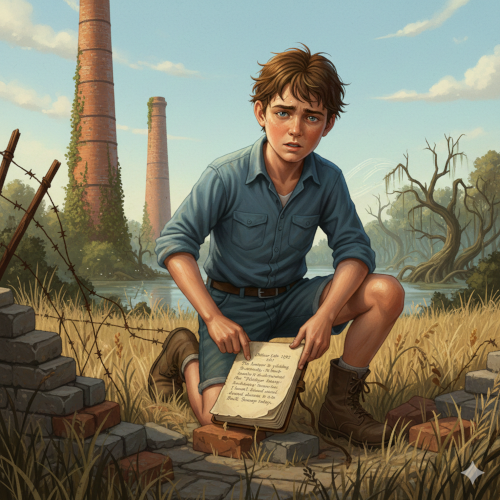
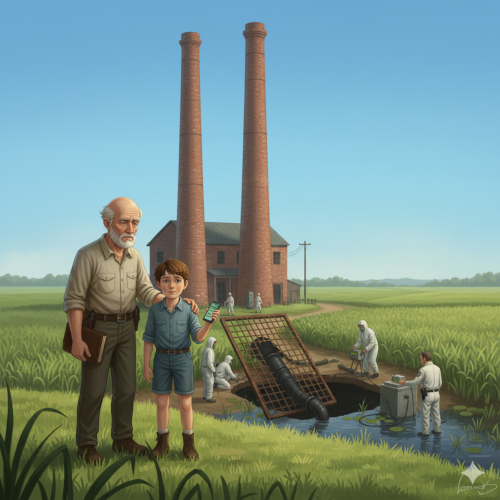
Pop’s farm bordered the derelict Fairymead Mill, a site closed down decades ago. Its brick chimneys stood like rusted monuments against the blue sky. Jem’s great-grandmother, who had worked in the mill’s crushing sheds, used to tell a story about the “Whisper.” She claimed that during the harvest, a soft, high-pitched whisper followed the cane cutters, urging them toward the low-lying wetlands known as the Back Swamp.
One sweltering morning, while clearing fence lines near the mill’s foundations, Jem found a small, leather-bound journal hidden beneath a loose brick. It was written in a formal, neat hand by the last mill manager, dated 1952. The entry for October 16th was underlined: “The harvest is yielding strangely. Several men have reported the ‘Whisper’ leading them astray. I found discarded sheaves in the Back Swamp today. I must protect the water table and stop this strange sabotage before the company audit finds the loss.”
Just as Jem finished reading the entry, he heard it—a sound like thin glass vibrating, impossibly soft, cutting right through the noisy background of the insects. It seemed to come from the direction of the overgrown wetlands. Jem stuffed the journal into his pocket, his skin prickling despite the heat.
Comprehension Questions
- Setting and Industry: Where is the story set, and what is the primary industry of the area? What two sensory details help establish the setting?
- Historical Context: According to the family story, what was the “Whisper,” and where did it try to lead the cane cutters?
- Vocabulary/Science: The mill manager mentions protecting the water table. What is a water table, and why would the mill manager be concerned about it?
- Evidence Analysis: What piece of evidence (found in the journal) convinced the mill manager that the Whisper was causing more than just folklore?
- Suspense: What narrative device does the author use at the end of the chapter to transition the “Whisper” from an old story into a current threat?
Chapter 2: The Back Swamp Perimeter
Story Text
Jem showed the journal to Pop that evening. Pop shook his head, a troubled look crossing his face. “The Whisper is old folklore, Jem. It’s part of the land. But that Back Swamp—it’s always been strange. It’s the lowest point, a natural catchment. The mill used it as a run-off for the boiling tanks.”
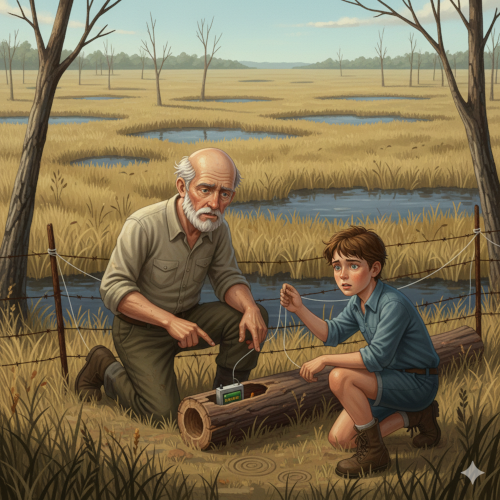
The next morning, Jem and Pop drove the utility vehicle to the edge of the Back Swamp. The land was flat, dense with tough grasses and stunted paperbark trees, and dotted with pools of stagnant, black water. A single, rusted wire fence marked the boundary.
Jem noticed something Pop missed: running along the top of the fence, interwoven with the wire, was a thin, almost invisible strand of clear fishing line. It didn’t look old; it looked recent. He also saw faint, circular indentations pressed into the damp soil beneath the wire.
He pulled Pop’s attention to a small, hollowed-out log near a large paperbark. Inside, nestled on the dry bark, was a small device—a battery-powered sound emitter, about the size of a matchbox. Its tiny speaker cone was vibrating, emitting a sound that was too high-frequency to be clearly heard, but which caused a low, insistent pressure in Jem’s inner ear.
“That’s the Whisper,” Pop breathed, staring at the device. “It’s not folklore; it’s a sonic lure.” Jem carefully checked the fishing line. It ran from the device, along the fence, and disappeared into the dense swamp vegetation. Someone was using the old story to cover up a very modern form of environmental sabotage.
Comprehension Questions
- Setting and Environment: Describe the characteristics of the Back Swamp area. What past use of the swamp by the mill might contribute to its current condition?
- Vocabulary/Technology: The device is described as a sonic lure. What does this term mean, and what specific action is it designed to encourage based on the folklore?
- Observation Skills: What two crucial pieces of modern evidence did Jem notice that led him to suspect the “Whisper” was not just folklore?
- Character Response: How does Pop’s initial belief in the Whisper as “folklore” change when he sees the sound emitter?
- Inference: Based on the mill manager’s concern about the water table and the discovery of the sonic lure, what illegal activity do you think the Whisper is meant to hide?
Chapter 3: The Hidden Pipe
Story Text
Jem and Pop followed the thin fishing line into the thick swamp undergrowth. The line led them in a winding path, seemingly random, designed to disorient anyone trying to trace it.
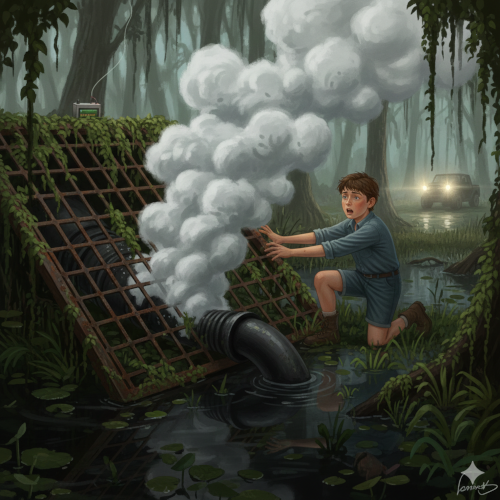
After twenty minutes of pushing through thorny bushes, the line ended abruptly at a massive, rusted steel grate, hidden beneath a curtain of thick vines. It was the original drainage outlet for the mill’s boiling tanks, a forgotten part of the mill’s industrial infrastructure. The grate was secured by a heavy chain and padlock.
More importantly, protruding from beneath the grate was a new addition: a thick, black plastic pipe, running straight out of the mill’s drain and into the deepest, darkest pool of the swamp. The pipe was clearly used for illegal dumping.
“They’re draining something toxic into the Back Swamp,” Pop muttered, shaking the grate. “And they’re using that sonic lure to draw the cane cuttings right onto the path, creating a diversion. If the cane loss is reported, they can keep their operation secret during the audit.”
Suddenly, the familiar, gentle thrum of the Whisper intensified, pulsing sharply. Then, a voice, amplified by a small speaker hidden in the grate, spoke clearly: “You shouldn’t have come past the fence, Pop. Some old men need to stay retired. This is private property now.”
The shock of the personalised warning was immediate. Before they could react, a cloud of thick, white smoke erupted from the pipe. The choking, chemical fumes were overpowering. Jem grabbed Pop, pulling him away from the mill’s poisonous secret just as a four-wheel-drive engine roared to life in the distance.
Comprehension Questions
- Identification: What is the specific illegal operation that Jem and Pop discover hidden behind the vines?
- Synthesis: Explain the full scheme. How did the sonic lure and the discarded cane sheaves serve as a distraction for the true sabotage?
- Technical Vocabulary: What does the term industrial infrastructure refer to in the context of the old Fairymead Mill?
- Suspense and Climax: What two events occur at the end of the chapter that escalate the danger from observation to confrontation?
- Inference: How did the saboteurs know Pop’s name and realise they were being watched, leading to the personalised warning?
Chapter 4: The Environmental Data
Story Text
Shaken, but unharmed, Jem and Pop retreated. They knew they needed more than just a locked grate and a story to convince the police or the EPA. They needed irrefutable chemical data.
Pop remembered the old mill manager’s journal, specifically the line about protecting the water table. “If they’re dumping toxic runoff, it’ll follow the natural gradient,” Pop explained. “It’ll run from the swamp and eventually contaminate our farm bore.”
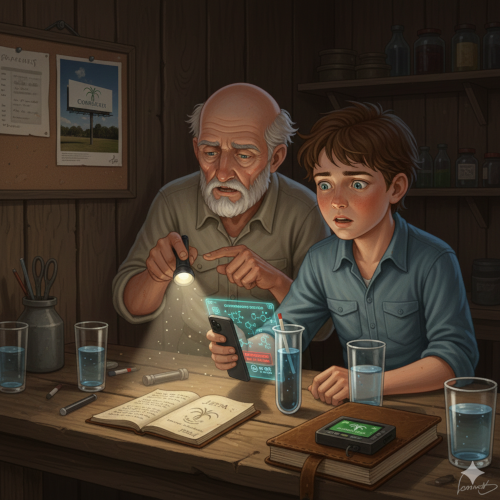
Jem’s phone, though usually useless for calling, contained a modern environmental app his school had installed, designed to analyse water samples using the phone’s camera and a specialised test strip. They collected samples from the swamp pool and then from their own farm bore, which was located much further away.
The results were alarming. The swamp water showed extremely high levels of sulphates and heavy metals—the distinct signature of industrial waste. Even worse, the farm bore water, though cleaner, showed trace amounts. The contamination was spreading through the underground water table.
As they were documenting the data, Jem looked at the journal one last time. He saw a faint stamp on the corner of the 1952 entry: a logo depicting a stylised cane stalk bent over a single water droplet—the original company emblem. Jem suddenly remembered a large, faded billboard near the mill entrance that had been recently updated with a logo for the company now auditing the mill—a logo that looked suspiciously similar to the old stamp. The same company that closed the mill decades ago was now quietly poisoning the land to avoid the cost of legally capping the old waste.
Comprehension Questions
- Problem Formulation: What specific type of evidence did Jem and Pop know they needed to make a successful report, and why were their initial observations insufficient?
- Scientific Procedure: Describe the two-step process Jem used to scientifically prove the existence and spread of the contamination.
- Analysis of Motive: Based on the discovery of the similar logos, what is the most likely motivation of the current company for illegally dumping the waste?
- Technical Vocabulary: What does irrefutable chemical data mean in the context of reporting an environmental crime?
- Cause and Effect: How did the contamination of the Back Swamp, located far from their bore, eventually start to affect Pop and Jem’s farm?
Chapter 5: Unearthing the Truth
Story Text
Jem’s digital data and the old journal proved to be the perfect combination. They drove straight to the local police station and then to the EPA office, presenting the photos of the hidden pipe, the GPS location of the sonic lure, and the phone app’s geolocated chemical readings. The resemblance between the two company logos, separated by decades, gave the authorities the historical link they needed.
The environmental auditors arrived the next morning, accompanied by police, to secure the site. When they finally forced open the heavy steel grate, they confirmed the worst: the company was using a powerful, submersible pump to secretly drain massive, highly toxic holding tanks located beneath the mill’s old foundations. This had been done to avoid the cost of an official, mandated cleanup that would have run into the millions.
The manager of the operation—the same person who had spoken through the hidden speaker—was arrested. He confessed that the sonic lure was cheap, effective technology designed to exploit the old local superstition. The Whisper kept local residents spooked and focused on minor thefts, while the real environmental crime remained hidden.
Pop finally smiled, looking out over his green cane fields. “The Whisper was real, Jem,” he said, holding the old journal. “But it wasn’t the sound that was the danger; it was the secrecy. Now the land can rest.”
Jem kept the journal, its story now linking his great-grandmother’s folklore with a modern victory for environmental protection. The story of the Whisper wasn’t just history; it was a warning about the importance of listening closely, both to old stories and to the quiet data of the land itself.
Comprehension Questions
- Resolution and Evidence: What three specific pieces of evidence did Jem and Pop provide that led to the manager’s arrest and the discovery of the toxic tanks?
- Analysis of Deception: Explain the effectiveness of the sonic lure as a cover story for the environmental crime, referencing both the folklore and the actual toxic dumping.
- Technical Vocabulary: Explain why geolocated chemical readings were more useful to the police than just a regular photo of the chemical test results.
- Theme: Pop states, “The Whisper was real… but it wasn’t the sound that was the danger; it was the secrecy.” Explain this theme in the context of the entire story.
- Conclusion: The story links folklore with modern technology and environmental science. Why is this blend of elements suitable for teaching Year 7 comprehension and critical thinking?
**************************************************************************
That completes all five stories, each with five chapters and comprehension questions, tailored to the Year 7 Australian (QLD) reading level:
- The Lighthouse Keeper’s Secret (Family History/Mystery)
- The Copper Compass (Local History/Scavenger Hunt)
- The Sunken City of Cardwell (Marine Science/Environmental Crime)
- The Algorithm’s Echo (Technology/Cyber-Ethics)
- The Whisper in the Canefields (Regional History/Environmental Sabotage)
Please let me know if you have any final thoughts or need modifications to any of the stories!
**************************************************************************
5番目にして最後の物語「サトウキビ畑のささやき」をご紹介します。クイーンズランド州の地域性を色濃く残すサトウキビ栽培地域を舞台に、歴史的な民間伝承、環境の変化、そして文化理解に焦点を当て、7年生の読者に適しています。
📚 第5話:サトウキビ畑のささやき
第1章:古い製糖所の廃墟
物語本文
ジェムは夏休みを、バンダバーグ郊外にある祖父のポップのサトウキビ農園で手伝っていました。大変な仕事で暑さも厳しいものでしたが、セミの絶え間ない鳴き声と、遠くの製糖所から風に乗って運ばれてくる糖蜜の香りが、その喜びでした。
ポップの農場は、数十年前に閉鎖されたフェアリーミード製粉所に隣接していました。レンガ造りの煙突は、青い空を背景に、錆びついたモニュメントのようにそびえ立っていました。ジェムの曽祖母は、製粉所の圧搾小屋で働いていました。祖母はよく「ささやき」について語ってくれました。収穫期になると、柔らかく甲高いささやきがサトウキビ刈り人たちの後をついて回り、バック・スワンプと呼ばれる低地の湿地帯へ向かわせるのだと言っていました。
ある蒸し暑い朝、製粉所の土台近くの柵を片付けていたジェムは、緩んだレンガの下に隠された革装丁の小さな日記帳を見つけました。それは、最後の製粉所長が1952年に、きちんとした筆跡で記したものでした。10月16日の日付には下線が引かれていました。「収穫の豊作が異常です。何人かの人が『ささやき』に惑わされていると報告しています。今日、バック・スワンプで捨てられた麦束を見つけました。会社の監査で損失が発覚する前に、地下水位を守り、この奇妙な妨害行為を止めなければなりません。」
ジェムが日記を読み終えたまさにその時、彼は耳を澄ませた。薄いガラスが振動するような、信じられないほど柔らかな音が、昆虫のざわめきを切り裂いた。それは草木が生い茂る湿地帯の方角から聞こえてきたようだった。ジェムは日記をポケットに押し込んだ。暑さにもかかわらず、肌はヒリヒリと痛んだ。
読解問題
舞台と産業:物語の舞台はどこで、その地域の主要産業は何だろうか?舞台設定を裏付ける感覚的な要素を2つ挙げるとすれば、それは何だろうか?
歴史的背景:家伝によると、「ささやき」とは何だったのだろうか?そして、それはサトウキビ刈り人たちをどこへ導こうとしたのだろうか?
語彙/科学:工場長は地下水位の保護について言及している。地下水位とは何だろうか?そして、なぜ工場長は地下水位を懸念していたのだろうか?
証拠分析:(日記に記された)どの証拠が、工場長に「ささやき」が単なる言い伝え以上のものを引き起こしていると確信させたのだろうか?
サスペンス: 作者は、章の最後でどのような物語の手法を使って、「ささやき」を古い物語から現在の脅威へと移行させているのでしょうか。
第2章:バック・スワンプの境界線
ストーリーテキスト
その晩、ジェムはポップに日記を見せた。ポップは首を横に振り、困惑した表情を浮かべた。「ささやきは昔からの言い伝えだよ、ジェム。土地の一部なんだ。でも、あのバック・スワンプは、昔から不思議な感じだった。一番低い地点で、自然の集水域なんだ。製粉所はそれを煮沸タンクの排水路として使っていたんだ。」
翌朝、ジェムとポップはユーティリティ・ビークルでバック・スワンプの端まで行った。土地は平坦で、硬い草や矮小なペーパーバークの木が生い茂り、淀んだ黒い水たまりが点在していた。境界線は錆びた金網フェンスが一本だけだった。
ジェムはポップが見逃していたものに気づいた。フェンスの上部に、金網と絡み合うように、細く、ほとんど目に見えない透明な釣り糸が張られていた。それは古いものではなく、最近作られたもののようだった。彼はまた、電線の下の湿った土に、かすかな円形の窪みがあるのを見た。
彼はポップの注意を、大きなペーパーバークの近くにある、小さなくり抜かれた丸太へと引き寄せた。乾いた樹皮の上に、マッチ箱ほどの大きさの電池式の音響発信機が埋め込まれていた。その小さなスピーカーコーンが振動し、高周波すぎてはっきりと聞き取れない音を発していたが、ジェムの内耳には低く、しつこい圧力がかかった。
「あれがウィスパーだ」ポップは装置を見つめながら息を吐いた。「伝説じゃない。音響ルアーだ」ジェムは釣り糸を注意深く確認した。糸は装置からフェンスに沿って伸び、沼地の茂みの中に消えていった。誰かが、この昔話を利用して、ごく現代的な環境破壊行為を隠蔽しようとしているのだ。
読解問題
設定と環境:バック・スワンプ地域の特徴を説明しなさい。製粉所による沼地の過去の利用が、現在の沼地の状態にどのように影響していると考えられますか?
語彙/技術:この装置は「ソニックルアー」と呼ばれています。この用語の意味は何ですか?また、伝承に基づいて、具体的にどのような行動を促すように設計されているのでしょうか?
観察力:ジェムが「ウィスパー」が単なる伝承ではないと疑うに至った、2つの重要な現代的証拠は何ですか?
登場人物の反応:ポップは当初「ウィスパー」が「伝承」だと信じていましたが、音響発生装置を見たことでどのように変化しましたか?
推論:製粉所の経営者が地下水位を懸念していたことと、ソニックルアーが発見されたことを踏まえると、ウィスパーはどのような違法行為を隠蔽しようとしていたと考えられますか?
第3章:隠されたパイプ
ストーリーテキスト
ジェムとポップは細い釣り糸を辿り、沼地の茂みへと入った。釣り糸は、一見ランダムな曲がりくねった道を辿り、辿ろうとする者を惑わすように設計されていた。
20分ほど棘だらけの茂みをかき分け進んだ後、釣り糸は、濃いツタのカーテンの下に隠された、巨大な錆びた鉄格子で突然途切れた。それは、工場の煮沸タンクの排水口だった。工場の産業インフラの忘れられた一部だった。格子は重い鎖と南京錠で固定されていた。
さらに重要なのは、格子の下から新たに突き出ていたものだった。太くて黒いプラスチック製のパイプが、工場の排水口から沼地の最も深く暗い淵へとまっすぐ伸びていた。このパイプは明らかに不法投棄に使われていた。
「何か有毒物質をバックスワンプに流しているんだ」ポップは格子を揺すりながら呟いた。 「そして、彼らはあの音のルアーを使ってサトウキビの刈りカスを道に引き寄せ、陽動作戦を仕掛けている。サトウキビの損失が報告されれば、監査の間、彼らの行為は秘密にできるのだ。」
突然、聞き慣れた、ウィスパーの穏やかな振動が強まり、鋭く脈動した。そして、格子に隠された小型スピーカーから増幅された声が、はっきりと語りかけた。「フェンスを越えてくるなんてダメだ、ポップ。老人たちは引退したままでいるべきだ。ここはもう私有地だ。」
個人的な警告に、彼らはすぐに衝撃を受けた。反応する間もなく、パイプから濃い白煙が噴き出した。窒息するような化学物質の煙は、圧倒的だった。ジェムはポップをつかみ、工場の有毒な秘密から引き離した。その時、遠くで四輪駆動車のエンジンが轟音を立てた。
理解に関する質問
特定:ジェムとポップがブドウの木の陰に隠された違法行為を発見した具体的な内容は何ですか?
まとめ:計画の全容を説明してください。ソニックルアーと捨てられたサトウキビの束は、どのようにして真の破壊工作の妨害として機能したのでしょうか?
専門用語:古いフェアリーミード製粉所の文脈において、「産業インフラ」とはどのような意味を指すのでしょうか?
サスペンスとクライマックス:この章の最後で、危険を監視から対決へとエスカレートさせる2つの出来事は何ですか?
推論:破壊工作員はどのようにしてポップの名前を知り、監視されていることに気づき、個人宛ての警告を発したのでしょうか?
第4章:環境データ
ストーリーテキスト
衝撃を受けながらも無傷だったジェムとポップは撤退した。警察やEPAを納得させるには、鍵のかかった格子と言い訳だけでは不十分だと分かっていた。反駁の余地のない化学データが必要だったのだ。
ポップは昔の工場長の日記、特に地下水位の保護に関する一節を思い出した。「もし有毒な流出物を投棄するなら、それは自然の勾配を辿るだろう」とポップは説明した。「沼地から流れ出て、最終的には私たちの農場の井戸を汚染するだろう」
ジェムの携帯電話は、普段は通話には使えないが、学校がインストールした最新の環境アプリが入っていた。携帯電話のカメラと専用の試験紙を使って水サンプルを分析するアプリだ。彼らは沼地の水たまりからサンプルを採取し、それからずっと離れた自分たちの農場の井戸からもサンプルを採取した。
結果は憂慮すべきものだった。沼地の水は、産業廃棄物特有の硫酸塩と重金属の濃度が非常に高かったのだ。さらに悪いことに、農場の井戸水は、より清浄ではあったものの、微量の汚染物質が含まれていた。汚染は地下水位を通じて広がっていたのだ。
データを記録しながら、ジェムは最後にもう一度日誌に目を通した。1952年の項目の隅に、かすかなスタンプが押されているのに気づいた。様式化されたサトウキビの茎が一滴の水滴をかがめたロゴ、つまり当初の会社のエンブレムだった。ジェムは突然、工場の入り口近くにあった、色あせた大きな看板を思い出した。最近、工場を監査している会社のロゴが刷新されていたのだ。そのロゴは、以前のスタンプと疑わしいほど似ていた。数十年前に工場を閉鎖したその会社が、今、古い廃棄物を法的に封鎖する費用を逃れるために、ひそかに土地を汚染していたのだ。
理解度に関する質問
問題設定:ジェムとポップは、報告書を成功させるには具体的にどのような証拠が必要だと考えていたのか、そしてなぜ当初の観察では不十分だったのか。
科学的手順:ジェムが汚染の存在と拡散を科学的に証明するために用いた2段階のプロセスについて説明してください。
動機の分析:類似したロゴの発見に基づいて、現在の企業が廃棄物を不法投棄した最も可能性の高い動機は何ですか?
専門用語:環境犯罪の報告において、「反駁の余地のない化学データ」とはどういう意味ですか?
因果関係:彼らの井戸から遠く離れたバックスワンプの汚染は、どのようにしてポップとジェムの農場に影響を与え始めたのですか?
第5章:真実の発掘
ストーリーテキスト
ジェムのデジタルデータと古い日記帳は、完璧な組み合わせだった。彼らは地元の警察署へ直行し、その後EPA事務所へ。隠されたパイプの写真、ソニックルアーのGPS位置情報、そしてスマホアプリの位置情報に基づいた化学物質の測定値を提示した。数十年も離れた2つの企業ロゴの類似性は、当局に必要な歴史的繋がりを与えた。
翌朝、環境監査官は警察に付き添われ、現場の安全確保のために現場に到着した。ついに重い鉄格子をこじ開けた彼らは、最悪の事態を突き止めた。会社は強力な水中ポンプを使って、工場の古い基礎の下にある巨大な高毒性貯蔵タンクから秘密裏に水を排出していたのだ。これは、数百万ドルにも上るはずだった正式な浄化費用を回避するためだった。
この作業の責任者――隠されたスピーカーから話していた人物――は逮捕された。彼は、音のルアーは、古くから伝わる地元の迷信を利用するために設計された、安価で効果的な技術だったと告白した。ウィスパーは地元住民を怖がらせ、軽微な窃盗に目を向けさせ、真の環境犯罪は隠されたままだった。
ポップはついに微笑み、緑のサトウキビ畑を見渡した。「ウィスパーは本当だったんだ、ジェム」と彼は古い日記を手にしながら言った。「でも、危険だったのは音ではなく、秘密だったんだ。これで土地は安らかに眠れる。」
ジェムは日記を書き続け、その物語は今や曽祖母の伝承と現代の環境保護の勝利を結びつけている。ウィスパーの物語は単なる歴史ではなく、古い物語と土地そのものの静かなデータの両方に注意深く耳を傾けることの重要性についての警告だった。
理解に関する質問
解決と証拠:ジェムとポップが提出した3つの具体的な証拠が、管理人の逮捕と有毒物質タンクの発見につながったのか?
欺瞞の分析:環境犯罪の隠れ蓑として、音を使ったルアーが有効であった理由を、民間伝承と実際の有害物質投棄の両方に言及しながら説明してください。
専門用語:位置情報付き化学物質測定値が、単なる化学検査結果の写真よりも警察にとって有益であった理由を説明してください。
テーマ:ポップは「ささやきは現実のものだった…しかし、危険だったのは音ではなく、その秘密だった」と述べています。このテーマを物語全体の文脈の中で説明してください。
結論:この物語は、民間伝承と現代技術、そして環境科学を結びつけています。この要素の組み合わせが、中学1年生の読解力と批判的思考力を養うのに適しているのはなぜでしょうか?
これで、オーストラリア(クイーンズランド州)の7年生の読解レベルに合わせて、5つの物語がすべて完成しました。各物語には5つの章と読解問題があり、それぞれオーストラリアの7年生(QLD)の読解レベルに合わせて作られています。
灯台守の秘密(家族の歴史/ミステリー)
銅の羅針盤(地域の歴史/宝探し)
沈没都市カードウェル(海洋科学/環境犯罪)
アルゴリズムの反響(テクノロジー/サイバー倫理)
サトウキビ畑のささやき(地域の歴史/環境破壊)
最後に、ご意見や修正点などございましたら、ぜひお知らせください!