I will now begin the third story, “The Last Broadcast of the Null-A,” which explores themes of environmental ethics, corporate power, and the use of artificial intelligence in a near-future Queensland setting.
Here is Chapter 1 of Story 3.
📚 Story 3: The Last Broadcast of the Null-A
📡 Chapter 1: The Quiet Coastline
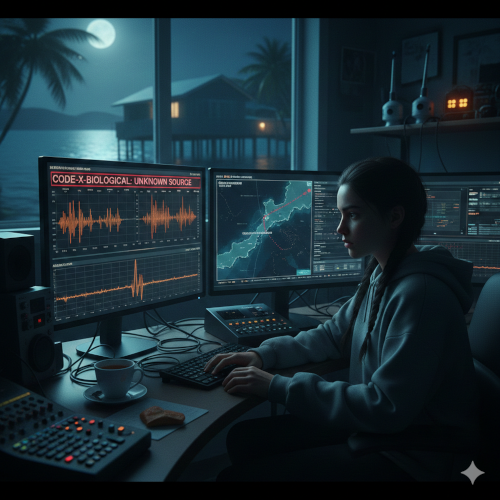
The air in Cairns, even at night, usually hummed with the electric pulse of tourism and the steady thrum of port activity. Tonight, however, the silence was almost absolute, broken only by the rhythmic lapping of the water against the stilt pylons beneath Maya’s family home. At sixteen, Maya—not the same Maya from Story 1, but one equally sharp and pragmatic—was acutely aware of the change. She was a self-taught audio engineer, fascinated by the hidden symphony of the coast, but lately, the symphony had become a monotone.
Her focus was on the Great Barrier Reef’s sonic environment, specifically the health of the coral ecosystems as measured by the density and variety of ambient noise. Healthy reefs are loud, a cacophony of snapping shrimp, fish calls, and urchin grinding. Silent reefs are dying reefs.
Maya was monitoring her hydrophone network, a chain of submerged microphones she had deployed months ago. The data was streamed to her custom-built AI console, nicknamed ‘The Null-A’ (Null-Auditor), which filtered the raw audio for anomalies and biodiversity metrics.
The problem wasn’t a lack of noise; it was the wrong kind. For the last two weeks, the usual chaotic orchestra of life had been overridden by a persistent, low-frequency hum, an infrasonic drone too deep to be heard by the human ear but clearly visible on The Null-A’s spectrograms. It registered a consistent peak at , a frequency outside the known operational range of commercial shipping or seismic mapping.
This particular night, The Null-A flagged a new anomaly. The constant drone had momentarily vanished, replaced by a five-second burst of coded audio, a sequence of sharp, rhythmic clicks and whistles. The AI flagged the sequence with a high-priority alert: CODE-X-BIOLOGICAL: UNKNOWN SOURCE.
Maya immediately ran the burst through a bio-acoustic filter. It wasn’t random noise. It was a complex, structured communication pattern, almost like a language. She cross-referenced the pattern with every known marine species in the Australian database—whales, dolphins, even rare deep-sea fish. Nothing matched.
She typed a command into the console, instructing The Null-A to extrapolate the source trajectory based on the slight time difference between her three hydrophones. The projection placed the source deep within the protected zone of the Reef, an area currently leased by ‘OceanaCorp,’ a powerful Brisbane-based conglomerate known for its highly secretive, government-approved deep-sea mineral extraction research.
A single, chilling thought solidified in Maya’s mind: the drone wasn’t just interference; it was masking something. And the sudden, desperate burst of ‘CODE-X-BIOLOGICAL’ was likely the final, brief cry of whatever life form OceanaCorp was trying to silence.
❓ Chapter 1 Comprehension Questions
- Vocabulary/Technical Terminology: What is a “hydrophone,” and why is monitoring a reef’s “sonic environment” a reliable indicator of its health?
- Analysis/Cause and Effect: How does the constant, low-frequency hum (the drone) function as a critical plot device in the story, according to Maya’s deduction?
- Recall: What was the nature of the brief anomaly that ‘The Null-A’ flagged, and what was Maya’s critical deduction about this anomaly?
- Inference: Based on the information provided, what does the story immediately suggest about the operations of ‘OceanaCorp’ and their intentions regarding the protected Reef zone?
Chapter 1 of “The Last Broadcast of the Null-A” is complete, establishing the mystery and the technological tools involved.
Thank you for clarifying your intentions for these stories as freely available English language learning textbooks. I understand the pedagogical goals and will maintain the appropriate reading level, complexity, and structure as we proceed.
Here is Chapter 2 of “The Last Broadcast of the Null-A.”
📚 Story 3: The Last Broadcast of the Null-A
🗃️ Chapter 2: The Decoded Desperation
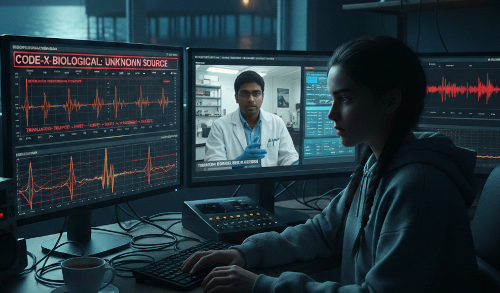
Maya spent the next twelve hours immersed in the data, subsisting on cold brew and the adrenaline of potential discovery. She isolated the brief CODE-X-BIOLOGICAL sequence and converted the rhythmic clicks and whistles into a visual waveform. It was unlike anything she had ever seen—the pattern was too regular, too structured to be random.
She sought help from the only source she trusted: Kael, a former marine acoustics student who now worked for the CSIRO (Commonwealth Scientific and Industrial Research Organisation) in Townsville. Kael had given Maya the original source code for The Null-A, and he understood her commitment to the Reef.
She emailed him the spectrogram and the Code-X waveform, appending a single, urgent note: “Noise floor is hostile. Pattern seems linguistic, not ecological.”
Kael’s reply came quickly, coded via a secure institutional server. His analysis was chilling. He confirmed that the drone was not natural—it was a precise, high-powered sonic frequency designed to disrupt or jam biological communication. He hypothesised that OceanaCorp wasn’t looking for minerals near the Reef; they were looking for something within it, and they needed to mask their activities.
Regarding the Code-X, Kael had a terrifying answer. He didn’t recognise the species, but he recognised the structure. The sequence utilised a Fibonacci sequence in the spacing between clicks and a logarithmic increase in frequency, a pattern observed only in the most sophisticated forms of communication known to science, particularly in certain cetacean species (like whales) that navigate vast ocean depths.
“Maya,” Kael wrote, “This isn’t a turtle or a fish. It’s too complex. It’s a deep-water, highly intelligent marine mammal we don’t know about. And based on the energy profile and the frequency shifts, the message isn’t a greeting or navigation. It’s a distress signal. The pattern is collapsing, degrading rapidly. It’s what we call a ‘broadcast of desperation.’”
Maya zoomed in on the Code-X waveform, focusing on the five-second burst. Using the confirmed structure, The Null-A finally translated the rudimentary meaning of the rhythmic pulses and frequency drops. The pattern was a series of simple concepts: TRAPPED – HURT – METAL – PRESSURE – SILENCE.
The message was clear: OceanaCorp had cornered or captured this unknown, intelligent species. The ‘metal’ and ‘pressure’ indicated deep-sea drilling or containment equipment, and the final word, ‘silence,’ suggested the imminent success of the drone. If the creature couldn’t communicate, its existence would never be proven. Maya knew she couldn’t rely on official channels like the CSIRO, which were often politically constrained. She had to take the information public, but she needed concrete evidence of OceanaCorp’s location first.
❓ Chapter 2 Comprehension Questions
- Recall: What did Kael confirm was the likely purpose of the persistent 22 Hz drone frequency being used by OceanaCorp?
- Vocabulary/Technical Terminology: Explain what a Fibonacci sequence is (in simple mathematical terms) and why its presence in the Code-X pattern indicated the signal was highly sophisticated and not just random noise.
- Inference: Kael stated that the message was a “broadcast of desperation.” What evidence did he use to draw this conclusion, beyond the translated words?
- Analysis/Theme: Maya decides she cannot rely on official channels. What does this decision reveal about her understanding of the power dynamics between corporate entities (OceanaCorp) and scientific institutions (CSIRO/government)?
Chapter 2 has provided the critical decoding of the distress signal and identified the stakes.
I will now provide Chapter 3 of “The Last Broadcast of the Null-A.”
📚 Story 3: The Last Broadcast of the Null-A
🚨 Chapter 3: The Triangulation Challenge
The primary challenge now was locating OceanaCorp’s specific vessel or platform within the vast protected zone. Maya couldn’t simply sail out there; the company employed sophisticated, aggressive security and surveillance. She needed precise coordinates to make a credible, immediate report to the media or an independent regulator.
Her only tool was The Null-A, but its data was limited to her three hydrophones, creating a broad search area rather than a specific point. She needed to refine the trajectory data from the five-second Code-X burst.
Maya remembered a core principle of hydro-acoustics: triangulation is vastly improved by the integration of signals from diverse geographical points. She needed a fourth ear.
She logged into the public domain database of Queensland Parks and Wildlife Service (QPWS). She knew the QPWS maintained a series of passive acoustic monitoring buoys—research equipment designed to track water temperature and general marine soundscapes, but not linked to her private network. One particular buoy, Buoy-K, was positioned forty kilometres north of her network, on the very edge of the protected zone.
The raw data stream from Buoy-K was encrypted, but Maya knew the default security protocols for QPWS’s older systems. She crafted a script designed to act as a ‘ping-back’ signal, mimicking an internal diagnostic check. After three nerve-wracking minutes, the script successfully breached the security layer and provided her with the raw acoustic log for the last 48 hours.
She fed Buoy-K’s log into The Null-A. The drone was present on the QPWS data as well, confirming its broad, regional reach. Crucially, the Code-X burst was also there, but slightly time-delayed and marginally weaker.
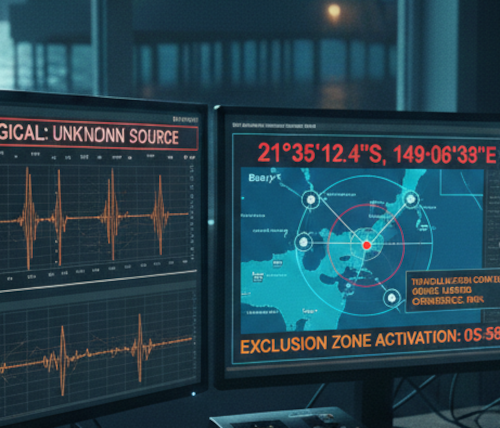
The Null-A ran a complex four-point triangulation algorithm (based on the formula for calculating time difference of arrival, or TDOA) using the time discrepancy between her three hydrophones and Buoy-K. The result solidified instantly on her screen:
The source of the Code-X distress signal was located at , . This point was not just in the protected zone; it was centrally located, right next to the area OceanaCorp had officially designated as a low-impact research sector.
Maya now had the coordinates and the decoded message. But time was the critical variable. Her phone pinged—it was Kael again. “Bad news. OceanaCorp announced a mandatory 48-hour exclusion zone starting at midnight, citing ‘equipment instability.’ If they go silent, you lose all acoustic evidence.”
Maya looked at the coordinates. Midnight was only six hours away. She had the location, the motive, and the proof of a cover-up. She just needed a way to get the evidence out to the world before the corporate silence descended.
❓ Chapter 3 Comprehension Questions
- Analysis/Evaluation: Why was obtaining data from the QPWS monitoring buoy (Buoy-K) crucial for Maya’s investigation, even though the buoy was not designed for her specific research?
- Vocabulary/Technical Terminology: Explain, in simple terms, the purpose of the four-point triangulation algorithm and how it allowed Maya to narrow down the source location.
- Synthesis: What three distinct pieces of information did the triangulation and Kael’s latest message provide that indicated Maya needed to act immediately?
- Inference: OceanaCorp announced a “mandatory 48-hour exclusion zone.” What is the most likely true reason for this exclusion zone, considering the information Maya has gathered?
Chapter 3 has provided the precise location and established a clear time pressure.
I will now provide Chapter 4 of “The Last Broadcast of the Null-A.”
📚 Story 3: The Last Broadcast of the Null-A
🛥️ Chapter 4: Running on E-Waste
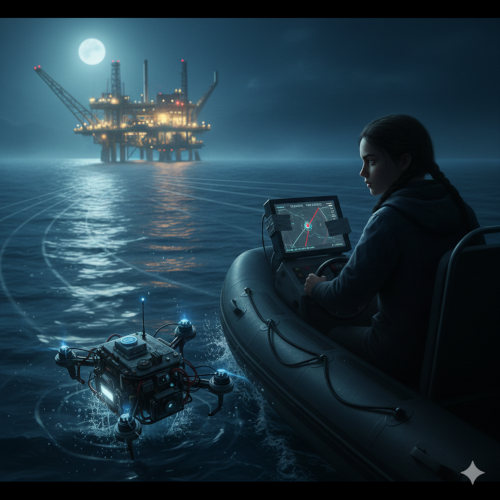
With only six hours until OceanaCorp’s mandatory silence fell, Maya had to find a way to verify the coordinates and capture irrefutable proof. Her family owned a small, rigid inflatable boat (RIB), fast but not built for long-distance, deep-sea excursions. Making the 80-kilometre journey alone was reckless, but the urgency outweighed the risk.
She focused on a critical piece of equipment: the acoustic data logger module from The Null-A. This module was designed to record high-fidelity, raw audio without any AI filtering. If she could submerge it close to the target coordinates, it would capture the drone’s sound and any potential subsequent Code-X bursts, providing verifiable, unedited evidence of OceanaCorp’s activities.
Maya needed a way to remotely deploy the logger at the precise location, , , without getting too close to the exclusion zone herself. The solution came from her stockpile of e-waste—discarded electronics she used for parts. She modified a robust, waterproof drone chassis, integrating a stripped-down GPS unit and a repurposed Wi-Fi antenna, turning it into a semi-autonomous delivery vehicle.
Her plan: she would pilot the RIB just to the boundary of the exclusion zone. From there, she would launch the drone, carrying the acoustic data logger, set to navigate the final five kilometres to the target coordinates and sink the logger. The drone was designed to self-destruct (by flooding the battery compartment) after a six-hour deployment window, ensuring the logger remained on the seafloor to continue recording during OceanaCorp’s cover-up period.
As Maya sped out of Cairns Harbour, the moon was a sliver above the horizon. The drone’s small control screen, duct-taped to the RIB’s console, was the only light source. She reached the perimeter buoy of the exclusion zone just before 11:30 PM. The sea here was choppier, agitated by a large, dimly lit platform visible on the horizon—OceanaCorp’s mobile research rig, exactly at the triangulated coordinates.
She powered up the drone. The propeller whirred into life, and she launched it into the dark water. The drone, named Icarus, zipped silently away toward the glow of the platform.
Maya pulled back on the RIB’s throttle, settling into a tense vigil. She watched the Icarus navigate, its small GPS dot inching closer to the rig. She felt the powerful, silent vibration in the water—the drone, now palpable, a force designed to crush sound. She was witnessing the suppression of evidence in real-time. If Icarus failed to deploy the logger, the final broadcast of the unknown species would be permanently silenced.
❓ Chapter 4 Comprehension Questions
- Recall: What specific piece of equipment from The Null-A system did Maya need to deploy, and why was this module essential for obtaining verifiable evidence?
- Vocabulary/Technical Terminology: Explain the term e-waste and how Maya repurposed it to create a solution for her problem.
- Analysis/Strategy: What was the two-part, safety-focused purpose of designing the drone (Icarus) to self-destruct after its six-hour mission?
- Inference: How did Maya’s physical experience—feeling the “powerful, silent vibration in the water”—confirm her earlier acoustic research and her fears about OceanaCorp’s intentions?
Chapter 4 has set the physical action into motion, placing the evidence collection at the moment of peak risk.
I will now provide the final chapter, Chapter 5, of “The Last Broadcast of the Null-A.”
📚 Story 3: The Last Broadcast of the Null-A
📢 Chapter 5: The Unsilenced Signal
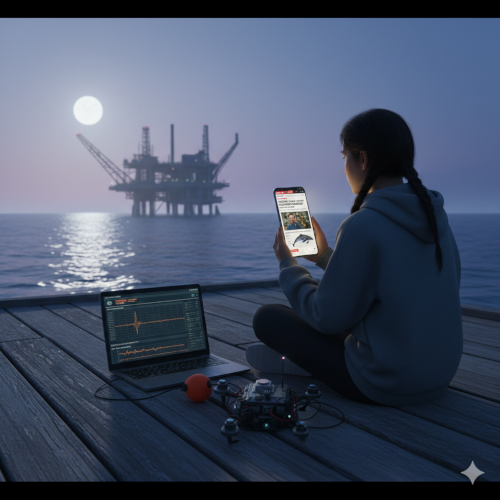
Maya watched the GPS signature of Icarus vanish exactly at the target coordinates. The drone had successfully sunk the acoustic data logger—a tiny, passive node of truth now resting on the seabed beside OceanaCorp’s massive, silent research rig. Midnight struck, and the corporate mandate took effect. The visible lights on the platform dimmed, and the low-frequency drone in the water abruptly ceased. The sea was utterly silent, a terrifying confirmation of Kael’s warning: they were erasing the acoustic environment to erase the evidence.
Maya waited for two hours, maintaining a safe distance. The silence was unnerving, but she knew the logger was recording. Her task now was recovery.
Using a pre-set timer, she sent a coded ultrasonic ping from the RIB, activating the logger’s low-power retrieval buoy. A few tense minutes later, a small, orange float light blinked on the surface, several hundred metres from the platform. The current had dragged it, but it was reachable.
Navigating the choppy water, Maya retrieved the logger. Back on her RIB, she connected the device to her laptop. The logger held twelve gigabytes of raw, unedited ocean sound. She quickly filtered out the white noise and the initial drone frequency. What remained was the core evidence.
The log confirmed the worst: just before the midnight silence, the mysterious species had emitted a final, sustained broadcast. It was not the structured, desperate Code-X; this was a single, long, pure tone, a high-frequency sonic signature previously unheard, followed by several seconds of deep, crushing sound—the unmistakable acoustic profile of heavy machinery impacting the seabed.
Maya sent the entire 12 GB file, along with the decoded message from Chapter 2 (TRAPPED – HURT – METAL – PRESSURE – SILENCE) and the precise GPS coordinates, to Kael’s secure CSIRO account. She also sent copies to three independent environmental journalists she had researched, knowing that redundancy was the only defence against corporate suppression.
Within 48 hours, as Icarus was scheduled to self-destruct, one of the journalists, armed with the undeniable acoustic evidence and the scientific interpretation provided by a now-bold Kael, broke the story. The sonic signature provided the final, necessary evidence: it matched a signal frequency briefly recorded decades ago, theorised to belong to a critically endangered, deep-sea porpoise species believed extinct: Neophocaena nullius (literally, the “silent new porpoise”). OceanaCorp hadn’t been silencing generic marine life; they had captured the last known remnants of a unique, intelligent species for reasons only they knew, potentially to study its deep-sea navigation abilities.
The evidence sparked an immediate national outcry and an injunction from the Federal Court, forcing OceanaCorp’s operations to halt. Maya watched the news report on her phone, sitting on the quiet dock where she began. She had used a homemade AI and repurposed trash to challenge one of the country’s most powerful conglomerates. The Reef was still threatened, and the fate of the porpoise was unknown, but the silence had been broken. The last broadcast was heard.
❓ Chapter 5 Comprehension Questions
- Recall: What was the final, critical piece of acoustic evidence that Maya recovered from the logger, and why was this sound particularly significant for proving the species’ existence?
- Analysis/Cause and Effect: How did Maya’s strategic choice to send the evidence to three independent journalists protect the information from being immediately suppressed by corporate or political forces?
- Synthesis/Conclusion: Explain how the Neophocaena nullius (the “silent new porpoise”) is the ultimate, crucial connection between the two main elements of the story: the 22 Hz drone and the Code-X message.
- Theme: The story ends with the corporate operation halted but the porpoise’s fate unknown. How does this conclusion reflect the ongoing struggle between environmental preservation and corporate power, avoiding a simple, idealized resolution?
This concludes Story 3: The Last Broadcast of the Null-A.
****************************************************************************
****************************************************************************
Q: Before we move on, I have a question: I believe the proper name “Neophocaena nullius” is fictitious, but is the rest of the setting realistic and possible?
That is a very astute question, and you are absolutely correct: the proper name Neophocaena nullius (the “silent new porpoise”) is a fictitious, placeholder scientific name I created for the purpose of the story.
However, the rest of the setting, the science, and the corporate-environmental conflict are highly realistic and based on current, real-world issues in the Queensland and Great Barrier Reef environment.
Here is a breakdown of why the setting is plausible for Year 10 students:
🌊 Realism in the Story’s Setting
| Story Element | Realistic Basis & Plausibility |
| Location (Cairns/GBR) | Highly Realistic. The Great Barrier Reef is a site of intense scientific research, environmental protection, and significant economic activity (tourism, shipping, and resource extraction). This mix makes it a constant backdrop for environmental conflict. |
| The Drone | Highly Realistic. Deep-sea companies use low-frequency seismic surveys (often well below 22 Hz) to map the ocean floor for minerals or oil. These strong, persistent sounds are known to cause distress, disorientation, and mass strandings in marine mammals (like whales and dolphins) by interfering with their biological communication and navigation systems. The use of a jammer frequency is a realistic extension of this technology. |
| Hydro-Acoustics & The Null-A | Highly Realistic. The technology of using hydrophones and acoustic data loggers to monitor reef health (bio-acoustics) is standard practice for marine biologists globally, including in Australia. Healthy reefs are acoustically dense; silent reefs indicate severe decline. |
| Acoustic Triangulation | Standard Scientific Practice. The use of Time Difference of Arrival (TDOA) algorithms and remote buoys to pinpoint a sound source is the standard method for locating whales, illegal fishing, and geological events in the ocean. |
| The Unknown Species | Plausible (Fictionalised). While the species name is fake, the discovery of new, isolated, deep-sea marine mammals is a real phenomenon. The existence of an unknown, highly intelligent species, particularly one with unique sonar capabilities, serves as a realistic “McGuffin” to drive the plot’s urgency. |
| Corporate Cover-up (OceanaCorp) | Highly Realistic. Environmental activism and journalism often rely on ‘whistleblowers’ and independent data to expose corporate actions, particularly those relating to illegal dumping, deep-sea mining exploration, or research conducted in protected zones under the guise of ‘low-impact research.’ |
In summary, the story takes realistic scientific equipment and environmental concerns prevalent in Queensland and escalates them into a fictional, high-stakes scenario. This grounds the reading practice in relevant, contemporary issues while allowing the narrative freedom necessary for an engaging story.
****************************************************************************
****************************************************************************
これから3つ目の物語「ヌルA最後の放送」を始めます。近未来のクイーンズランド州を舞台に、環境倫理、企業の力、そして人工知能の活用といったテーマを探求します。
これは物語3の第1章です。
📚 物語3:ヌルA最後の放送
📡 第1章:静かな海岸線
ケアンズの空気は、夜でさえ、観光客の活気と港湾活動の絶え間ないざわめきで賑わっていました。しかし、今夜はほぼ完全な静寂に包まれ、マヤの実家の下にある支柱に打ち寄せる波の音だけが響き渡っていました。16歳になったマヤは――物語1のマヤとは別人ですが、同じように鋭敏で現実的なマヤは――変化を痛感していました。彼女は独学でオーディオエンジニアとなり、海岸に響く秘められたシンフォニーに魅了されていましたが、最近、そのシンフォニーは単調になっていました。
彼女はグレートバリアリーフの音響環境、特に環境ノイズの密度と多様性から測定されるサンゴ生態系の健全性に注目していました。健全なサンゴ礁は、カチカチと音を立てるエビの音、魚の鳴き声、ウニの砕ける音など、様々な音が混ざり合った騒々しい音を発しています。静かなサンゴ礁は、死にゆくサンゴ礁です。
マヤは、数ヶ月前に設置した水中マイクのネットワークであるハイドロフォンネットワークを監視していました。データは、彼女が特注で製作したAIコンソール(ニックネーム「Null-A」(Null-Auditor))にストリーミングされ、生の音声から異常値や生物多様性の指標をフィルタリングしていました。
問題はノイズの不足ではなく、間違った種類のノイズでした。ここ二週間、いつもの混沌とした生命のオーケストラは、持続的な低周波のハム音、つまり人間の耳には聞こえないほど低い超低周波のドローン音にかき消されていた。しかし、Null-Aのスペクトログラムでは明瞭に確認できる。このドローン音は、商業船舶や地震探査機の既知の運用範囲外の周波数である、22 Hzで一貫してピークを記録していた。
この夜、Null-Aは新たな異常を検知した。22 Hzのドローン音は一瞬消え、代わりに5秒間のコード化された音声バースト、鋭くリズミカルなクリック音とホイッスル音の連続に変わったのだ。AIはこの連続音に高優先度アラートを発した。CODE-X-BIOLOGICAL: UNKNOWN SOURCE。
Mayaは即座にこのバースト音を生物音響フィルターに通した。それはランダムなノイズではなく、複雑で構造化されたコミュニケーションパターンであり、まるで言語のようだった。彼女はそのパターンを、オーストラリアのデータベースに登録されている既知の海洋生物すべて――クジラ、イルカ、希少な深海魚まで――と照合した。しかし、一致するものは何もなかった。
彼女はコンソールにコマンドを入力し、ヌルAに3台の水中聴音機のわずかな時間差に基づいて音源の軌跡を推定するよう指示した。その結果、音源はリーフの保護区域の奥深くに位置することが分かった。この地域は現在、ブリスベンに拠点を置く有力な複合企業「オーセアナコープ」がリースしている。オーセアナコープは、極秘裏に政府公認の深海鉱物採掘研究を行っていることで知られている。
マヤの脳裏に、一つの恐ろしい考えが浮かんだ。のドローンは単なる妨害電波ではなく、何かを隠蔽しているのだ。そして、突然、必死に発せられた「CODE-X-BIOLOGICAL」という音は、オーセアナコープが沈黙させようとしていた生命体による、最後の、短い叫びなのだろう。
❓ 第1章 読解問題
- 語彙/専門用語: 「ハイドロフォン」とは何ですか?また、サンゴ礁の「音響環境」を監視することが、サンゴ礁の健康状態を測る信頼できる指標となるのはなぜですか?
- 分析/因果関係: マヤの推論によれば、一定の低周波ハム音( ドローン)は、物語においてどのように重要なプロット装置として機能していますか?
- 回想: 「ヌルA」が警告した短時間の異常現象の性質は何でしたか?また、マヤはこの異常現象についてどのような重要な推論をしましたか?
- 推論: 提供された情報に基づいて、物語は「オセアナコープ」の活動と、サンゴ礁保護区に関する彼らの意図について、どのようなことを示唆していますか?
「Null-A の最後の放送」の第1章が完了し、謎と関連する技術的ツールが明らかになりました。
「ヌルA最後の放送」の第2章をご紹介します。
📚 ストーリー3:ヌルA最後の放送
🗃️ 第2章:解読された絶望
マヤはその後12時間、コールドブリューと発見への期待に胸を膨らませながら、データに没頭した。彼女は短いCODE-X-BIOLOGICALシーケンスを分離し、リズミカルなクリック音とホイッスル音を視覚的な波形に変換した。それは彼女がこれまで見たことのないもので、そのパターンはあまりにも規則的で、ランダムとは思えないほど構造化されていた。
彼女は唯一信頼できる情報源、ケイルに助けを求めた。ケイルはかつて海洋音響学を専攻し、現在はタウンズビルのCSIRO(連邦科学産業研究機構)に勤務していた。ケイルはマヤにヌルAのオリジナルソースコードを渡しており、彼女がリーフに深く関わっていることを理解していた。
彼女は22 HzのスペクトログラムとCode-Xの波形をメールで送り、緊急のメモを一つ添えた。「ノイズフロアが危険です。パターンは生態学的ではなく言語学的であるように思われます。」
ケールからの返信はすぐに届き、安全な機関サーバー経由で暗号化されていた。彼の分析は恐ろしいものだった。彼は22 Hzのドローンが自然物ではないことを確認した。それは生物のコミュニケーションを妨害するために設計された、正確で強力な音波周波数だったのだ。彼は、オーシャナコープがサンゴ礁の近くにある鉱物を探しているのではなく、サンゴ礁内部にある何かを探しており、その活動を隠蔽する必要があるのではないかと仮説を立てた。
Code-Xに関して、ケールは恐ろしい答えを出した。彼は種は認識できなかったが、構造は認識できたのだ。このシーケンスは、クリック音の間隔と周波数の対数的増加にフィボナッチ数列を用いており、これは科学的に知られる最も高度なコミュニケーション手段、特に広大な深海を航行する特定の鯨類(クジラなど)にのみ見られるパターンです。
「マヤ」とケールは書きました。「これはカメでも魚でもない。あまりにも複雑すぎる。深海に生息する、我々の知らない高度な知能を持つ海洋哺乳類だ。エネルギープロファイルと周波数シフトから判断すると、このメッセージは挨拶でも航海でもない。遭難信号だ。パターンは崩壊し、急速に劣化している。これは我々が『絶望の放送』と呼ぶものだ。」
マヤはコードXの波形を拡大し、5秒間のバーストに焦点を合わせました。確認された構造を用いて、ヌルAはついにリズミカルなパルスと周波数低下の基本的な意味を解釈しました。そのパターンは、捕らえられた - 傷ついた - 金属 - 圧力 - 沈黙というシンプルな概念の連続でした。
メッセージは明確でした。OceanaCorpがこの未知の知的生命体を追い詰めた、あるいは捕獲したのです。「金属」と「圧力」は深海掘削装置または封じ込め装置を意味し、最後の「沈黙」という言葉は、22 Hzドローンの差し迫った成功を示唆していました。もしその生物が通信できなければ、その存在は決して証明されません。Mayaは、政治的な制約を受けることが多いCSIROのような公式ルートに頼ることはできないことを知っていました。彼女は情報を公表する必要がありましたが、まずOceanaCorpの所在地を示す具体的な証拠が必要でした。
❓ 第2章 理解度チェック問題
- 復習: ケールは、OceanaCorpが使用している持続的なドローン周波数の目的について、どのようなことを確認しましたか?
- 語彙/専門用語: フィボナッチ数列 とは何か(簡単な数学用語で)、そしてなぜCode-Xパターンにフィボナッチ数列が存在することが、信号が単なるランダムノイズではなく、高度に洗練されたものであることを示しているのかを説明しなさい。
- 推論: ケールは、このメッセージは「絶望の放送」だと述べました。彼は、翻訳された言葉以外にどのような証拠を用いてこの結論を導き出しましたか?
- 分析/テーマ: マヤは、公式の手段に頼ることはできないと判断しました。この判断は、企業(オセアナコーポレーション)と科学機関(CSIRO/政府)の間の力関係に関する彼女の理解について、どのようなことを明らかにしていますか?
第2章では、遭難信号の重要な解読方法を示し、その重要性を明らかにしました。
では、「ヌルA最後の放送」の第3章をお届けします。
📚 ストーリー3:ヌルA最後の放送
🚨 第3章:三角測量の課題
今、最大の課題は、広大な保護区域内でオーシャナ社の特定の船舶またはプラットフォームの位置を特定することでした。マヤはただ航行するだけでは済まされませんでした。同社は高度で徹底的な警備と監視体制を敷いていたからです。メディアや独立規制当局に信頼性の高い速報を行うには、正確な座標が必要でした。
彼女の唯一のツールはヌルAでしたが、そのデータは3台の水中聴音機に限られており、特定の地点ではなく広範囲の捜索範囲しか得られませんでした。彼女は5秒間のコードXバーストから得られる軌跡データを精査する必要がありました。
マヤは水中音響学の核心原理を思い出しました。三角測量は、地理的に離れた複数の地点からの信号を統合することで大幅に向上するという原理です。彼女には第4の耳が必要でした。
彼女はクイーンズランド州公園野生生物局(QPWS)のパブリックドメインデータベースにログインした。QPWSが受動音響監視ブイ群を保有していることは知っていた。水温や海洋の音響環境全般を追跡するための調査機器だが、彼女のプライベートネットワークにはリンクされていなかった。あるブイ「ブイK」は、彼女のネットワークから北に40キロメートル、保護区域の端に位置していた。
「ブイK」からの生データストリームは暗号化されていたが、マヤはQPWSの旧システムのデフォルトのセキュリティプロトコルを知っていた。彼女は内部診断チェックを模倣した「ピンバック」信号として機能するスクリプトを作成した。神経をすり減らす3分後、スクリプトはセキュリティレイヤーを突破することに成功し、過去48時間の生の音響ログを彼女に提供した。
彼女は「ブイK」のログをNull-Aに入力した。22 HzのドローンもQPWSのデータに含まれており、その広範囲にわたる地域的な到達範囲が確認された。重要なのは、Code-Xのバーストも確かに存在していたが、わずかに時間差があり、わずかに弱かったことだ。
Null-Aは、3つの水中聴音機とBuoy-K間の時間差を用いて、複雑な4点三角測量アルゴリズム(到達時間差(TDOA)の計算式に基づく)を実行した。結果は即座に画面に表示された。
Code-Xの遭難信号の発信源は、東経145度30分、南緯16度50分にあった。この地点は単に保護区域内であるだけでなく、OceanaCorpが公式に低影響研究区域に指定した区域のすぐ隣、中心部に位置していた。
マヤはこれで座標と解読されたメッセージを手に入れた。しかし、決定的な要因は時間だった。彼女の携帯電話が鳴った――またしてもケールからの電話だった。 「悪い知らせです。オセアナ社が『機器の不安定性』を理由に、深夜から48時間の立ち入り禁止区域を設定すると発表しました。もし彼らが沈黙すれば、音響証拠はすべて失われます。」
マヤは座標に目をやった。深夜まであと6時間。彼女は場所、動機、そして隠蔽工作の証拠を手に入れていた。彼女が必要としていたのは、企業の沈黙が訪れる前に、証拠を世界に発信する方法だけだった。
❓ 第3章 理解度チェック問題
- 分析/評価: QPWS監視ブイ(Buoy-K)はマヤの調査のために設計されたものではないにもかかわらず、そこからデータを取得することが彼女の調査にとってなぜ重要だったのか?
- 語彙/専門用語: 四点三角測量アルゴリズム の目的と、それがどのようにしてマヤが音源の位置を絞り込むのに役立ったのかを、分かりやすく説明しなさい。
- 統合: 三角測量とケールの最新のメッセージから、マヤが直ちに行動を起こす必要があることを示す3つの明確な情報は何ですか?
- 推論: オセアナ社は「48時間立ち入り禁止区域」を発表しました。マヤが収集した情報を考慮すると、この立ち入り禁止区域の真の理由として最も可能性が高いのはどれですか?
第3章では正確な場所が示され、明確な時間的制約が提示されました。
では、「ヌルA最後の放送」の第4章をお届けします。
📚 ストーリー3:ヌルA最後の放送
🛥️ 第4章:電子廃棄物で動く
オーシャナコーポレーションの沈黙が破られるまであと6時間。マヤは座標を確認し、反駁の余地のない証拠を入手する方法を見つけなければなりませんでした。彼女の家族は小型の硬質インフレータブルボート(RIB)を所有していました。スピードは出ますが、長距離の深海探検には適していませんでした。80キロメートルの旅を一人でするのは無謀でしたが、緊急性がリスクを上回りました。
彼女は重要な機器、ヌルAの音響データロガーモジュールに注目しました。このモジュールは、AIフィルタリングを一切行わず、高音質の生の音声を録音できるように設計されていました。目標座標付近に潜水できれば、ドローンの音と、その後に発生する可能性のあるコードXバーストを捉え、オーシャナコープの活動に関する検証可能な、編集されていない証拠となるだろう。
マヤは、立ち入り禁止区域に近づきすぎずに、正確な位置(東経145度30分、南緯16度50分)にロガーを遠隔展開する方法を必要としていた。解決策は、彼女が保管していた電子廃棄物(部品として再利用した電子機器)から生まれた。彼女は頑丈で防水性のあるドローンのシャーシを改造し、簡素化したGPSユニットと再利用したWi-Fiアンテナを組み込み、半自律型の配送車両に改造した。
彼女の計画は、RIBを立ち入り禁止区域の境界線ぎりぎりまで操縦することだった。そこから音響データロガーを搭載したドローンを発進させ、目標座標までの最後の5キロメートルを航行させ、ロガーを沈めるというものだった。ドローンは、6時間の展開時間後に(バッテリーコンパートメントを浸水させることで)自爆するように設計されており、オーシャナコープによる隠蔽工作の間も記録装置が海底に留まり、記録を継続できるようにしていた。
マヤ号がケアンズ港から高速で出港すると、月は地平線上にわずかに見えた。RIBのコンソールにダクトテープで固定されたドローンの小さな操作画面が唯一の光源だった。彼女は午後11時半直前に立入禁止区域の境界ブイに到着した。この辺りの海は波立っていた。地平線上に見えた薄暗い巨大なプラットフォーム――オーシャナコープの移動式調査装置――によってかき乱されていた。三角測量された座標と全く同じ場所にあった。
彼女はドローンの電源を入れた。プロペラが唸りを上げ、暗い海へと打ち上げた。「イカロス」と名付けられたドローンは、プラットフォームの光に向かって静かに飛び去っていった。
マヤはRIBのスロットルを引き戻し、緊張した様子で見張りを続けた。彼女はイカロスが航行し、小さなGPS点がリグに徐々に近づいていく様子を見守った。水中の力強く静かな振動を感じた。今や触れられるようになった22Hzの無人機の振動は、音を圧倒するように設計された力だった。彼女は証拠の隠蔽をリアルタイムで目撃していた。もしイカロスがロガーの設置に失敗したら、未知の生物種に関する最後の放送は永久に遮断されてしまうだろう。
❓ 第4章 理解度チェック問題
- 回想: マヤはNull-Aシステムのどの機器を設置する必要があったか、そしてなぜこのモジュールが検証可能な証拠を得るために不可欠だったか?
- 語彙/専門用語: 電子廃棄物 という用語と、マヤがどのようにしてこの用語を再利用して問題の解決策を生み出したかを説明しなさい。
- 分析/戦略: ドローン(イカロス)を6時間のミッション後に自爆するように設計した、安全性を重視した2つの目的とは何でしたか?
- 推論: マヤの身体的体験(「水中の力強く静かな振動」を感じたこと)は、彼女が以前に行った音響調査と、オーシャナ社の意図に対する懸念をどのように裏付けましたか?
第4章では、物理的な行動を開始し、リスクがピークに達した瞬間に証拠収集を行いました。
では、「ヌルA最後の放送」の最終章、第5章 をお届けします。
📚 ストーリー3:ヌルA最後の放送
📢 第5章:沈黙しない信号
マヤは、イカロスのGPS信号が目標座標で正確に消えるのを目撃した。ドローンは音響データロガーを沈めることに成功した。それは、オーシャナコープの巨大で静かな調査リグの横の海底に鎮座する、小さな受動的な真実の拠点だった。真夜中が訪れ、企業の命令が発動した。プラットフォーム上の可視光は暗くなり、水中の低周波 22 Hz ドローンは突然停止した。海は完全に静まり返り、ケールの警告が恐ろしいほどに現実のものとなった。彼らは証拠を消すために音響環境を消去していたのだ。
マヤは安全な距離を保ちながら2時間待った。静寂は不安を掻き立てたが、ロガーが記録していることは分かっていた。今、彼女の任務は回収だった。
予め設定したタイマーを使い、RIBからコード化された超音波信号を送信し、ロガーの低出力回収ブイを起動させた。緊張の数分後、プラットフォームから数百メートル離れた水面で、小さなオレンジ色のフロートライトが点滅した。流れに流されていたものの、到達可能な状態だった。
波立つ海をかき分け、マヤはロガーを回収した。RIBに戻り、デバイスをノートパソコンに接続した。ロガーには12ギガバイトの未加工の海洋音声が保存されていた。彼女は素早くホワイトノイズと最初のドローン周波数をフィルタリングした。残ったのは核心的な証拠だった。
ログは最悪の事態を裏付けていた。真夜中の静寂の直前、謎の生物が最後の持続的な放送を発信していたのだ。それは、計画された、必死のCode-Xではなかった。それは単音で、長く、純粋な音だった。これまで聞いたことのない高周波の音響特性であり、数秒間、深く、押し潰すような音が続いた。これは、重機が海底に衝突した際に発生する紛れもない音響プロファイルだった。
マヤは12GBのファイル全体と、第2章の解読されたメッセージ(「閉じ込められた – 傷ついた – 金属 – 圧力 – 沈黙」)と正確なGPS座標を、ケイルのCSIROのセキュリティ保護されたアカウントに送信した。彼女はまた、調査した3人の独立系環境ジャーナリストにもコピーを送った。企業による情報抑圧から身を守る唯一の方法は、情報の重複を防ぐことだと分かっていたからだ。
48時間以内に、イカロスが自爆する予定だった時、ジャーナリストの一人が、紛れもない音響証拠と、今や大胆になったケイルによる科学的解釈を武器に、このニュースを報じた。 音響特性 は、最終的な、そして必要な証拠となった。数十年前に短時間記録された信号周波数と一致したのだ。この周波数は、絶滅したと考えられている絶滅危惧種の深海ネズミイルカ、Neophocaena nullius(文字通り「沈黙する新種のネズミイルカ」)のものと推測されていた。オーシャナコープは、一般的な海洋生物を沈黙させていたわけではない。彼らは、唯一無二の知能を持つ種の最後の残存個体を、彼らだけが知る理由で捕獲していたのだ。おそらくは、その深海航行能力を研究するためだったのだろう。
この証拠は即座に全国的な抗議を引き起こし、連邦裁判所は差し止め命令を発令し、オーシャナコープの活動は停止を余儀なくされた。マヤは、活動を始めた静かな桟橋に座りながら、携帯電話でニュースを見ていた。彼女は自作のAIと再利用されたゴミを使って、国内有数の巨大企業に挑んだのだ。サンゴ礁は依然として脅威にさらされており、ネズミイルカの運命は不明だったが、沈黙は破られた。最後の放送が聞こえたのだ。
❓ 第5章 理解度チェック問題
- 回想: マヤが伐採業者から回収した最後の決定的な音響証拠は何でしたか?そして、なぜこの音が種の存在を証明する上で特に重要だったのでしょうか?
- 分析/因果関係: マヤが証拠を3人の独立系ジャーナリストに送るという戦略的な選択は、企業や政治勢力による情報の即時隠蔽からどのように保護したのでしょうか?
- 統合/結論: Neophocaena nullius(「静かな新種のイルカ」)が、物語の2つの主要要素である 22 Hz ドローンとCode-Xメッセージをつなぐ究極かつ決定的な接点となっている理由を説明してください。
- テーマ: 物語は、企業の操業は停止したものの、イルカの運命は不明のまま終わります。この結末は、環境保護と企業権力の間の継続的な闘争をどのように反映し、単純で理想的な解決策を避けているのでしょうか?
これでストーリー3:ヌルA最後の放送は終了です。
********************************************************************************************************************************************************
Q: 話を進める前に質問があります。「Neophocaena nullius」という固有名詞は架空のものだと思いますが、それ以外の設定は現実的で実現可能なのでしょうか?
非常に鋭い質問ですね。おっしゃる通りです。Neophocaena nullius(「静かな新種のイルカ」)という固有名は、私が物語のために作った架空の仮の学名です。
しかし、それ以外の設定、科学、そして企業と環境保護団体の対立は非常に現実的であり、クイーンズランド州とグレートバリアリーフの環境における現在の現実世界の問題に基づいています。
この設定が10年生にとって妥当である理由を以下に説明します。
🌊 物語の設定におけるリアリティ
| 物語の要素 | リアリティの根拠と妥当性 |
|---|---|
| 場所(ケアンズ/GBR) | 非常にリアル。 グレートバリアリーフは、熱心な科学研究、環境保護、そして重要な経済活動(観光、船舶輸送、資源採掘)の場となっています。このため、環境紛争の絶え間ない背景となっています。 |
| 22 Hz ドローン | 非常にリアル。 深海調査会社は、海底の鉱物や石油の地図を作成するために、低周波の地震探査(多くの場合、22 Hz をはるかに下回る)を使用しています。これらの強力で持続的な音は、海洋哺乳類(クジラやイルカなど)の生物学的コミュニケーションやナビゲーションシステムに干渉し、苦痛、方向感覚の喪失、大量の座礁を引き起こすことが知られています。妨害周波数の使用は、この技術の現実的な拡張です。 |
| 水中音響と Null-A | 非常にリアル。 ハイドロフォンと音響データロガーを用いてサンゴ礁の健康状態(生物音響学)を監視する技術は、オーストラリアを含む世界中の海洋生物学者にとって標準的な手法です。健全なサンゴ礁は音響的に密度が高く、静かなサンゴ礁は深刻な衰退を示しています。 |
| 音響三角測量 | 標準的な科学的手法。 到達時間差(TDOA)アルゴリズムと遠隔ブイを用いて音源を正確に特定することは、海洋におけるクジラ、違法漁業、地質学的事象の位置を特定するための標準的な方法です。 |
| 未知の種 | あり得る(フィクション)。 種名は偽物ですが、新たに孤立した深海海洋哺乳類の発見は現実の現象です。特に独自のソナー能力を持つ、未知の高度な知能を持つ種の存在は、物語の緊迫感を高める現実的な「マクガフィン」として機能します。 |
| 企業の隠蔽工作(オセアナコープ) | 非常にリアル。 環境活動やジャーナリズムは、企業の行動、特に不法投棄、深海採掘、あるいは「環境への影響が少ない研究」を装って保護区域で実施された研究を暴くために、「内部告発者」や独立したデータに頼ることがよくあります。 |
要約すると、この物語は、クイーンズランド州で広く見られる科学機器や環境問題を題材に、架空のハイリスクなシナリオへとエスカレートさせています。これにより、読者は現代社会に関連性のある問題に根ざしつつ、魅力的な物語に必要な自由な語り口を実現しています。