Welcome back! I’m ready to continue creating the reading practice stories for your Year 9 students.
The third story will focus on Chemistry and Engineering, specifically how understanding chemical properties can lead to solving an industrial or environmental contamination problem.
Here is the first chapter of the third story.
🔬 Story 3: The Ghost Vapour
Chapter 1: The Fading Farm
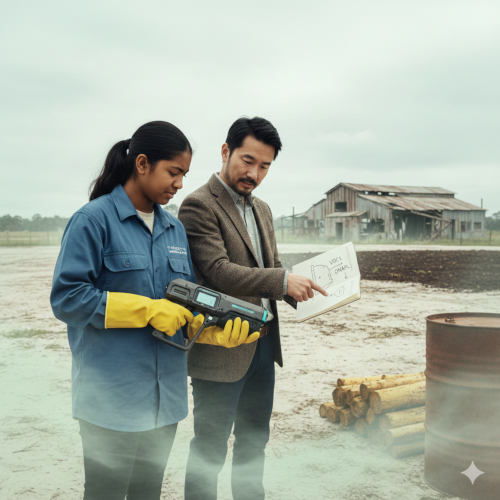
Sam pulled on a pair of oversized rubber gloves, wrinkling her nose at the faint, acrid smell that always hung in the air near the old processing plant. Sam was interning with the Department of Environmental Health during her school break. Unlike her classmates, who were working retail, Sam was hunting for invisible poisons.
The scene of their current investigation was a former fruit cannery just outside the town of Gympie, QLD. The plant had closed five years ago, but the land was meant to be repurposed into a community garden and farm. That plan had stalled.
“Look around, Sam,” said her supervisor, Dr. Lee, a patient environmental chemist known for his methodical approach. “This soil should be rich and black. Instead, it’s pale, and nothing grows here. They’ve tried three seasons of crops, and everything fails to thrive.”
The issue wasn’t the soil’s nutrients, which tested normally. The issue was an invisible vapour that seemed to be rising from the ground, causing persistent health issues—headaches and nausea—for anyone working the site for long periods. Local workers called it the “ghost vapour.”
“We know the plant used a range of chemical solvents for cleaning the machinery,” Dr. Lee explained, gesturing toward a stack of brittle, archived factory logs. “Our initial soil samples showed trace amounts of a common industrial solvent, Tetrachloroethylene (PCE). PCE is a dense, non-flammable liquid, and it’s classified as a Volatile Organic Compound (VOC).”
Dr. Lee drew a quick diagram in his notebook. VOCs are chemicals that easily turn into vapour or gas at normal temperatures. .
“PCE is a DNAPL—a Dense Non-Aqueous Phase Liquid,” Dr. Lee continued. “It’s heavier than water. If any was spilled over the years, it would have sunk straight through the soil, past the water table, and pooled on the bedrock below. That hidden pool is our source.”
Sam’s task was to help design a strategy to precisely map the extent of this deep contamination. She was given a box of sophisticated, but sensitive, equipment, including a photo-ionisation detector (PID), which measures the concentration of VOCs in the air.
“This is an engineering problem layered on a chemistry problem,” Dr. Lee concluded. “We can’t just dig up the whole site. We have to find the edges of that buried pool without disturbing it. Find the pool, and we find the source of the ghost vapour.”
Sam looked at the vast, desolate field. Mapping an invisible, buried, chemical time-bomb with an air detector felt like trying to catch smoke with a net. But the challenge, blending chemistry and mapping skills, was exactly why she had taken the internship.
Comprehension Questions (Chapter 1)
- What is the main problem on the land of the former fruit cannery, and what symptoms do people experience there?
- What specific chemical solvent (and its acronym) did the former plant use, and how is it classified chemically?
- Why is the spilled chemical, PCE, described as a DNAPL (Dense Non-Aqueous Phase Liquid), and where would it eventually settle underground?
- What specific piece of equipment was Sam given to help her map the contamination?
- What engineering challenge did Dr. Lee present to Sam regarding the hidden chemical pool?
I will continue the story. Here is Chapter 2 of Story 3: The Ghost Vapour.
🔬 Story 3: The Ghost Vapour
Chapter 2: Mapping the Migration
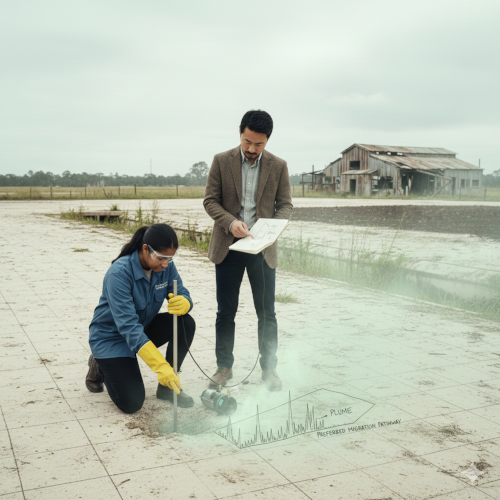
The next morning, Sam and Dr. Lee began their investigation. The challenge was that the Tetrachloroethylene (PCE) contamination was concentrated deep underground, but the ghost vapour they were measuring—the VOCs—had migrated upwards.
“We can’t rely on just sniffing the air,” Dr. Lee instructed. “Wind, temperature, and atmospheric pressure all affect the rate at which the VOCs escape. We need a systematic approach to map the source area, which we call the plume.”
Their method was known as a soil gas survey. They established a precise grid across the entire former cannery site, marking out sampling points every 10 metres. At each point, Sam drove a small, hollow steel probe about 1.5 metres into the soil, staying above the water table.
Using a small vacuum pump, she drew a sample of the air trapped in the soil pores. She then introduced this sample into the photo-ionisation detector (PID). The PID works by bombarding the air sample with UV light. If VOCs are present, they are ionised (given an electric charge), and the detector measures the electric current produced. The result is a concentration reading in parts per million (ppm).
Sam and Dr. Lee worked through the heat, meticulously recording their readings.
- In the northeast corner, near the old loading dock, the readings were 0.5 ppm. Low.
- In the centre of the field, the readings jumped to 35 ppm. High contamination.
- But in the southwest corner, adjacent to an old, unused drainage ditch, the readings suddenly spiked to over 100 ppm—an extremely dangerous concentration.
“This is the core,” Dr. Lee said, pointing to the southwest spike on the map they were sketching. “The vapour isn’t just rising; it’s being funnelled. See how the plume isn’t a neat circle? It’s elongated and concentrated.”
Sam pulled up a historical site plan on her tablet. The drainage ditch in the southwest corner wasn’t just a surface feature; it followed an old, backfilled pipe trench from the 1950s.
“The pipe trench would have been filled with coarse gravel to aid drainage,” Sam hypothesised. “The gravel acts like a superhighway for the PCE vapour. Instead of the VOCs diffusing slowly through dense soil, the gravel trench creates a preferred migration pathway, concentrating the vapour at the surface.” .
Dr. Lee nodded, impressed. “Excellent observation, Sam. That also explains why the contamination seems so severe in that one spot. Now, we use this insight to pinpoint the source. We know where the vapour is escaping, but where did the dense liquid PCE pool?”
They decided their next step needed to be more intrusive: they would drill deep, small boreholes along the length of the drainage trench to sample the soil and rock below the water table. They needed to find a spot where the liquid PCE was physically present, resting on the bedrock. That would be the “hot spot” they needed to target for clean-up.
Comprehension Questions (Chapter 2)
- What is a soil gas survey, and why did Sam and Dr. Lee use this method instead of just measuring the air?
- How does the photo-ionisation detector (PID) work to measure the concentration of VOCs in the air sample?
- What significant anomaly in the concentration readings did Sam and Dr. Lee discover, and in which part of the site was it located?
- Based on Sam’s hypothesis, how did the old pipe trench influence the movement of the ghost vapour?
- What was the goal of their next planned step—drilling deep boreholes—and what were they hoping to find?
I will continue the story. Here is Chapter 3 of Story 3: The Ghost Vapour.
🔬 Story 3: The Ghost Vapour
Chapter 3: The Density Trap
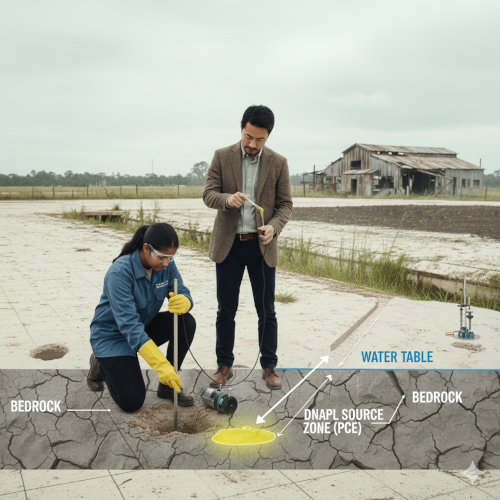
Armed with the knowledge that the old pipe trench was acting as a pathway for the VOCs, Sam and Dr. Lee returned to the site with a small drilling rig. Their goal was to find the exact spot where the liquid PCE was pooled on the bedrock, forming the DNAPL source zone.
They drilled a series of narrow monitoring wells along the length of the trench that showed the highest vapour concentrations. The geology confirmed their hypothesis: the soil layers contained a significant depth of coarse, fractured material (the old trench fill) before hitting the solid, impenetrable bedrock at about 15 metres.
The team lowered special instruments into the boreholes. First, they used a water level sensor to determine the precise depth of the water table in each well. Next, they lowered a unique probe designed to detect the presence of DNAPL. This probe works because PCE, being a dense, non-aqueous phase liquid, sits below the groundwater and on top of the bedrock.
In the first two wells, the probe confirmed only water. But in the third well, located right at the elbow of the old cannery building, the sensor hit resistance. When the probe was retrieved, the bottom section was coated in a clear, oily liquid with that distinct, acrid smell: pure liquid Tetrachloroethylene (PCE). .
“We found the pool,” Dr. Lee announced triumphantly. “The PCE was spilled here, sank through the water table, and then migrated along the slight slope of the bedrock until it hit that corner. It’s been sitting there for years, slowly vaporising and feeding the trench pathway.”
Now that they had pinpointed the source, the clean-up (or remediation) strategy could be designed. Dr. Lee explained that simply pumping out the liquid was difficult because PCE is so dense and sticky—it adheres strongly to the rock pores, a phenomenon called residual saturation.
“We can’t get it all out with just a pump,” Dr. Lee said. “We need to use chemistry to turn this dense liquid into a gas we can pump out. This is where chemical phase change comes in.”
He proposed a technique called Soil Vapour Extraction (SVE), but enhanced by heat.
“PCE is a liquid at ambient temperature, but it has a relatively low boiling point of . If we can heat the soil and rock around the pool to that temperature, the PCE will undergo a phase change. It will turn instantly into a high-concentration vapour, and we can then suck it out using a vacuum system. It’s the most efficient way to remove the contaminant mass.”
Sam realised the solution required a combination of chemistry (the boiling point) and engineering (the controlled heating and vacuum system). The ghost vapour was not just being mapped, it was about to be forcibly captured and removed.
Comprehension Questions (Chapter 3)
- What geological feature did Sam and Dr. Lee find 15metres down that prevented the liquid PCE from sinking further?
- How did the team confirm the presence of DNAPL (PCE) in the monitoring wells?
- Why is simply pumping out the liquid PCE difficult, based on its chemical properties?
- What is the name of the proposed clean-up technique, and what fundamental chemical phase change is involved?
- What temperature would they need to heat the ground to, and how would this chemical reaction aid the engineering clean-up process?
I will continue the story. Here is Chapter 4 of Story 3: The Ghost Vapour.
🔬 Story 3: The Ghost Vapour
Chapter 4: The Thermal Barrier
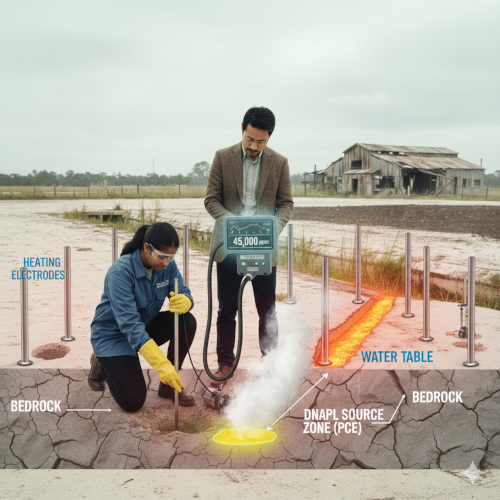
The decision was made to proceed with the enhanced Soil Vapour Extraction (SVE) method. This required a delicate balance of engineering and thermal chemistry to ensure the clean-up was effective without damaging the integrity of the ground.
The first step was installing the necessary infrastructure. A series of heating electrodes were drilled deep into the ground, surrounding the identified DNAPL pool at the base of the bedrock. These electrodes would pass an electrical current through the ground, turning the soil and rock itself into a giant heater.
Simultaneously, extraction wells were placed centrally within the heated zone. These wells were connected to a large vacuum pump on the surface, which would draw out the vaporised chemical.
“We have to be precise with the power input,” Dr. Lee instructed Sam as they monitored the control panel. “We’re aiming for a sustained temperature of . If we go too high, we waste energy. If we stay below the boiling point of PCE, the phase change won’t happen efficiently, and we’ll be extracting very little contaminant mass.”
The heating phase began slowly. For the first two days, the ground temperature rose steadily. Sam used a specialised temperature sensor lowered into the monitoring wells to track the heat front.
By day three, the extraction wells were fully operational. The initial samples pulled by the vacuum system showed low concentration of PCE vapour. But as the temperature hit , the concentration in the extracted air suddenly spiked.
“There it is,” Sam pointed to the monitor showing the PID reading. The PCE concentration in the extracted air jumped from a few hundred ppm to over . The liquid PCE was boiling and turning into high-concentration gas, just as predicted by the principles of thermal chemistry.
However, a new problem arose. The vapour flow rate from one of the extraction wells near the old pipe trench suddenly dropped to near zero.
“The trench is creating a short circuit,” Dr. Lee realised. “The heat is causing the soil in the coarse gravel pathway to dry out completely. Dry soil acts as a much better thermal insulator and flow barrier than saturated soil. The heat is getting trapped, and the vacuum pump can’t pull the vapour efficiently because the pathway is sealed by the thermal barrier.”
They needed to re-establish the efficient flow path immediately. The solution was simple, but required quick action: steam injection. By pumping small amounts of low-pressure steam into the blocked extraction well, they could cool the dry soil, re-introduce moisture to maintain permeability, and, crucially, use the steam itself to push the trapped PCE vapour towards the central vacuum. The ghost vapour was proving to be a formidable chemical opponent, but Sam and Dr. Lee were ready to adapt the engineering based on real-time chemistry.
Comprehension Questions (Chapter 4)
- What two specific types of infrastructure were installed in the ground for the enhanced SVE system?
- What critical temperature were they aiming for, and why was maintaining this temperature so important based on the chemistry of PCE?
- What significant event occurred on day three that confirmed the phase change was happening efficiently?
- What new engineering problem arose when the soil near the old trench dried out, and why did this create a ‘short circuit’?
- What was the solution to the short-circuit problem, and how would it use both heat and moisture to maintain the extraction flow?
I will continue the story. Here is Chapter 5 of Story 3: The Ghost Vapour, concluding the third story.
🔬 Story 3: The Ghost Vapour
Chapter 5: The Mass Balance
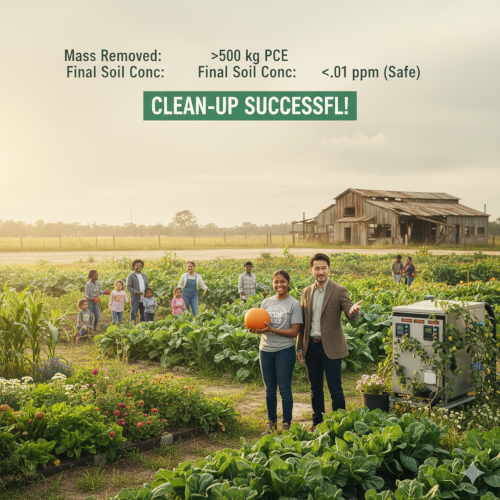
The steam injection was a success. By introducing low-pressure steam, Sam and Dr. Lee were able to maintain the necessary permeability in the soil and rock, preventing the formation of the thermal barrier. The steam also acted as a carrier gas, efficiently moving the vaporised PCE towards the extraction wells. The system ran continuously for the next three weeks.
The most critical part of the clean-up was measuring its success. They couldn’t just assume the PCE was gone; they needed to demonstrate the removal of a specific contaminant mass. This required precise chemistry and mathematics, known as mass balance.
The vacuum system didn’t just pump the vapour into the air; it channeled it into a large, closed carbon filtration system. The carbon physically adsorbs (sticks to) the PCE molecules.
“We calculate the total mass of PCE removed by the system,” Dr. Lee explained, standing next to the massive filter unit. “We monitor two things: the concentration of PCE in the extracted air (measured in ) and the total flow rate of the air (measured in ).”
Using these measurements, Sam performed the calculation every day:
As the weeks progressed, the extraction system successfully removed hundreds of kilograms of PCE. Initially, the concentration of PCE vapour was high, but it began to drop dramatically, indicating the pool of liquid DNAPL was being depleted.
By the end of the third week, the concentration of PCE in the extracted air had dropped from its peak of to consistently less than . Simultaneously, they took a final deep soil sample from the former DNAPL pool area. Chemical analysis showed that the residual saturation of PCE in the rock pores was below the safe regulatory threshold—the level at which it could still vaporise and cause problems.
The ghost vapour was finally silenced. The thermal enhanced SVE system, blending the chemistry of a low boiling point with the engineering of targeted heat and vacuum, had worked perfectly.
The former cannery site was declared safe for use. A year later, Sam drove past the area. Where there was once pale, sterile soil, a vibrant community farm now stood, bursting with healthy green produce. The faint, acrid smell was replaced by the clean, earthy scent of upturned soil and growing things.
Sam’s work didn’t just stop a single chemical spill; it demonstrated how a deep understanding of a compound’s properties (density, volatility, and boiling point) could be leveraged by sophisticated engineering (thermal SVE) to solve a complex, buried environmental problem. She had learned that chemical science was the ultimate tool for restoration.
Comprehension Questions (Chapter 5)
- How did the steam injection specifically address the permeability problem in the ground?
- What is the term for the mathematical process used to calculate the amount of PCE removed, and what two key measurements were required for this calculation?
- What specific technology was used to physically trap the PCE vapour after it was extracted from the ground?
- How did the researchers know, chemically and mathematically, that the DNAPL pool had been depleted?
- What was the final outcome for the former cannery site, and what did Sam realise about the connection between chemistry and environmental restoration?
That concludes the third five-chapter story, The Ghost Vapour.
**********************************************************************************************************************************************
Q: I will reread this third story to understand it better. Because I am not very knowledgeable in chemistry, I have not yet fully understood the content. Please give me a little time.
That is perfectly understandable. Environmental chemistry and remediation engineering involve complex concepts, but I can provide a simple, focused explanation of the core principles of Story 3: The Ghost Vapour to help you review the material.
Take all the time you need!
🧪 Key Concepts from Story 3 Explained
The story revolves around three main scientific ideas:
1. The Contaminant: PCE (Tetrachloroethylene)
- What it is: A chemical solvent used for cleaning (like dry-cleaning).
- Key Property 1: DNAPL (Density): PCE is a Dense Non-Aqueous Phase Liquid. This means it is heavier than water and doesn’t dissolve well in water. Because of this, when spilled, it doesn’t float; it sinks right through the soil and the water table until it hits an impenetrable layer, like solid bedrock. This creates a hidden, liquid pool deep underground.
- Key Property 2: VOC (Volatility): PCE is a Volatile Organic Compound. This means it easily turns from a liquid into a gas (vapour) at normal temperatures. This vapour then rises from the deep pool, creating the “ghost vapour” problem on the surface.
2. The Problem: The Vapour Highway
- The liquid PCE is pooled on the bedrock (the source).
- The gas (vapour) rises, but instead of diffusing evenly, it follows the path of least resistance—the old, coarse gravel-filled pipe trench. This trench acts like a “preferred migration pathway” or “vapour highway,” concentrating the toxic gas in one dangerous area.
- Goal of Chapters 1-3: Use the surface vapour measurements (PID) and deep drilling to find where the liquid pool is resting on the bedrock.
3. The Solution: Thermal SVE (Chemistry + Engineering)
- SVE stands for Soil Vapour Extraction. It means vacuuming the vapour out of the ground.
- The Challenge: The liquid PCE is “sticky” (residual saturation), meaning it clings to the rock pores and can’t be easily pumped out as a liquid.
- The Chemistry Solution: PCE has a low boiling point (). By heating the ground (the engineering part), the liquid PCE quickly changes its phase (boils) into a high-concentration gas.
- The Engineering Solution: The heating electrodes heat the ground above , forcing the phase change. The extraction wells and vacuum pump then collect the high-concentration PCE gas, which is filtered out using carbon.
- Mass Balance: The success of the clean-up is tracked by measuring exactly how much contaminant mass (in kilograms) they extract, proving they have removed the source pool.
I hope this summary helps solidify your understanding of the science involved. Please take your time to review the chapters. I will wait for you to signal when you are ready to begin the first chapter of Story 4.
********************************************************************************************************************************************************
おかえりなさい!9年生の生徒さん向けの読書練習ストーリーの作成を再開する準備ができました。
3つ目のストーリーは**化学と工学**に焦点を当て、特に化学特性を理解することが産業汚染や環境汚染問題の解決にどのようにつながるかに焦点を当てます。
こちらが3つ目のストーリーの第1章です。
***
## 🔬 ストーリー3:幽霊のような蒸気
### 第1章:消えゆく農場
**サム**は、古い加工工場の近くにいつも漂っているかすかな刺激臭に鼻をひそめながら、大きめのゴム手袋をはめました。サムは学校の休み中に**環境衛生局**でインターンシップをしていました。小売業で働いているクラスメートたちとは異なり、サムは目に見えない毒物を探していました。
彼らの現在の調査現場は、クイーンズランド州ジムピーの町のすぐ外にある、かつて果物缶詰工場だった場所です。工場は5年前に閉鎖されましたが、その土地はコミュニティガーデンと農場として再利用される予定でした。その計画は頓挫した。
「サム、周りを見回してごらん」と、彼女の上司である**リー博士**は言った。彼は忍耐強く、几帳面なアプローチで知られる環境化学者だ。「この土壌は肥沃で黒くなっているはずなのに、実際には色が薄く、何も育たない。3シーズン作物を育ててみたが、何も育たない**。」
問題は土壌の栄養分ではなく、検査結果は正常だった。問題は地面から立ち上っているように見える**目に見えない蒸気**だった。この蒸気は、現場で長時間働く人々に頭痛や吐き気といった慢性的な健康問題を引き起こしていた。地元の労働者たちはそれを「ゴースト蒸気」と呼んでいた。
「工場では機械の洗浄に様々な化学溶剤を使用していたことは分かっています」とリー博士は説明し、もろくなった工場の記録簿の山を指さした。 「当初の土壌サンプルには、一般的な工業用溶剤であるテトラクロロエチレン(PCE)が微量に含まれていました。PCEは高濃度で不燃性の液体で、揮発性有機化合物(VOC)に分類されます。」
リー博士はノートに簡単な図を描いた。VOCは常温で容易に蒸気またはガスに変化する化学物質だ。
「PCEはDNAPL(高密度非水相液体)です」とリー博士は続けた。「水よりも重いのです。もし長年かけて流出していたとしたら、土壌を通り抜け、地下水位を超え、岩盤に溜まっていたはずです。この隠れた水たまりこそが、私たちの汚染源なのです。」
サムの任務は、この深部汚染の範囲を正確にマッピングするための戦略策定を支援することだった。彼女は、空気中のVOC濃度を測定する光イオン化検出器(PID)を含む、高性能かつ高感度の機器一式を受け取った。
「これは化学の問題に重なる工学的な問題です」とリー博士は結論づけた。「敷地全体を掘り起こすだけではだめです。埋もれたプールを乱すことなく、その端を見つけなければなりません。プールを見つければ、幽霊蒸気の発生源が見つかるのです。」
サムは広大で荒涼とした原野を見渡した。目に見えない、埋もれた化学時限爆弾を空気検知器でマッピングするのは、網で煙を捕らえようとするようなものだった。しかし、化学とマッピング技術を融合させるという難題こそが、彼女がインターンシップに参加した理由だった。
### 理解度チェック問題(第1章)
1. かつての果物缶詰工場跡地における**主な問題**は何ですか?また、そこで人々はどのような症状を経験していますか?
2. かつての工場ではどのような**化学溶剤**(およびその略称)が使用されていましたか?そして、それは化学的にどのように分類されていますか?
3. 流出した化学物質PCEが**DNAPL**(高密度非水相液体)と表現されているのはなぜですか?そして、最終的に地下のどこに沈殿するのでしょうか?
4. 汚染マップを作成するために、サムはどのような**機器**を受け取りましたか?
5. リー博士は、隠された化学物質プールに関して、サムにどのような**技術的課題**を提示しましたか?
***
物語の続きをお話しましょう。**ストーリー3:ゴースト蒸気**の第2章です。
—
## 🔬 ストーリー3:ゴースト蒸気
### 第2章:移動のマッピング
翌朝、サムとリー博士は調査を開始しました。問題は、**テトラクロロエチレン(PCE)**汚染は地下深くに集中しているのに対し、彼らが測定していた**ゴースト蒸気**、つまり**VOC**は上層に移動していたことでした。
「空気を嗅ぐだけでは不十分です」とリー博士は指示しました。「風、気温、気圧はすべて、VOCの放出速度に影響します。発生源をマッピングするには、体系的なアプローチが必要です。私たちはこれを**プルーム**と呼んでいます。」
彼らの手法は**土壌ガス調査**として知られていました。彼らは缶詰工場跡地全体に正確なグリッドを設定し、10メートルごとにサンプリングポイントを設定しました。各地点で、サムは地下水面より上、約1.5メートルの深さまで、小さな中空の鋼鉄製プローブを土壌に突き刺しました。
彼女は小型の真空ポンプを使って、土壌の隙間に閉じ込められた空気のサンプルを採取しました。そして、このサンプルを**光イオン化検出器(PID)**に導入しました。PIDは空気サンプルに**紫外線**を照射することで機能します。VOC(揮発性有機化合物)が含まれている場合、それらはイオン化(電荷を帯びる)され、検出器は発生した電流を測定します。その結果が**百万分率(ppm)**で濃度の測定値となります。
サムとリー博士は暑い中作業をしながら、測定値を注意深く記録しました。
* 北東の角、古い荷積み場の近くでは、測定値は****でした。低い値です。
* 圃場の中央では、測定値は****に跳ね上がりました。高い汚染レベルです。
* しかし、南西の角、古くて使われていない排水溝に隣接する場所では、測定値が突然 **** を超え、極めて危険な濃度に達した。
「ここが中心です」とリー博士は、彼らが描いていた地図の南西の急上昇部分を指差しながら言った。「蒸気はただ上昇しているのではなく、集中して流れています。煙がきれいな円ではなく、細長く、集中しているのがわかりますか?」
サムはタブレットで**史跡配置図**を開いた。南西の角にある排水溝は単なる地表地形ではなく、1950年代に埋め戻された古い配管溝に沿って伸びていた。
「排水を促進するために、配管溝には粗い砂利が詰められていたのでしょう」とサムは仮説を立てた。 「砂利はPCE蒸気にとって高速道路のような役割を果たします。VOCが密集した土壌をゆっくりと拡散する代わりに、砂利の溝が**優先的な移動経路**を作り出し、蒸気を地表に集中させるのです。」
リー博士は感心して頷いた。「素晴らしい観察力ですね、サム。それで、あの一箇所の汚染がなぜそれほど深刻に見えるのかが説明できます。さて、この知見を使って発生源を特定します。蒸気がどこから漏れているのかは分かっていますが、濃厚な液体の**PCE**はどこに溜まっているのでしょうか?」
彼らは次のステップとして、より徹底的な調査が必要だと判断した。排水溝の全長にわたって深く小さなボーリング孔を掘削し、地下水位**下**の土壌と岩石を採取するのだ。液体のPCEが岩盤の上に物理的に存在する場所を見つける必要があった。それが、浄化の対象となる「ホットスポット」となる。
—
### 理解度確認問題(第2章)
1. **土壌ガス調査**とは何ですか?また、サムとリー博士はなぜ空気中のガス濃度を測定する代わりに、この方法を採用したのですか?
2. **光イオン化検出器(PID)**は、空気サンプル中のVOC濃度を測定するためにどのように機能しますか?
3. サムとリー博士は、濃度測定値においてどのような重要な**異常**を発見しましたか?また、それは現場のどの部分でしたか?
4. サムの仮説に基づくと、**古いパイプ溝**はゴースト蒸気の動きにどのような影響を与えましたか?
5. 彼らが次に計画していたステップである深層ボーリングの**目標**は何でしたか?そして、彼らは何を発見しようとしていましたか?
***
## 🔬 ストーリー3:幽霊蒸気
### 第3章:密度トラップ
古いパイプ溝が**VOC**の経路となっているという知見を得たサムとリー博士は、小型掘削リグを持って現場に戻りました。彼女らの目標は、液体の**PCE**が岩盤上に溜まり、**DNAPL発生源帯**を形成している正確な場所を見つけることでした。
彼女らは溝の全長に沿って、最も高い蒸気濃度を示した一連の狭いモニタリング井戸を掘削しました。地質調査によって彼女らの仮説が裏付けられました。土壌層には、約15メートルで固く浸透不可能な**岩盤**に達する前に、かなり深いところまで粗く破砕された物質(古い溝の充填物)が含まれていました。
チームは特殊な機器を掘削孔に降ろしました。まず、**水位センサー**を用いて各井戸の**地下水位**の正確な深さを測定した。次に、DNAPLの存在を検出するために設計された独自のプローブを下ろした。このプローブは、PCEが高密度の非水相液体であり、地下水の*下*、岩盤の*上*に存在するため、機能する。
最初の2つの井戸では、プローブは水のみを確認した。しかし、旧缶詰工場のすぐ曲がり角にある3つ目の井戸では、センサーが抵抗にぶつかった。プローブを回収すると、底部は独特の刺激臭を伴う透明な油状の液体で覆われていた。純粋な液体**テトラクロロエチレン(PCE)**だった。
「プールを見つけた」とリー博士は勝ち誇ったように宣言した。「PCEはここにこぼれ落ち、地下水位を沈み、岩盤のわずかな傾斜に沿って移動し、あの角にたどり着いた。PCEは何年もそこに留まり、ゆっくりと蒸発して溝の通路に流れ込んでいたのだ。」
発生源が特定されたことで、浄化(または**修復**)戦略を策定できるようになりました。リー博士は、PCEは非常に密度が高く粘着性が高いため、液体をポンプで単純に排出するのは困難だと説明しました。PCEは岩石の細孔に強く付着し、この現象は**残留飽和**と呼ばれます。
「ポンプだけですべてを除去することはできません」とリー博士は言います。「この密度の高い液体を、ポンプで排出できるガスに変換するには、化学反応を利用する必要があります。ここで**化学的相変化**が役立ちます。」
彼は、加熱によって強化された**土壌蒸気抽出(SVE)**と呼ばれる技術を提案しました。
PCEは常温では液体ですが、**沸点**は比較的低く、です。プール周辺の土壌と岩石をその温度まで加熱できれば、PCEは相変化を起こします。瞬時に高濃度の蒸気に変化し、真空システムを使って吸い出すことができます。これは汚染物質を除去する最も効率的な方法です。
サムは、この解決策には化学(沸点)と工学(制御された加熱・真空システム)の組み合わせが必要だと気づきました。ゴースト蒸気は単に地図化されるだけでなく、強制的に捕捉・除去されるところだったのです。
—
### 理解度チェック問題(第3章)
1. サムとリー博士は、15メートルの深さで、液体PCEの沈下を阻止していたどのような**地質学的特徴**を発見しましたか?
2. チームはどのようにしてモニタリング井戸に**DNAPL**(PCE)が存在することを確認しましたか?
3. 液体PCEを単純にポンプで汲み出すのは、その化学的性質から見てなぜ**困難**なのでしょうか?
4. 提案されている浄化技術の名称は何ですか?また、どのような基本的な**化学的相変化**が関係しているのでしょうか?
5. 地盤をどのくらいの**温度**まで加熱する必要があり、この化学反応は工学的な浄化プロセスにどのように役立つのでしょうか?
***
物語の続きをお話しましょう。**ストーリー3:ゴースト蒸気**の第4章です。
## 🔬 ストーリー3:ゴースト蒸気
### 第4章:熱バリア
**強化土壌蒸気抽出(SVE)**法を採用することが決定されました。地盤の健全性を損なうことなく浄化を効果的に行うには、工学と熱化学の繊細なバランスが必要でした。
最初のステップは、必要なインフラの設置でした。岩盤の基底部で特定された**DNAPLプール**を囲むように、一連の**加熱電極**が地中深くに掘削されました。これらの電極は地中に電流を流し、土壌と岩盤自体を巨大なヒーターに変えます。
同時に、加熱ゾーンの中央に**抽出井**が設置されました。これらの井は地表の大型真空ポンプに接続され、蒸発した化学物質を吸い出します。
「電力入力は正確に行う必要があります」と、リー博士は制御盤を監視しながらサムに指示した。「目標温度は を維持します。温度が高すぎるとエネルギーを無駄にします。**PCE** の沸点 を下回ると、相変化が効率的に起こらず、抽出される汚染物質の量が非常に少なくなってしまいます。」
加熱段階はゆっくりと始まりました。最初の2日間は、地表温度は着実に上昇しました。サムは、監視井戸に特殊な **温度センサー** を設置し、熱流束を追跡しました。
3日目には、抽出井戸は完全に稼働しました。真空システムで採取した最初のサンプルでは、*PCE蒸気** の濃度は低かったものの、温度が に達すると、抽出空気中の濃度が急上昇しました。
「ほら、これだ」とサムはPIDの指示値を示すモニターを指差した。抽出空気中のPCE濃度は数百ppmから以上に急上昇した。液体PCEは沸騰し、**熱化学**の原理で予測された通り、高濃度ガスへと変化していた。
しかし、新たな問題が発生した。古いパイプ溝の近くにある抽出井の一つからの蒸気流量が、突然ほぼゼロにまで低下したのだ。
「溝が**短絡**を起こしている」とリー博士は気づいた。「熱によって、粗い砂利の通路の土壌が完全に乾燥している。乾燥した土壌は、飽和した土壌よりもはるかに優れた断熱材と流動バリアとして機能する。熱が閉じ込められ、通路が断熱バリアによって密閉されているため、真空ポンプは蒸気を効率的に吸引できないのだ。」
彼女らはすぐに効率的な流路を再構築する必要があった。解決策は単純でしたが、迅速な対応が必要でした。それは**蒸気注入**です。閉塞した抽出井に少量の低圧蒸気を注入することで、乾燥した土壌を冷却し、透水性を維持するために水分を再導入し、そして重要な点として、蒸気自体を利用して閉じ込められたPCE蒸気を中央真空へと押し出すことができました。ゴースト蒸気は手強い化学的敵であることが判明していましたが、サムとリー博士はリアルタイム化学に基づくエンジニアリングを適応させる準備ができていました。
—
### 理解度チェック問題(第4章)
1. 強化されたSVEシステムのために、地中にどのような2種類のインフラが設置されましたか?
2. 目指していた**臨界温度**はどれくらいでしたか?また、PCEの化学的性質に基づいて、なぜこの温度を維持することが重要だったのですか?
3. 3日目に、**相変化**が効率的に起こっていることを確認する重要な出来事は何ですか?
4. 古い溝の近くの土壌が乾燥したとき、どのような新たな**工学的問題**が発生しましたか?また、なぜ「短絡」が発生したのですか?
5. 短絡問題に対する**解決策**は何でしたか?また、熱と水分の両方をどのように利用して抽出流量を維持するのでしょうか?
***
物語の続きをお話しましょう。**ストーリー3:ゴースト蒸気**の第5章、第三話の締めくくりです。
—
## 🔬 ストーリー3:ゴースト蒸気
### 第5章:マスバランス
蒸気注入は成功しました。低圧蒸気を導入することで、サムとリー博士は土壌と岩石に必要な**透水性**を維持し、熱障壁の形成を防ぐことができました。蒸気はキャリアガスとしても機能し、気化した**PCE**を効率的に抽出井へと運びました。システムはその後3週間連続稼働しました。
浄化作業で最も重要な部分は、その成功度を測定することでした。PCEが除去されたと単純に仮定することはできず、特定の**汚染物質**が除去されたことを証明する必要がありました。これには、**マスバランス**と呼ばれる精密な化学と数学の知識が必要でした。
真空システムは単に蒸気を大気中に排出するだけでなく、それを大型の密閉式**炭素ろ過システム**に送り込みます。炭素はPCE分子を物理的に吸着(付着)します。
「システムによって除去されたPCEの総質量を計算します」と、リー博士は巨大なフィルターユニットの隣に立って説明しました。「私たちは2つのことを監視しています。抽出された空気中のPCEの**濃度**(で測定)と、空気の総**流量**(で測定)です。」
これらの測定値を用いて、サムは毎日計算を行いました。
数週間が経過するにつれ、抽出システムは数百キログラムのPCEを除去することに成功しました。当初はPCE蒸気の濃度は高かったものの、劇的に低下し始め、液体DNAPLプールが枯渇していることを示していました。
3週目末までに、抽出空気中のPCE濃度はピーク時のから一貫して未満に低下しました。同時に、彼らは以前の**DNAPLプール**エリアから最終的な深層土壌サンプルを採取しました。化学分析の結果、岩石の細孔におけるPCEの**残留飽和度**は、安全基準値を下回っていることが示されました。この基準値以下では、PCEは依然として蒸発して問題を引き起こす可能性があります。
ゴースト蒸気はついに静まり返りました。低沸点の化学反応と、標的を絞った加熱と真空の工学技術を融合させた熱強化SVEシステムは、完璧に機能したのです。
かつての缶詰工場跡地は安全に使用できると宣言されました。1年後、サムは車でその地域を通り過ぎました。かつて青白く不毛な土壌だった場所には、今では活気のあるコミュニティファームが立ち、健康的な緑の農産物が溢れていました。かすかな刺激臭は、掘り返された土と育つ植物の、清潔で土のような香りに取って代わられました。
サムの仕事は、単なる化学物質流出の阻止にとどまりませんでした。化合物の特性(密度、揮発性、沸点)に関する深い理解を、高度な工学技術(熱SVE)によって活用することで、複雑で埋もれた環境問題を解決できることを実証したのです。彼女は化学科学こそが環境修復のための究極のツールであることを学んだのです。
—
### 理解度確認問題(第5章)
1. **蒸気注入**は、地中の透水性の問題に具体的にどのように対処しましたか?
2. 除去されたPCEの量を計算するために使用された数学的プロセスの用語は何ですか?また、この計算に必要な2つの主要な測定値は何ですか?
3. 地中から抽出されたPCE蒸気を物理的に捕捉するために、どのような**技術**が使用されましたか?
4. 研究者たちは、化学的および数学的に、DNAPLプールが**枯渇**したことをどのようにして知りましたか?
5. 缶詰工場跡地の**最終的な結果**は何でしたか?また、サムは化学と環境修復の関連性についてどのようなことに気づきましたか?
***
***
これで、5章からなる3番目の物語「幽霊蒸気」は終了です。
それでは、4番目の物語の第1章を始めましょうか?
Q:この3番目の物語をもう一度読んで、より深く理解したいと思います。化学にあまり詳しくないので、まだ内容を完全に理解できていません。少しお時間をください。
それは全く理解できます。**環境化学**と**修復工学**には複雑な概念が含まれていますが、**ストーリー3:幽霊蒸気**の中核となる原理を簡潔かつ焦点を絞って説明することで、教材の復習に役立ちます。
必要なだけ時間をかけてください!
—
## 🧪ストーリー3の主要概念の説明
この物語は、3つの主要な科学的概念を中心に展開されます。
### 1. 汚染物質:PCE(テトラクロロエチレン)
* **概要:** 洗浄(ドライクリーニングなど)に使用される化学溶剤。
* **主要特性1:DNAPL(密度):** PCEは**高密度の非水相液体**です。つまり、**水より重く**、**水に溶けにくい**ということです。そのため、こぼしても浮きません。土壌と地下水面を通り抜け、固い**岩盤**のような浸透不可能な層にぶつかるまで沈み続けます。こうして、地下深くに隠れた液体プールが形成されます。
* **主要特性2:VOC(揮発性):** PCEは**揮発性有機化合物**です。つまり、常温では液体から容易にガス(**蒸気**)に変化します。この蒸気は深いプールから上昇し、地表に「ゴースト蒸気」問題を引き起こします。
### 2. 問題:蒸気ハイウェイ
* 液体の**PCE**は岩盤(発生源)に溜まります。
* ガス(**蒸気**)は上昇しますが、均等に拡散するのではなく、抵抗が最も少ない経路、つまり古くて粗い砂利が詰まった**パイプ溝**を通ります。この溝は**「優先移動経路」**または「蒸気ハイウェイ」のように機能し、有毒ガスを危険な一箇所に集中させます。
* **第1章~3章の目標:** 地表蒸気測定 (**PID**) と深部掘削を用いて、岩盤上の液体プールの位置を特定します。
### 3. 解決策: 熱SVE (化学 + 工学)
* **SVE** は **土壌蒸気抽出** (Soil Vapour Extraction**) の略です。これは、地中から蒸気を吸引することを意味します。
* **課題:** 液体PCEは「粘着性」(**残留飽和**) があるため、岩石の細孔に付着し、液体として容易に汲み出すことができません。
* **化学的解決策:** PCEは**沸点** () が低いです。地中を加熱すると (工学的部分)、液体PCEは急速に**相** (沸騰) が変化し、高濃度のガスになります。
* **工学的解決策:** **加熱電極** は地面を 以上に加熱し、相変化を強制します。その後、**抽出井** と真空ポンプが高濃度PCEガスを収集し、**炭素** を用いてろ過します。
* **質量収支:** 浄化の成功は、抽出された汚染物質の**質量** (kg) を正確に測定することで追跡され、発生源プールが除去されたことが証明されます。
—
この要約が、関連する科学への理解を深めるのに役立つことを願っています。各章をじっくりとお読みください。